.svg&w=384&q=75 "GoalGist logo")
Torino vs Sassuolo: A Clash of Styles in Serie A
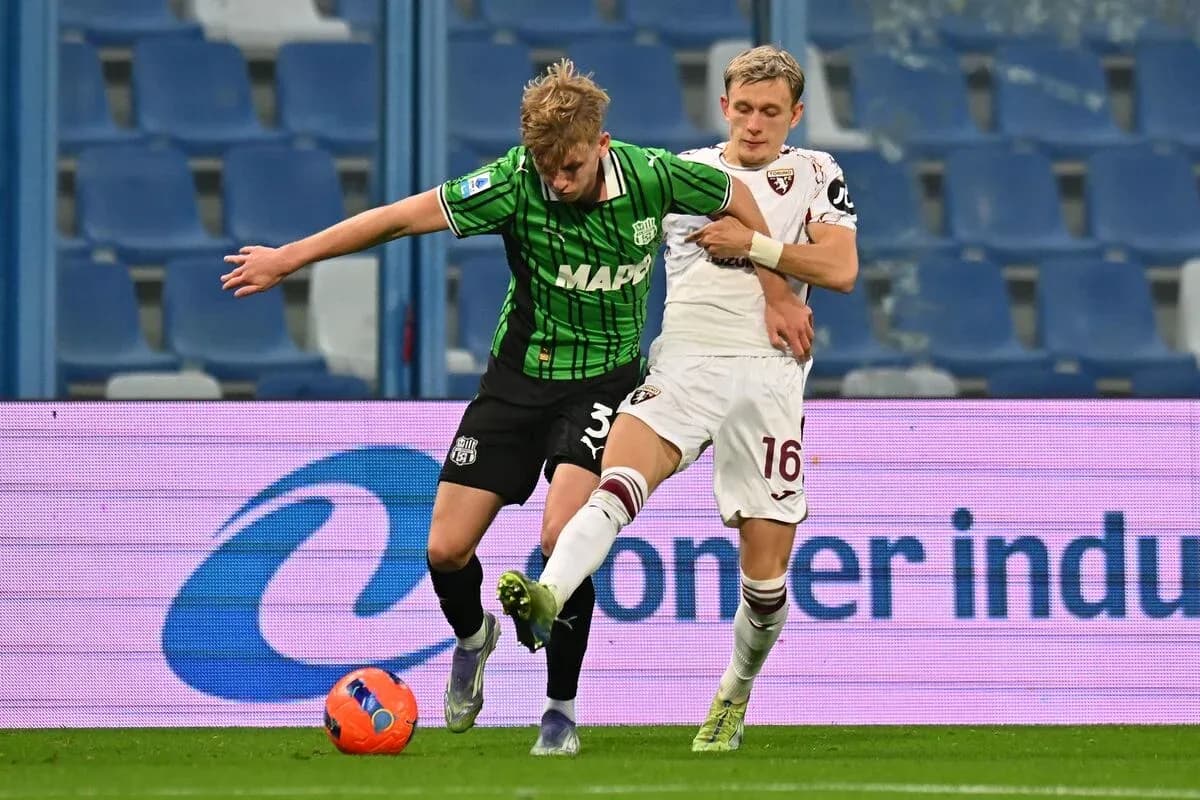
Under the lights of the Stadio Olimpico Grande Torino, this was a mid‑table Serie A meeting that felt heavier than its billing. Torino and Sassuolo arrived separated by five points but bound by similar seasons: streaky, volatile, and capable of both brilliance and collapse. Following this result, Torino’s 2–1 win did more than tilt the table slightly in their favour; it underlined a clash of identities between a side trying to harden its defensive shell and another living on the edge of its attacking talent and disciplinary chaos.
Heading into this game, Torino sat 12th with 44 points, their overall goal difference at -18, the product of 41 goals scored and 59 conceded. At home they had been respectable: 8 wins from 18, with 25 goals for and 27 against, an average of 1.4 goals scored and 1.5 conceded at home. Sassuolo, 11th with 49 points and an overall goal difference of -2 (44 for, 46 against), travelled as a classic risk‑reward outfit: 5 away wins from 18, scoring 21 and conceding 23, averaging 1.2 goals scored and 1.3 conceded on their travels.
I. The Big Picture – Shapes, context, and seasonal DNA
Leonardo Colucci leaned into Torino’s structural comfort, rolling out a 3‑4‑2‑1 that echoed one of their favoured schemes this season. While their most used shape has been 3‑5‑2, the three‑at‑the‑back family is clearly their identity, with 3‑4‑2‑1 already deployed multiple times. A. Paleari anchored the back three of L. Marianucci, S. Coco and E. Ebosse, with width and running from V. Lazaro and R. Obrador. In the engine room, M. Prati and G. Gineitis were tasked with knitting phases together, while N. Vlasic and A. Njie floated behind lone striker G. Simeone.
Sassuolo, under Fabio Grosso, stayed loyal to their season’s blueprint: the 4‑3‑3 that has defined them across 34 league outings. A. Muric started in goal behind a back four of W. Coulibaly, S. Walukiewicz, T. Muharemovic and J. Doig. The midfield trio of L. Lipani, N. Matic and K. Thorstvedt offered a blend of control, bite and vertical runs, while the front three of C. Volpato, A. Pinamonti and A. Lauriente promised movement and threat between the lines.
Torino’s season has been built on narrow margins. Overall they score 1.1 goals per game and concede 1.6, but they have managed 12 clean sheets in total, including 5 at home. Their problem has often been consistency: a longest losing streak of 4 and a form line littered with short bursts of revival. Sassuolo, by contrast, are more open: 1.2 goals scored and 1.3 conceded per game overall, with 8 clean sheets and 11 games where they failed to score. They oscillate between three‑match winning streaks and equally damaging losing runs.
II. Tactical Voids – Absences and disciplinary shadows
Both squads arrived with notable absences that shaped the tactical landscape.
Torino were without Z. Aboukhlal, F. Anjorin and A. Ismajli, all ruled out with muscle or hip issues. For Colucci, that meant fewer options for explosive wide running and a missing defensive alternative in the back line. It pushed more responsibility onto Obrador and Lazaro to provide width and onto Vlasic to carry the creative load between the lines.
Sassuolo’s absences were even more structurally significant. D. Boloca and F. Cande (muscle and knee injuries), J. Idzes and E. Pieragnolo (foot and knee injuries), and A. Fadera (suspended for yellow cards) stripped Grosso of depth across defence and midfield. Without Boloca’s energy and Cande’s athleticism on the flank, the visitors leaned heavily on Matic and Thorstvedt to control central zones and protect a back four that has already conceded 23 goals away.
Disciplinary trends added another layer. Torino’s yellow cards are heavily back‑loaded: 18.84% arrive between 76–90 minutes and 21.74% between 91–105, a clear pattern of late‑game strain. Their single red card this season has come in the 46–60 window. Sassuolo are even more combustible: 28.75% of their yellows land in the 76–90 stretch, with further spikes in added time (15.00% between 91–105). Their red cards are spread across 16–30, 46–60 and 76–90, underlining how their aggression can tip into self‑sabotage just as matches open up.
III. Key Matchups – Hunter vs Shield, Engine Room battles
The headline duel was always going to be G. Simeone against Sassuolo’s defensive spine. Simeone has been one of Serie A’s sharper finishers this season: 11 goals in total from 30 appearances, with 56 shots and 28 on target. He is not just a finisher but a worker, engaging in 271 duels and winning 106, and drawing 38 fouls. Against a Sassuolo defence that concedes 1.3 goals per game on their travels and whose biggest away defeat is a 2–0, his physical presence and relentless pressing were designed to stress Walukiewicz and Muharemovic every time Torino went direct.
On the other side, A. Pinamonti carried Sassuolo’s central threat. With 8 goals and 3 assists this campaign, plus 54 shots (27 on target), he is a penalty‑box forward who thrives on service. Yet his penalty record is a blemish: he has missed 1 spot‑kick, a reminder that Sassuolo’s margin for error in high‑leverage moments is thin. Up against a Torino back three that concedes 1.5 goals per game at home but has delivered 5 home clean sheets, his movement between Coco and Ebosse was crucial.
Flanking Pinamonti, A. Lauriente has been one of the league’s most productive creators. With 9 assists and 6 goals in total, 52 key passes and 75 dribble attempts (27 successful), he embodies Sassuolo’s high‑risk, high‑reward wing play. His duel with Lazaro and Marianucci was a pure “Hunter vs Shield” scenario: Lauriente’s ability to isolate and beat his man against Torino’s need to keep their wing‑backs from being pinned deep.
In the “Engine Room”, M. Prati and G. Gineitis faced a formidable Sassuolo triangle. N. Matic, a top red‑card collector this season, is the enforcer and metronome: 1 goal, 1 assist, 1 red card, 7 yellows, 1,645 passes at 86% accuracy, plus 42 tackles and 26 interceptions. His screening in front of the back four, alongside the all‑action K. Thorstvedt – 4 goals, 4 assists, 43 tackles, 13 blocked shots and 30 interceptions – gave Sassuolo both bite and progression. Thorstvedt’s 8 yellow cards underline how fine the line is between dominance and danger for him.
For Torino, without a high‑profile playmaker in the league’s assist charts, creativity had to be collective. Vlasic’s pockets of space between the lines, Obrador’s surges from wing‑back and Njie’s runs off Simeone were all designed to pull Matic and Lipani out of their zones, creating gaps for late arrivals.
IV. Statistical Prognosis – xG logic and defensive solidity
Even without explicit xG numbers, the season’s statistical profiles sketch a clear pre‑match prognosis. Torino’s home attack, at 1.4 goals per game, against Sassuolo’s away defence conceding 1.3, suggested a narrow but tangible edge for the hosts in chance creation. Sassuolo’s away scoring rate of 1.2, up against a Torino home defence shipping 1.5, pointed to the visitors finding opportunities of their own.
The late‑card surges for both sides hinted that the final quarter of an hour would be chaotic: Torino’s discipline fraying under pressure, Sassuolo’s aggression spiking as they chased or protected a result. In that turbulence, the presence of clinical forwards like Simeone, Pinamonti and the bench option of D. Berardi – 8 goals, 4 assists, 32 shots and 19 on target, plus 2 penalties scored but 1 missed – tilted the xG narrative towards a game decided by fine finishing margins rather than sheer volume of shots.
Following this result, Torino’s 2–1 victory fits the statistical script: a home side with a modest but real attacking edge, leveraging structural familiarity in a 3‑4‑2‑1, and surviving the volatility of Sassuolo’s 4‑3‑3. The numbers painted a picture of balance tipped by individual quality and discipline; the pitch in Turin merely confirmed it.