.svg&w=384&q=75 "GoalGist logo")
Crystal Palace vs Everton: Tactical Analysis of 2-2 Draw
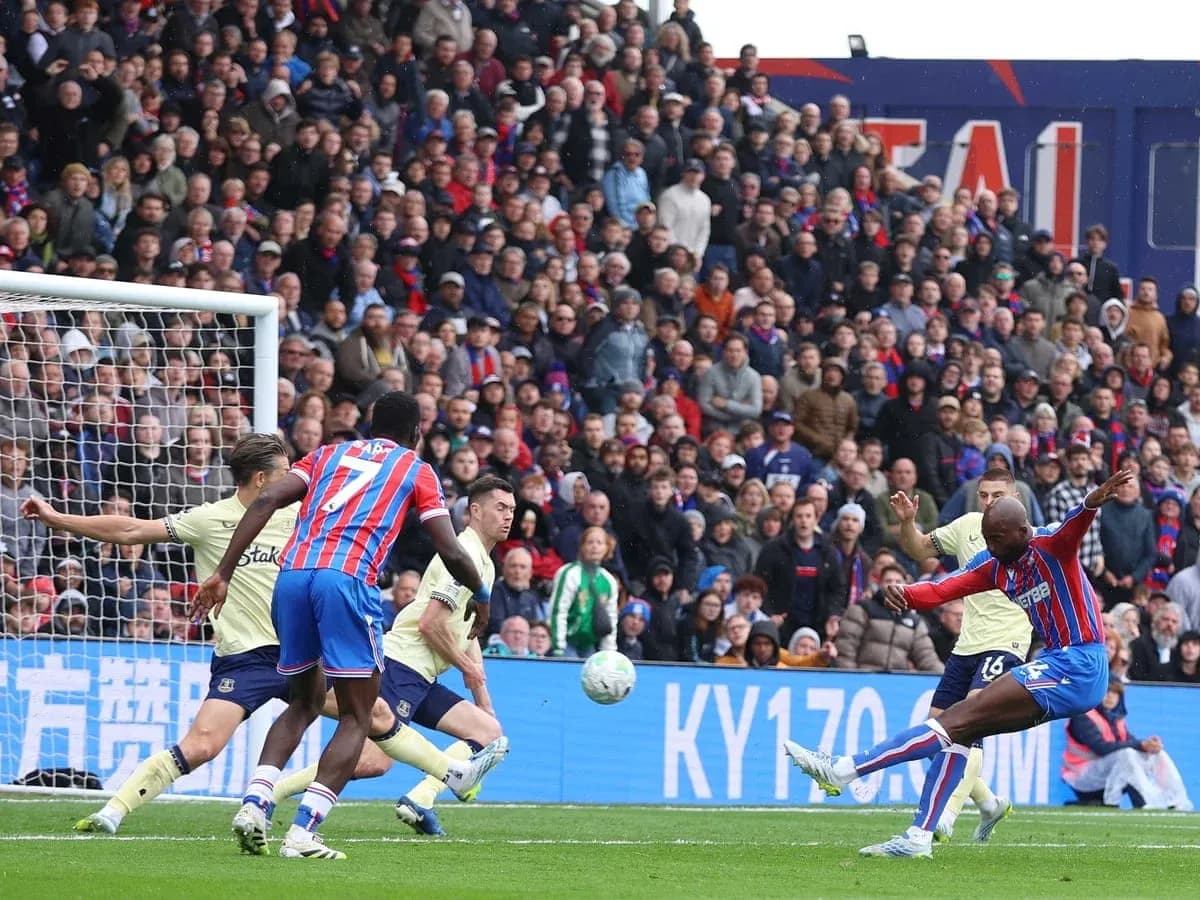
Crystal Palace and Everton shared a 2-2 draw at Selhurst Park in Premier League Regular Season Round 36, a match defined by contrasting structures and a clear tilt in territory versus efficiency. Palace, in Oliver Glasner’s 3-4-2-1, dominated the ball and shot volume, while Everton’s 4-2-3-1 leaned on set-piece threat, direct running and a compact mid-block. The 1-1 halftime score reflected Palace’s gradual recovery after conceding early, and the 2-2 full-time result ultimately mirrored the underlying numbers: Palace generated more and better chances, but Everton’s verticality and aerial power ensured they remained dangerous throughout.
I. Executive Summary
Everton struck first through James Tarkowski on 6', exploiting Palace’s early vulnerability on rest-defence and box organisation. Palace responded on 34' via Ismaïla Sarr, capitalising on sustained pressure and width from the wing-backs. At the interval it was Crystal Palace 1-1 Everton, a scoreline that slightly flattered the visitors given the shot and possession profile. After the restart, Beto restored Everton’s lead on 47', again with Tarkowski involved, before Jean Philippe Mateta’s 77' equaliser rewarded Palace’s territorial siege. Palace’s 59% possession, 21 shots and 2.66 xG framed them as the proactive side, but Everton’s 13 shots and 1.44 xG underlined their ability to turn limited spells into high-quality moments.
II. Scoring Sequence & Disciplinary Log
The event flow underlines how Everton’s early directness shaped the match.
- 6' — Goal: James Tarkowski (Everton). A “Normal Goal” for the centre-back gave Everton a 0-1 lead, signalling their set-piece and aerial threat from the outset and exploiting Palace’s three-at-the-back structure on dead balls.
- 30' — Card: 30' James Garner (Everton) — Foul. Garner’s yellow, explicitly for “Foul”, reflected Everton’s need to disrupt Palace’s growing control between the lines, especially against Daichi Kamada and Adam Wharton.
- 34' — Goal: Ismaïla Sarr (Crystal Palace). Sarr levelled at 1-1 with a “Normal Goal” that stemmed from Palace’s sustained pressure and aggressive wing-back positioning, turning possession dominance into penetration.
- 45' — Card: 45' Vitaliy Mykolenko (Everton) — Foul. Another yellow “Foul” for Mykolenko highlighted the strain on Everton’s full-backs as Palace repeatedly attacked wide and forced 1v1 defending.
Halftime score: Crystal Palace 1-1 Everton.
- 47' — Goal: Beto (Everton), assist James Tarkowski. A “Normal Goal” from Beto, assisted by Tarkowski, restored Everton’s lead at 1-2. This sequence encapsulated Everton’s plan: direct supply to a powerful No. 9 and aggressive attacking of second phases.
- 65' — Substitution: Jean Philippe Mateta (IN) came on for Jørgen Strand Larsen (OUT) for Crystal Palace. Glasner sought more penalty-box presence and a more physical reference point against Everton’s centre-backs.
- 70' — Substitution: Thierno Barry (IN) came on for Beto (OUT) for Everton. With a 1-2 lead, Everton adjusted their forward profile, looking for fresh legs to chase longer clearances and counterattacks.
- 77' — Goal: Jean Philippe Mateta (Crystal Palace). Mateta’s “Normal Goal” made it Crystal Palace 2-2 Everton, validating Glasner’s substitution by adding a sharper finisher to sustained crossing and cut-back patterns.
- 80' — Substitution: Jefferson Lerma (IN) came on for Brennan Johnson (OUT) for Crystal Palace. This shift added central ballast, allowing Palace to maintain pressure while guarding against Everton counters.
- 80' — Substitution: Tyrique George (IN) came on for Merlin Röhl (OUT) for Everton. A like-for-like attacking midfield change to refresh pressing and transition threat.
- 90+4' — Substitution: Carlos Alcaraz (IN) came on for Kiernan Dewsbury-Hall (OUT) for Everton. A late adjustment, likely aimed at adding energy and ball-carrying in the final moments.
Discipline totals are clear: Crystal Palace 0 yellow cards, Everton 2 yellow cards (James Garner — Foul; Vitaliy Mykolenko — Foul), Total: 2.
III. Tactical Breakdown & Personnel
Glasner’s 3-4-2-1 was built on width and central overloads. Chris Richards, Maxence Lacroix and Jaydee Canvot formed the back three, tasked with covering large horizontal spaces while also tracking Beto’s movements. Early on, this line was vulnerable to Everton’s set-piece mechanics, as evidenced by Tarkowski’s opener and his later assist.
Wing-backs Daniel Muñoz and Tyrick Mitchell were essential to Palace’s territorial dominance. Their high starting positions stretched Everton’s 4-2-3-1 horizontally, creating pockets for Kamada and Wharton to receive. Kamada operated as a connective midfielder, linking build-up to the front three, while Wharton’s distribution underpinned Palace’s 459 passes, 382 accurate (83%). The structure allowed Palace to sustain pressure, contributing to 21 total shots, 15 inside the box, and 2.66 xG.
Up front, Ismaïla Sarr and Brennan Johnson supported Jørgen Strand Larsen. Sarr’s equaliser typified his role: attacking the space between full-back and centre-back. Johnson offered depth runs and pressing, but once Everton dropped deeper after taking the lead, Glasner needed a more penalty-box oriented striker. The introduction of Jean Philippe Mateta at 65' changed the attacking profile: Mateta attacked crosses more aggressively and occupied both centre-backs, directly leading to his 77' leveller.
Defensively, Palace were relatively clean — only 5 fouls and no cards — reflecting more control than desperation. Dean Henderson’s 5 saves, combined with a goals-prevented value of 1.2, indicate that when Everton did create, the chances were significant. Henderson’s shot-stopping kept Palace alive despite conceding twice from 13 shots and 1.44 xG.
Everton’s 4-2-3-1 was anchored by Jordan Pickford, who made 6 saves and also posted 1.2 goals prevented, underlining Palace’s shot quality. The back four of Jake O'Brien, James Tarkowski, Michael Keane and Vitaliy Mykolenko defended deep for long stretches. Tarkowski was central to Everton’s identity: scorer of the first goal, provider for Beto’s second, and the main aerial outlet on both set plays and long diagonals.
Double pivot Tim Iroegbunam and James Garner had to absorb repeated central overloads. Garner’s yellow card for Foul at 30' symbolised the stress of containing Kamada and Wharton. Ahead of them, Merlin Röhl, Kiernan Dewsbury-Hall and Iliman Ndiaye formed a flexible three behind Beto, tasked with pressing triggers and transition runs rather than long positional sequences, as evidenced by Everton’s lower 313 passes, 232 accurate (74%).
Beto’s goal on 47' encapsulated Everton’s vertical plan: quick access into the striker, supported by second balls and late arrivals. Once replaced by Thierno Barry at 70', Everton lost some hold-up strength but gained fresh legs to chase counters. Later changes — Tyrique George and Carlos Alcaraz — were about energy and ball-carrying rather than structural overhaul.
IV. The Statistical Verdict
The numbers reinforce the tactical story. Palace’s 59% possession, 21 shots (8 on goal), and 2.66 xG against Everton’s 41% possession, 13 shots (6 on goal), and 1.44 xG show a home side that controlled territory and volume. Palace also led in passing quality: 459 passes, 382 accurate (83%) compared to Everton’s 313 passes, 232 accurate (74%). Yet Everton’s 10 corners to Palace’s 5 and their two goals from situations involving Tarkowski highlight a set-piece and aerial edge that compensated for less sustained build-up.
Discipline was asymmetric but telling: Palace committed only 5 fouls and received no cards, while Everton’s 13 fouls and 2 yellow cards for “Foul” (James Garner, Vitaliy Mykolenko) reflected a reactive, interruptive approach to managing Palace’s superior structure. Both goalkeepers overperformed their shot-stopping metrics with 1.2 goals prevented each, explaining why a match that could have tilted towards Palace on xG settled at Crystal Palace 2-2 Everton.