.svg&w=384&q=75 "GoalGist logo")
Lazio's Season Summary: A Solid Finish Against Relegated Pisa
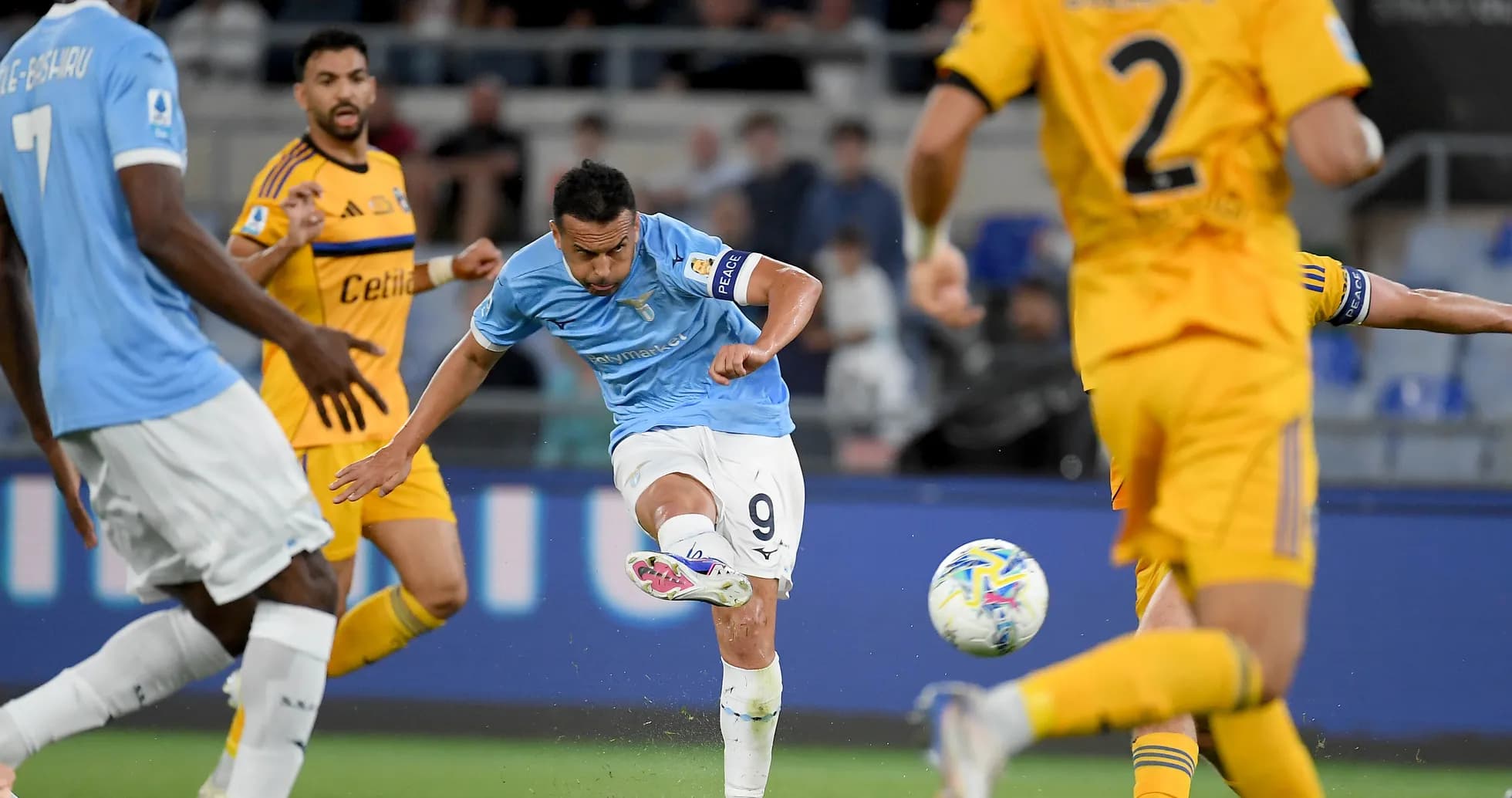
The final whistle at Stadio Olimpico confirmed what the table had hinted all along: a Lazio side with top‑half structure and depth had just enough control to see off a relegated Pisa, 2–1, and lock in a season that finished more solid than spectacular.
I. The Big Picture – Season DNA and the 90 minutes in Rome
Following this result, Lazio close their Serie A campaign in 9th place on 54 points, with a goal difference of +1 (41 scored, 40 conceded) over 38 matches. At home they have lived on the edge all year: 27 goals for and 25 against at the Olimpico, averaging 1.4 scored and 1.3 conceded per home game. Pisa, by contrast, depart the division bottom of the table in 20th with 18 points and a brutal goal difference of -45, the product of 26 goals scored and 71 conceded overall. On their travels they finish without an away win: 0 victories, 8 draws and 11 defeats, scoring 17 and conceding 45, an away average of 0.9 goals for and 2.4 against.
The 2–1 scoreline in Rome mirrored those season arcs. Lazio, in their familiar 4‑3‑3 under Maurizio Sarri, imposed enough possession and positional play to build a 2–1 half‑time lead and then manage the space. Pisa, set up in a 3‑5‑2 by Oscar Hiljemark, competed in phases but were again undermined by structural fragility at the back and a chronic inability to control games away from home.
II. Tactical Voids – Absences and Discipline
Both coaches arrived with significant gaps to plug. For Lazio, the spine was reshaped before a ball was kicked. First‑choice goalkeeper I. Provedel was out with a shoulder injury, pushing A. Furlanetto into the XI. Ahead of him, the absence of N. Rovella through suspension (red card) and the loss of M. Zaccagni to a knee injury stripped Sarri of a key metronome in midfield and one of his most incisive wide attackers. N. Tavares and K. Taylor were also unavailable due to yellow‑card accumulation, further narrowing the rotation options, especially in wide and full‑back zones. E. Motta’s thigh injury removed another depth piece.
The knock‑on effect was a more experimental, almost patched‑together Lazio: L. Pellegrini at left‑back, A. Marusic on the right, and a midfield three of F. Dele‑Bashiru, T. Basic and R. Belahyane asked to reproduce the pressing and circulation usually shared with Rovella and, earlier in the season, the often‑dismissed but influential M. Guendouzi.
Pisa’s voids were just as damaging, if not more. Their most card‑prone defender A. Caracciolo, who collected 10 yellow cards this season, was suspended, depriving the back line of its most experienced organiser and a player who blocked 24 shots over the campaign. Injuries to F. Coppola (muscle), D. Denoon (ankle), M. Marin (knee) and M. Tramoni (muscle), plus the coach’s decision to omit Lorran, meant Hiljemark’s bench lacked both defensive security and creative alternatives.
Disciplinary patterns across the season underlined how precarious Pisa’s defensive work has been. Their yellow‑card distribution peaks at 76–90 minutes with 25.64% of bookings in that window, while Lazio show a similar late‑game spike at 25.64% between 76–90. This shared tendency to lose control in the final quarter made game management in Rome a test of composure as much as tactics.
III. Key Matchups – Hunter vs Shield, and the Engine Room
With no top‑scorer data available, the “Hunter vs Shield” duel in this fixture was defined more by unit versus unit than by individual marksmen. Lazio’s attack at home has been steady rather than explosive, averaging 1.4 goals per game, but it was facing one of the league’s most porous away defences: Pisa’s 45 goals conceded on their travels, at an average of 2.4 per match. The first half played out as the numbers predicted – Lazio’s front three of M. Cancellieri, T. Noslin and Pedro repeatedly found pockets between Pisa’s back three and wing‑backs, turning positional superiority into the 2–1 advantage that ultimately decided the match.
The “Shield” for Lazio has been a back line anchored by A. Romagnoli and Mario Gila, both ever‑present figures in the league’s disciplinary charts. Romagnoli, who has 6 yellow cards and 1 red this season, and Mario Gila, also with a red and 4 yellows, defend aggressively on the front foot. Mario Gila’s 17 successful blocks and 25 interceptions underline how proactive he is stepping into passing lanes. Against Pisa’s strike pair S. Moreo and F. Stojilkovic, their task was less about tracking elite movement and more about maintaining focus and avoiding the lapses that have occasionally produced late‑game reds – particularly in a league where Lazio’s own red‑card distribution peaks at 76–90 minutes with 55.56% of their dismissals in that late window.
In midfield, the “Engine Room” contest was nuanced. For Pisa, M. Aebischer has been the understated hub: 1530 passes at 85% accuracy, 34 key passes, 65 tackles and 6 blocks across the season. He is both their primary distributor and a key defensive screen. Opposite him, Lazio’s trio of Dele‑Bashiru, Basic and Belahyane had to replace the vertical passing and press resistance normally offered by Rovella and Guendouzi. Basic’s role as the tempo‑setter, dropping between the centre‑backs to initiate build‑up, was critical in dragging Pisa’s midfield line out of shape, opening inside‑channel lanes for Noslin and Pedro to attack.
Without Caracciolo, Pisa’s back three of A. Calabresi, S. Canestrelli and R. Bozhinov lacked a natural leader to step out and engage those half‑space runs. That hesitation was visible whenever Lazio’s wingers drifted infield: the line dropped, the wing‑backs M. Leris and S. Angori were pinned deep, and Aebischer found himself stretched horizontally trying to plug multiple gaps.
IV. Statistical Prognosis – xG Logic and Defensive Solidity
There is no explicit xG data in the snapshot, but the season numbers sketch a clear expected‑goals narrative around this match. Heading into this game, Lazio’s overall scoring average of 1.1 per match, rising to 1.4 at home, combined with Pisa’s overall concession rate of 1.9 per match (2.4 away), pointed towards a home side likely to generate the higher‑quality chances. Pisa’s attack, at 0.7 goals per game overall and 0.9 away, rarely overwhelms opponents; their path to survival would always have required defensive resilience they never truly possessed.
Lazio’s 15 clean sheets overall – 6 at home and 9 away – show a team capable of shutting games down when structure and concentration align. Pisa, with only 5 clean sheets in total and just 1 on their travels, have lived the opposite reality: even modest attacking sides have found ways through.
In Rome, the 2–1 scoreline fits that statistical script. Lazio created and converted enough to reflect their superior attacking baseline, then leaned on a defence that, while not flawless, has been fundamentally more solid than Pisa’s all year. The absences on both sides reshaped the cast, but not the plot: a mid‑table Lazio side, flawed yet organised, closing out a campaign against a Pisa team whose relegation story was written long before the final evening at Stadio Olimpico.