.svg&w=384&q=75 "GoalGist logo")
Juventus vs Fiorentina: Tactical Insights from the Match
Allianz Stadium had the feel of a season’s reckoning. In Turin’s late-season light, Juventus walked out as a side that had quietly rebuilt itself into a Europa League force, while Fiorentina arrived fighting to keep distance from the trapdoor. By the end of ninety minutes, the scoreboard told a stark story: Juventus 0, Fiorentina 2. Following this result, the league table still framed it as sixth against fifteenth, but the afternoon belonged entirely to the visitors.
Juventus’ Seasonal DNA
Heading into this game, Juventus’ seasonal DNA was clear. Over 37 matches they had collected 68 points, with a goal difference of 27 built on 59 goals for and 32 against. At home they were a machine of control: 19 games, 10 wins, 7 draws, only 2 defeats, scoring 35 and conceding just 16. Their goals-for profile at home – averaging 1.8 – usually paired with a defensive average of 0.8 against to create a suffocating rhythm: get in front, then close the door.
Fiorentina’s Edge
Fiorentina, by contrast, had lived on the edge. Their 41 points from 37 matches came with a goal difference of -9, the product of 40 goals scored and 49 conceded. On their travels they had been erratic: 5 wins, 6 draws, 8 defeats, 20 goals for and 29 against, an away average of 1.1 scored and 1.5 conceded. Yet the form line of WDLDD hinted at a team that had recently learned to suffer better, to grind out results rather than collapse.
Tactical Setup
Luciano Spalletti’s choice of a 4-2-3-1 for Juventus was both a nod to control and an attempt to bring his creative core into the same channel. M. Di Gregorio stood behind a back four of P. Kalulu, Bremer, L. Kelly and A. Cambiaso. In front of them, M. Locatelli and T. Koopmeiners formed the double pivot, with F. Conceicao, W. McKennie and K. Yildiz supporting D. Vlahovic.
It was, on paper, a structure designed to dominate central zones. Locatelli, one of Serie A’s most influential midfield anchors this season, came into the match with 2720 passes at an 88% accuracy rate, 99 tackles, 23 successful blocks and 38 interceptions. He is the organiser and the breaker of lines, but also the risk-taker: 54 fouls committed and 9 yellow cards underline how often he steps into the fire. His season also carried a subtle blemish – one missed penalty – a reminder that Juventus’ perfection from the spot is not absolute.
Alongside him, Koopmeiners offered verticality and late runs, freeing McKennie to shuttle higher. McKennie’s 5 goals and 5 assists in the league, with 47 key passes and 39 tackles, made him the natural connector between structure and chaos, the man who links Locatelli’s metronome to the front four.
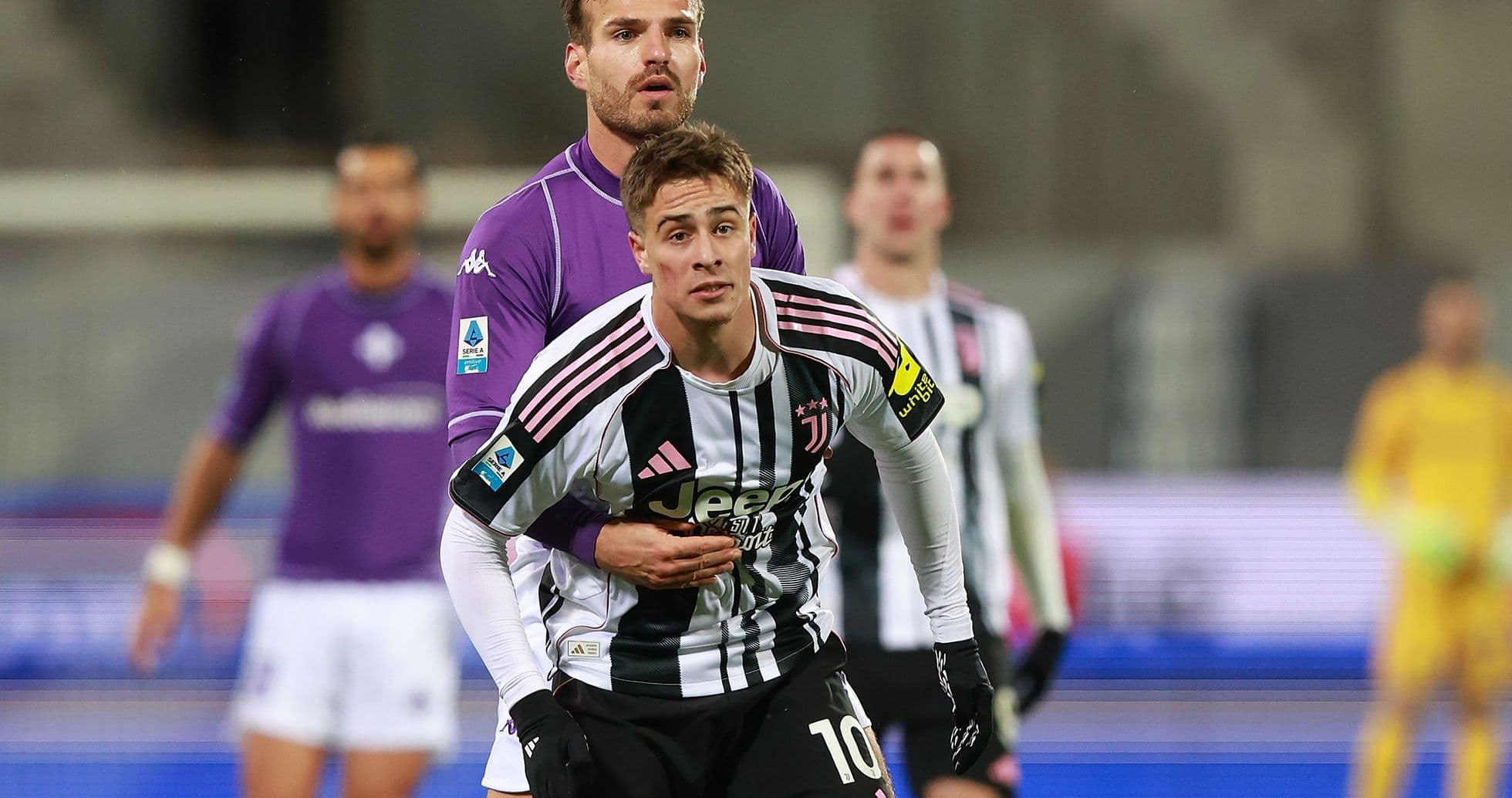
Ahead of them, the creative axis revolved around K. Yildiz. With 10 goals and 6 assists in Serie A, 76 key passes and 149 attempted dribbles (78 successful), he has become Juventus’ primary offensive reference. His duel volume – 348 contested, 175 won – speaks to a player who never hides, constantly receiving under pressure and forcing defensive decisions. Even his penalty record tells a story of responsibility: he has both scored and missed from the spot this season.
Fiorentina’s Response
Yet against Fiorentina, that offensive core found itself smothered. Paolo Vanoli’s 4-3-3 was built on a rugged defensive spine and a hard-running midfield. D. de Gea anchored a back line of Dodo, M. Pongracic, L. Ranieri and R. Gosens. Ahead of them, C. Ndour, N. Fagioli and M. Brescianini formed a compact trio, with F. Parisi, R. Piccoli and M. Solomon as the front three.
If Juventus’ identity lay in controlled aggression, Fiorentina’s was in survival and timely incision. Pongracic, the league’s leading yellow-card collector with 12 bookings, arrived as both enforcer and organiser. Across the season he had made 32 tackles, but more importantly he had blocked 26 shots and made 35 interceptions, a defender who lives in the path of danger. His 1887 passes at 91% accuracy showed why Vanoli trusts him to start attacks as much as end them.
Beside him, Ranieri brought his own edge: 8 yellow cards and 1 red, 34 tackles, 13 successful blocks and 24 interceptions. Together, Pongracic and Ranieri formed a central pairing built to absorb Vlahovic’s physicality and Yildiz’s movement, even at the risk of disciplinary trouble. Fiorentina’s season-long card profile – a late-game surge of yellow cards between 76-90 minutes at 25.30% of their total, and a red-card spike in the same window at 66.67% – painted them as a side that often finishes on the brink.
Fiorentina’s Tactical Coup
That volatility made the control they showed in Turin all the more striking. With Juventus typically strong at home and boasting 16 clean sheets overall (8 at home), Fiorentina’s ability to score twice and shut them out was a tactical coup. Their season had been defined by fragility on their travels, conceding 29 away goals, but here their defensive block remained compact, the full-backs disciplined, the midfield diligent in closing Yildiz’s pockets between the lines.
The “Hunter vs Shield” narrative that many expected – Yildiz, McKennie and Vlahovic attacking a defence that had allowed 49 goals overall – inverted itself. Instead, it was Fiorentina’s front three exploiting moments of transition against a Juventus side more used to dictating tempo than chasing games. With Juventus’ goals-against average of 0.9 overall, conceding 2 at home was an outlier, and it exposed how much their system depends on the double pivot controlling the middle third.
Engine Room Battle
In the “Engine Room”, Locatelli and Koopmeiners found themselves harried by Ndour’s legs, Fagioli’s intelligence and Brescianini’s industry. Fiorentina’s midfield did not outplay Juventus in pure technique, but they broke the rhythm, forcing longer passes, disrupting the vertical lanes that usually feed Yildiz between the lines and McKennie’s underlapping runs.
Looking Ahead
From a statistical prognosis perspective, the season-long numbers would still back Juventus in a rematch at the Allianz Stadium. Heading into this game, their home scoring average of 1.8 against Fiorentina’s away concessions of 1.5 suggested that Juventus should generate the higher xG profile, while their defensive solidity – 16 goals conceded at home – should normally keep Fiorentina’s chances limited.
But following this result, the narrative sharpens. Fiorentina showed they can bend their chaotic season into a disciplined, compact away performance, leaning on Pongracic’s blocking, Ranieri’s aggression and De Gea’s authority. Juventus, for all their structural strength, revealed a vulnerability when their creative fulcrum Yildiz is denied space and when Locatelli’s control is disrupted high up the pitch.
If these sides were to meet again, the tactical fault line would be clear: Juventus must find ways to free Yildiz from Fiorentina’s central cage and get McKennie running beyond the first line, while Fiorentina would again bet on their hardened back four and a midfield willing to live on the disciplinary edge. On paper, the xG models would still lean towards a Juventus side with better underlying numbers and a superior goal difference of 27 compared to Fiorentina’s -9. On the grass in Turin, though, Fiorentina proved that for one afternoon, structure, suffering and a ruthless edge in both boxes could overturn the odds.