.svg&w=384&q=75 "GoalGist logo")
Fiorentina and Genoa: A Tactical Stalemate in Serie A
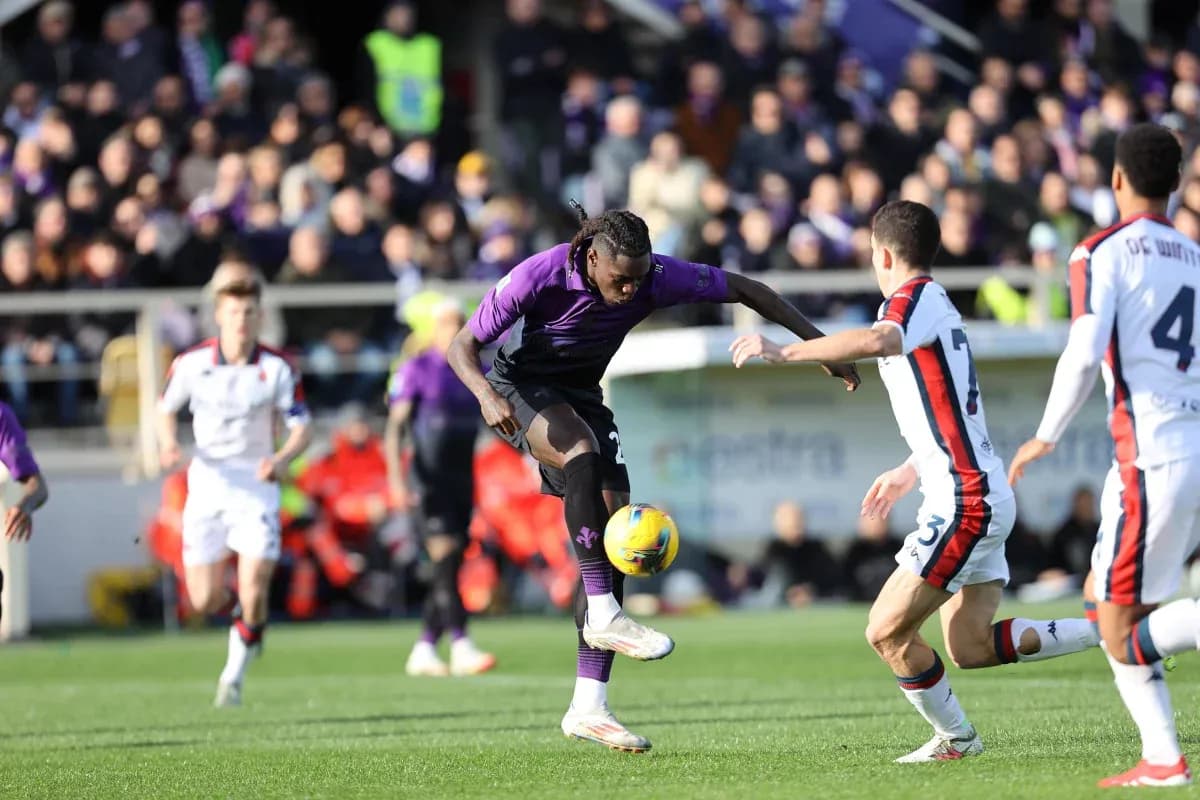
Under the pale May light at Stadio Artemio Franchi, this was a meeting of neighbours in the Serie A table that felt more like a mirror test than a derby: Fiorentina in 15th against Genoa in 14th, both trying to prove that their seasons were about more than simply surviving. The 0-0 final scoreline tells one story; the squads, their absences and their tactical DNA tell another.
Heading into this game, Fiorentina’s season had been defined by narrow margins and a chronic inability to tilt them. Overall they had played 36 matches, with only 8 wins, 14 draws and 14 defeats. Their goal difference of -11 was the mathematical echo of that story: 38 goals scored and 49 conceded in total. At home, they were almost unnervingly balanced – 20 goals for and 20 against across 18 matches, averaging 1.1 goals scored and 1.1 conceded at the Franchi. Genoa, by contrast, arrived with a slightly stronger overall profile: 10 wins, 11 draws, 15 defeats, 40 goals for and 48 against, for a goal difference of -8. On their travels they had been stubborn if unspectacular, with 19 away goals scored and 24 conceded, an away average of 1.1 for and 1.3 against.
That equilibrium in the numbers set the stage for a tactical contest where detail would decide everything. Paolo Vanoli stayed loyal to Fiorentina’s most-used shape of the season, the 4-3-3 that had already been deployed 13 times in the league. D. de Gea anchored a back four of Dodo, M. Pongracic, L. Ranieri and R. Gosens, a line designed as much for controlled build-up as for pure defending. In midfield, R. Mandragora, N. Fagioli and C. Ndour formed a technically inclined trio, while the front line of F. Parisi, R. Braschi and M. Solomon offered mobility rather than a classic penalty-box focal point.
The most glaring tactical void was the absence of M. Kean. The Fiorentina striker, one of Serie A’s more productive forwards this season with 8 league goals and 1 assist in 26 appearances, was ruled out with a calf injury. His profile – 75 shots, 27 on target, 60 dribbles attempted with 25 successful – had given Fiorentina a direct, aggressive outlet that this XI could not fully replicate. Without him, Vanoli’s 4-3-3 became more about collective circulation than vertical punches. Kean had also been flawless from the spot, scoring 2 penalties from 2; without him, Fiorentina still retained a perfect penalty record overall (6 scored from 6, 100.00%), but lost their most proven in-game reference.
Genoa had their own absences to manage. T. Baldanzi, Junior Messias, B. Norton-Cuffy, M. Cornet and S. Otoa were all unavailable, stripping Daniele De Rossi of several creative and rotational options. Yet he leaned into Genoa’s structural identity: a 3-4-2-1, one of their staple systems alongside the frequently used 3-5-2. J. Bijlow stood behind a back three of A. Marcandalli, L. Ostigard and N. Zatterstrom. Across midfield, M. E. Ellertsson, Amorim, M. Frendrup and A. Martin provided the platform for a flexible front line of J. Ekhator and Vitinha operating behind L. Colombo.
If Fiorentina’s attacking absence was Kean, Genoa’s creative heartbeat was very much present in A. Martin. The Spanish left-sided defender arrived as one of Serie A’s leading assist providers, with 5 assists and 60 key passes from 714 total passes, at an accuracy of 78. His delivery from wide areas and set pieces is central to Genoa’s chance creation. Yet his season also carried a blemish: 1 missed penalty, a reminder that Genoa’s otherwise perfect team penalty record (5 scored from 5, 0 missed) has one personal scar.
The disciplinary undercurrent to this fixture was impossible to ignore. Fiorentina’s defensive axis featured two of Serie A’s most card-prone players. M. Pongracic, a mainstay with 33 appearances and 2804 minutes, had collected 11 yellow cards. He is not simply a stopper; his 1855 passes at 91% accuracy and 23 blocked shots show a defender who both initiates play and protects his box. Alongside him, L. Ranieri brought 8 yellow cards of his own, plus 34 tackles and 11 blocked shots. This pairing is aggressive, front-footed, and always on the disciplinary edge.
That aggression is mirrored higher up the pitch by A. Gudmundsson, on Fiorentina’s bench here but emblematic of their risk-reward profile. With 5 goals, 4 assists and 1 red card this season, he embodies a side whose yellow-card distribution peaks late: 25.00% of their yellows arrive between 76-90 minutes, and all of their red cards in Serie A this season have also come in that 76-90 window (2 reds, 100.00% of their dismissals). Genoa, too, live dangerously: R. Malinovskyi, among the league’s most-booked midfielders with 10 yellows, adds both bite and creativity, while the team’s red-card pattern is scattered – one each in 0-15, 46-60 and 91-105.
This is where the “Hunter vs Shield” and “Engine Room” duels crystallise. Without Kean, Fiorentina’s “Hunter” role is diffused among Solomon, Braschi and Parisi, all tasked with probing a Genoa defence that, on their travels, concedes 1.3 goals per game and has allowed 24 away goals in total. Genoa’s “Shield” is not just the back three, but the entire mid-block, with Frendrup and Amorim screening and Martin balancing forward surges with recovery runs.
In midfield, the “Engine Room” battle pits Fiorentina’s Mandragora–Fagioli–Ndour trio against Genoa’s Amorim–Frendrup axis, with Martin and Ellertsson stretching wide. Malinovskyi, starting on the bench, looms as the game-breaking option: 6 goals, 3 assists, 37 key passes and 39 shots suggest a player capable of altering the rhythm if introduced, even as his 10 yellow cards warn of the cost of his intensity.
From a statistical prognosis standpoint, these squads almost demand a tight, attritional contest. Heading into this game, Fiorentina averaged 1.1 goals for and 1.4 against overall, Genoa 1.1 for and 1.3 against. Both sides had kept 9 clean sheets each in total, and both had failed to score frequently – Fiorentina 11 times, Genoa 14. The 0-0 at the Franchi ultimately felt less like an anomaly and more like the logical intersection of two teams whose seasons have been defined by fine margins, missing sparks and defensive stubbornness.
Following this result, the table barely shifts, but the narrative sharpens: Fiorentina and Genoa remain locked in a shared identity – disciplined, combative, structurally sound – yet still searching for the extra layer of risk and invention that can turn these carefully constructed stalemates into defining victories.