.svg&w=384&q=75 "GoalGist logo")
Cremonese's 3-0 Triumph Over Pisa: A Tactical Analysis
Stadio Giovanni Zini has seen more struggle than celebration this season, but this 3-0 win over Pisa felt like a rare moment of clarity for Cremonese. Following this result in the Serie A Regular Season - 36 round, the league table still paints a harsh picture: Cremonese sit 18th with 31 points and a goal difference of -23, Pisa 20th with 18 points and a goal difference of -41. Both remain locked in relegation territory, but this match underlined the contrasting directions of their trajectories.
Across the campaign, Cremonese have been a low-scoring, fragile side: overall they average 0.8 goals for and 1.5 goals against per match. At home, that becomes 0.9 scored and 1.4 conceded. Pisa’s numbers are even more stark. Overall they average 0.7 goals for and 1.8 against; on their travels, they score 0.9 but ship 2.4. This game’s 3-0 scoreline felt less like an outlier and more like the logical extension of Pisa’s away fragility meeting a Cremonese side finally playing with conviction.
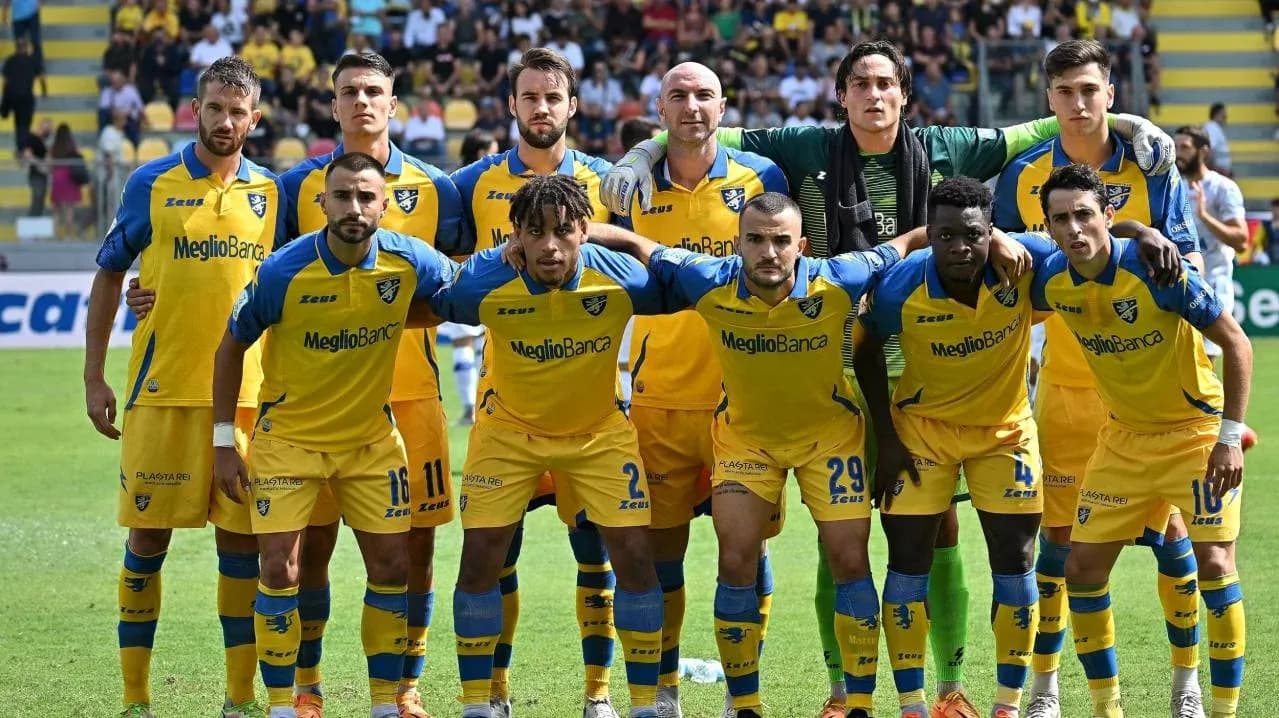
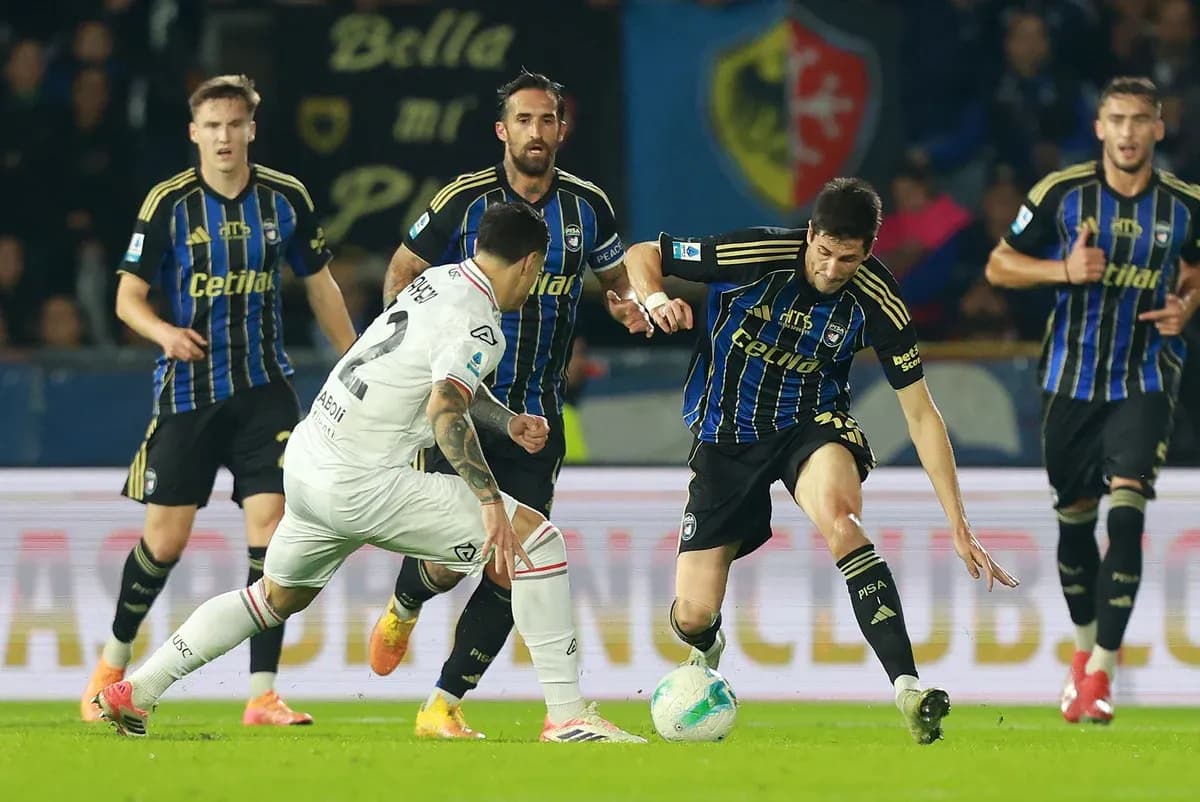
Marco Giampaolo’s 4-4-2 was orthodox on paper but aggressive in its execution. E. Audero anchored a back four of F. Terracciano, M. Bianchetti, S. Luperto and G. Pezzella, with a midfield line of T. Barbieri, A. Grassi, Y. Maleh and J. Vandeputte behind the strike pair of F. Bonazzoli and J. Vardy. Across from them, Oscar Hiljemark leaned into Pisa’s season-long preference for three at the back, rolling out a 3-4-2-1: A. Semper behind S. Canestrelli, A. Caracciolo and R. Bozhinov; a midfield band of I. Touré, E. Akinsanmiro, F. Loyola and M. Leris; with S. Moreo and I. Vural supporting lone forward F. Stojilkovic.
Tactical Voids and Absences
Both squads came into this fixture carrying scars. Cremonese were without F. Baschirotto (thigh injury), R. Floriani and F. Moumbagna (both muscle injuries) and M. Payero (knock). None of these names appear in the matchday squad, and their absence nudged Giampaolo toward a more settled, veteran back line and a compact midfield. It also helped crystallise Pezzella’s importance: a player already prominent in the league’s disciplinary charts, now tasked with locking down the left while still offering width.
Pisa’s list of absentees was equally telling: F. Coppola (muscle injury), D. Denoon (ankle injury), C. Stengs (inactive) and M. Tramoni (muscle injury) all missed out. For a side with only 25 goals in total this campaign and just 9 at home, losing attacking and creative depth further blunted Hiljemark’s options, forcing him to lean heavily on Stojilkovic and the half-spaces runs of Vural and Moreo.
Disciplinary history framed the edge of this contest. For Cremonese, Pezzella’s season has been combative: 8 yellow cards and 1 red, with 45 fouls committed and 31 drawn. Pisa brought their own enforcers: Caracciolo with 9 yellows, and M. Aebischer with 8, while Touré’s red card this season underlined his willingness to step over the line. At team level, both sides are late-game flashpoints. Cremonese’s yellow-card peak sits in the 76-90' window at 27.27% of their cautions, Pisa’s in the same period at 25.33%. It is no coincidence that this match’s control battle was decided by who could stay calmer as the minutes ticked away.
Key Matchups
The defining duel of the afternoon was always going to revolve around F. Bonazzoli. Heading into this game, he had 9 goals and 1 assist in Serie A, with 54 shots (30 on target) and a rating of 7. His profile is that of a complete forward: 803 passes at 84% accuracy, 13 key passes, 27 tackles and 9 interceptions. Against Pisa’s away record of 43 goals conceded and an average of 2.4 goals against on their travels, the equation was brutally simple: if Cremonese could supply him, Pisa’s back three would bend.
They did more than bend. Caracciolo, Pisa’s defensive bellwether with 71 tackles, 24 blocked shots and 45 interceptions this season, was asked to marshal both the aerial threat of Bonazzoli and the depth runs of Vardy. But with Pisa’s wing-backs pinned by Barbieri and Vandeputte, the three centre-backs were stretched horizontally. That opened the channels Bonazzoli thrives in, and Cremonese’s top scorer duly punished the gaps, embodying the “hunter” in a back line that has been leaking goals all year.
In midfield, the story was more nuanced. For Cremonese, J. Vandeputte is the creative metronome: 5 assists, 53 key passes and 887 total passes at 77% accuracy. He also brings work-rate – 37 tackles, 2 blocked shots and 18 interceptions – which allowed Giampaolo to trust a flat four without an orthodox number 10.
Pisa’s answer was a double axis of Touré and Akinsanmiro, with Loyola and Leris providing width. But the true “enforcer” by profile is M. Aebischer, even though he started on the bench here. Across the season he has 62 tackles, 6 blocked shots, 34 interceptions and 39 fouls committed, a classic screen in front of a vulnerable defence. Without him in the XI, Pisa lacked a natural destroyer to disrupt Vandeputte between the lines, and Cremonese repeatedly found ways to progress through the left half-space.
Touré, who has 42 tackles and 8 blocked shots plus a red card this season, tried to step into that role, but his instincts are more box-to-box than pure holding. As the game wore on, Cremonese’s midfield rotations – Maleh dropping inside, Barbieri underlapping – pulled Pisa’s central block apart, giving Vandeputte the time to pick passes and feed the front two.
Statistical Prognosis and Tactical Verdict
Following this result, the numbers reinforce the eye test. Cremonese, a side that had failed to score in 17 matches overall, suddenly looked ruthless against the league’s most porous travellers. Their home average of 0.9 goals for was obliterated by a three-goal haul, while Pisa’s away average of 2.4 goals against was effectively confirmed.
Defensively, Cremonese’s season-long average of 1.4 goals conceded at home was improved by a clean sheet, one of 6 they have kept at Stadio Giovanni Zini this campaign. Pisa, by contrast, added another blank to a grim ledger: they have failed to score in 9 away matches and 20 overall.
From an xG perspective, even without explicit figures, the structural patterns are clear. Cremonese’s 4-4-2 created repeated high-value central chances: early crosses from wide, second-ball situations around the box, and transitions against a slow-turning back three. Pisa’s 3-4-2-1, deprived of a true creative hub and shorn of depth options through injury, produced more hopeful entries than crafted opportunities.
Penalties did not tilt this particular contest, but the season context matters: Cremonese have taken 3 spot-kicks and scored all 3, with no penalties missed. Pisa have had 6 and converted all 6. Both sides are perfect from the spot this season, so any future meeting where the margins are finer could easily be decided from 12 yards.
Tactically, this match felt like a culmination rather than a surprise. Giampaolo’s choice of a more direct, front-foot 4-4-2 maximised his two elite pieces – Bonazzoli as the finisher, Vandeputte as the supplier – and trusted a combative flank presence in Pezzella despite his disciplinary record. Hiljemark, constrained by absences and a brittle defensive record, stayed loyal to the three-at-the-back structure that has defined Pisa’s season, but without the personnel to make it secure.
The verdict is stark. Cremonese, even in a relegation fight, have a clearer attacking spine and a defensive platform capable of the occasional clean sheet. Pisa’s statistical profile – 2 wins in 36, 66 goals conceded overall, no away victories – suggests a team structurally outgunned at this level. On this afternoon at Stadio Giovanni Zini, the numbers and the narrative finally aligned.