.svg&w=384&q=75 "GoalGist logo")
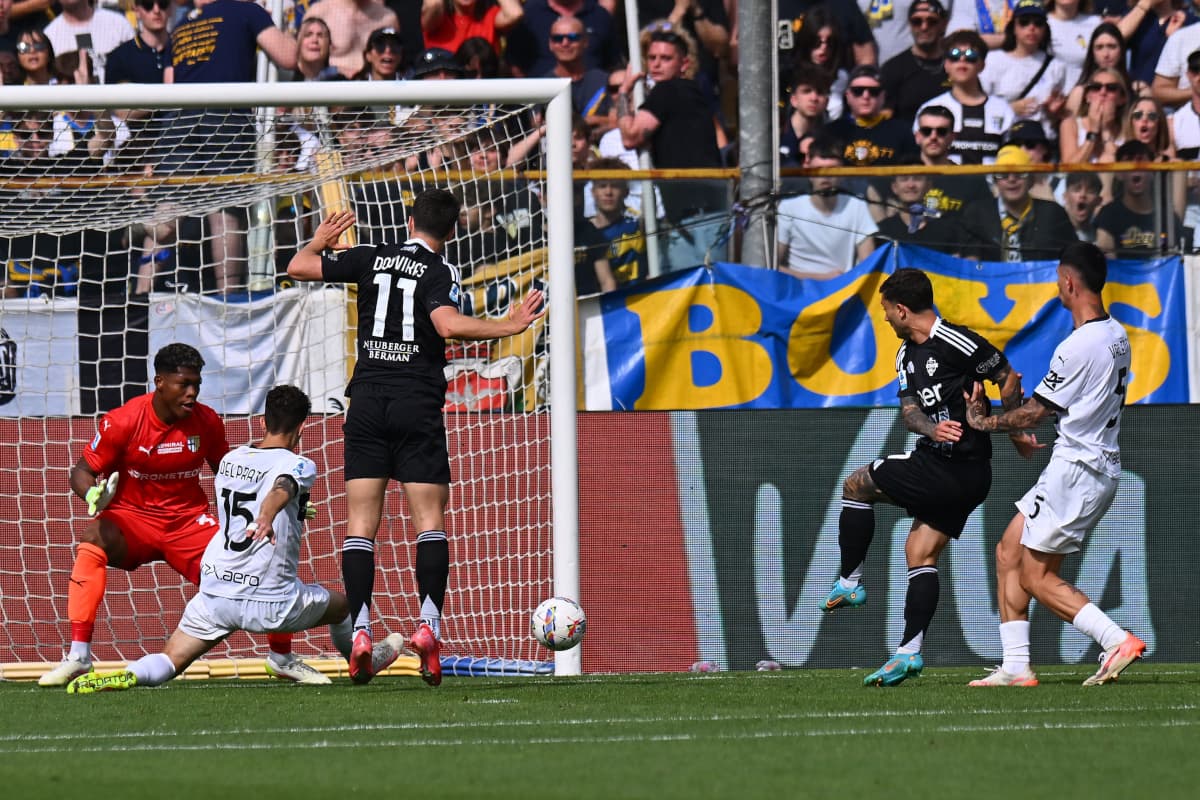
Como's Tactical Mastery in 1–0 Win Over Parma
The lakefront at Stadio Giuseppe Sinigaglia felt like a stage for a statement, and Como delivered one. Following this result, a 1–0 home win over Parma in Serie A’s Round 37, Cesc Fabregas’ side underlined why they sit 5th on 68 points, with a formidable overall goal difference of +33 (61 scored, 28 conceded). Parma, marooned in 13th on 42 points and an overall goal difference of -19 (27 for, 46 against), were reminded of the gulf between a Europa League chaser and a side still learning to live at this level.
I. The Big Picture – Structures and Seasonal DNA
On their travels this season, Parma have been cautious and often blunt: only 12 away goals in 19 matches, an away average of 0.6 goals for and 1.1 against. Como, by contrast, have built an assertive home identity. At home they have scored 35 goals in 19 games, an average of 1.8, while conceding just 15 (0.8 per home match). The clean-sheet count tells the same story: 10 home shutouts for Como against 8 away clean sheets for Parma.
Fabregas leaned into that identity with his trusted 4‑2‑3‑1, a structure that has been Como’s base in 33 league outings. J. Butez anchored the side in goal behind a back four of I. Van der Brempt, Jacobo Ramon, M. O. Kempf and A. Moreno. In front of them, the double pivot of L. Da Cunha and M. Perrone provided the balance, allowing the advanced trio of M. Caqueret, M. Baturina and A. Diao to orbit around lone striker T. Douvikas.
Carlos Cuesta answered with a 3‑5‑2, the formation Parma have used most often (18 times). Z. Suzuki was protected by a back three of A. Circati, M. Troilo and L. Valenti. The wide lanes belonged to E. Delprato and F. Carboni, with a central band of M. Keita, H. Nicolussi Caviglia and C. Ordonez trying to screen and spring transitions towards the front pair of M. Pellegrino and G. Strefezza.
The tactical chessboard was clear: Como’s structured possession and layered attacking lines against Parma’s deeper block and sporadic counters.
II. Tactical Voids – Absences and Discipline
Both squads came into this fixture carrying notable absences that reshaped options more than systems.
For Como, the attacking depth and creative rotation were trimmed by the injuries to J. Addai (Achilles tendon), N. Paz (knee) and A. Valle (injury). Paz’s absence was particularly significant. Across the season he has scored 12 goals and provided 6 assists, with 51 key passes and 86 shots; he is both a vertical runner and a playmaking hub. His two missed penalties this campaign also meant Como could not lean on him from the spot, even though the team overall has been perfect from 11 metres, scoring all 4 penalties in total.
Parma’s list was even more disruptive. A. Bernabe (muscle injury), B. Cremaschi (knee), M. Frigan (knee), J. Ondrejka (leg), G. Oristanio (knee) and the suspended S. Britschgi (red card) stripped Cuesta of several attacking and creative profiles. With a side that has already failed to score 16 times in total this season, losing further offensive options only deepened the reliance on M. Pellegrino and G. Strefezza.
Disciplinary trends also framed the risk profile. Como’s yellow-card distribution peaks late: 20.25% of their yellows arrive between 61–75 minutes and another 20.25% between 76–90. All of their red cards this season (3 in total) have come in that 76–90 window, making the closing phase a known danger zone. Parma’s yellows spike in the 46–60 and 76–90 ranges (both 21.88%), with red cards spread across 31–45 (40.00% of their reds), 61–75, 76–90 and 91–105. This is a team that can lose control in transition moments and late-game scrambles.
III. Key Matchups – Hunter vs Shield, Engine Room Battles
The headline duel was “Hunter vs Shield”: T. Douvikas against Parma’s away defensive record and, specifically, the Troilo-led back three.
Douvikas has been one of Serie A’s most efficient forwards this season: 13 goals and 1 assist, from 46 total shots with 28 on target. He draws 40 fouls and engages in 234 duels, winning 97. He is not just a finisher; he is the reference point that pins centre-backs and creates space for runners like Baturina and Diao.
Opposite him, M. Troilo is the embodiment of Parma’s last-ditch resistance. He has blocked 18 shots, underlining his willingness to step into the line of fire, and he is strong in duels, winning 85 of 146. Yet his disciplinary line is a double-edged sword: 7 yellows, 1 yellow-red and 1 straight red. In a match where Como are comfortable applying steady pressure at home, the risk of Troilo overstepping in the box or on the edge of it was always present.
In the “Engine Room”, Como’s M. Perrone and M. Caqueret squared off against Parma’s M. Keita and H. Nicolussi Caviglia. Perrone’s season numbers – 2111 passes at 91% accuracy, 56 tackles and 8 cards (all yellow) – tell of a metronome who also bites. Caqueret adds verticality: 5 assists, 24 key passes and an 87% pass completion rate. Together they form a pivot-plus-connector triangle with Baturina that allows Como to recycle the ball, change tempo and sustain attacks.
Parma’s central trio, by contrast, is more about containment than creation. With the team averaging only 0.7 goals in total per match, the midfield’s primary task has been to protect a defence that concedes 1.2 goals in total per game rather than to overload the final third.
On the flanks, Van der Brempt and Moreno were crucial in pinning back Delprato and Carboni. Every time Como’s full-backs advanced, Parma’s wing-backs were forced deeper, gradually transforming the 3‑5‑2 into a 5‑3‑2 and isolating Pellegrino and Strefezza from service.
IV. Statistical Prognosis and Tactical Verdict
Following this result, the numbers and the narrative align. Como’s overall scoring average of 1.6 goals per game against Parma’s overall concession rate of 1.2 suggested the hosts were more likely to find the decisive moment. At the other end, Parma’s meagre 0.7 goals in total per match ran into a Como defence that concedes just 0.8 overall and has kept 19 clean sheets in total.
The absence of Paz reduced Como’s creative ceiling, but the structural solidity of the 4‑2‑3‑1, the control exerted by Perrone and Caqueret, and the constant threat of Douvikas were enough to tilt the Expected Goals balance in their favour. Parma’s plan – compact, reactive, hoping for set-pieces or a Pellegrino break – was always walking a tightrope against a side this well-drilled at home.
In the end, the 1–0 scoreline felt like the distilled essence of both seasons: Como efficient, controlled and defensively assured; Parma organised but too limited in punch. It was not a spectacle of chaos, but a demonstration of how a clear structure, disciplined engine room and a reliable No. 9 can quietly suffocate an opponent over 90 minutes on the lake.