.svg&w=384&q=75 "GoalGist logo")
AC Milan Clinches Narrow 2–1 Victory Over Genoa in Serie A
Stadio Luigi Ferraris closed its doors on a narrow 2–1 win for AC Milan, but the story of this Serie A afternoon in Round 37 was written in the shapes and compromises of two very different seasons. Following this result, third‑placed Milan under Massimiliano Allegri tightened their grip on Champions League football, while Genoa, 14th with 41 points and a goal difference of -9 (41 scored, 50 conceded), were reminded again of the thin margins that have defined their campaign.
I. The Big Picture – Systems, Context, Scoreline
Genoa’s season has been one of grinding survival rather than spectacle. Overall they have taken 10 wins, 11 draws and 16 defeats from 37 matches, scoring 41 and conceding 50; that defensive record, 1.4 goals against on average in total, has often undone the modest attacking platform of 1.1 goals for per game. At home they have been inconsistent: 6 wins, 4 draws and 9 defeats from 19, with 22 goals for and 26 against.
Against a Milan side that has been one of Serie A’s most balanced outfits, the scale of the task was obvious. Overall, Milan’s 52 goals for and 33 against give them a goal difference of +19, underpinned by defensive parsimony away from home: on their travels they have conceded only 14 in 19 matches, an average of 0.7 per game, while scoring 28 (1.5 per game). That away resilience framed everything Allegri’s team attempted in Genoa.
The tactical duel began with formations. Daniele De Rossi rolled out a 4‑3‑2‑1, a departure from Genoa’s season-long preference for back‑three systems (they have used 3‑5‑2 in 18 league matches, 3‑4‑2‑1 in 9, and only once before had they started in 4‑3‑2‑1). Across from him, Allegri stayed loyal to his 3‑5‑2, the structure Milan have used in 33 league fixtures, betting that their rehearsed automatisms would outweigh Genoa’s surprise.
II. Tactical Voids – Absences and Discipline
Both coaches were forced into re‑designs by absences that cut straight into their usual patterns.
For Genoa, the missing list was long and structurally significant. M. Cornet and Junior Messias, both sidelined with muscle injuries, stripped De Rossi of wide and creative options who could have supported the lone forward. B. Norton‑Cuffy’s thigh injury and L. Ostigard’s knock weakened the depth and flexibility in the defensive line, particularly if De Rossi had wanted to revert to a back three mid‑game. J. Onana’s injury removed a physical, ball‑winning presence from midfield, leaving the responsibility for defensive balance squarely on M. Frendrup and Amorim.
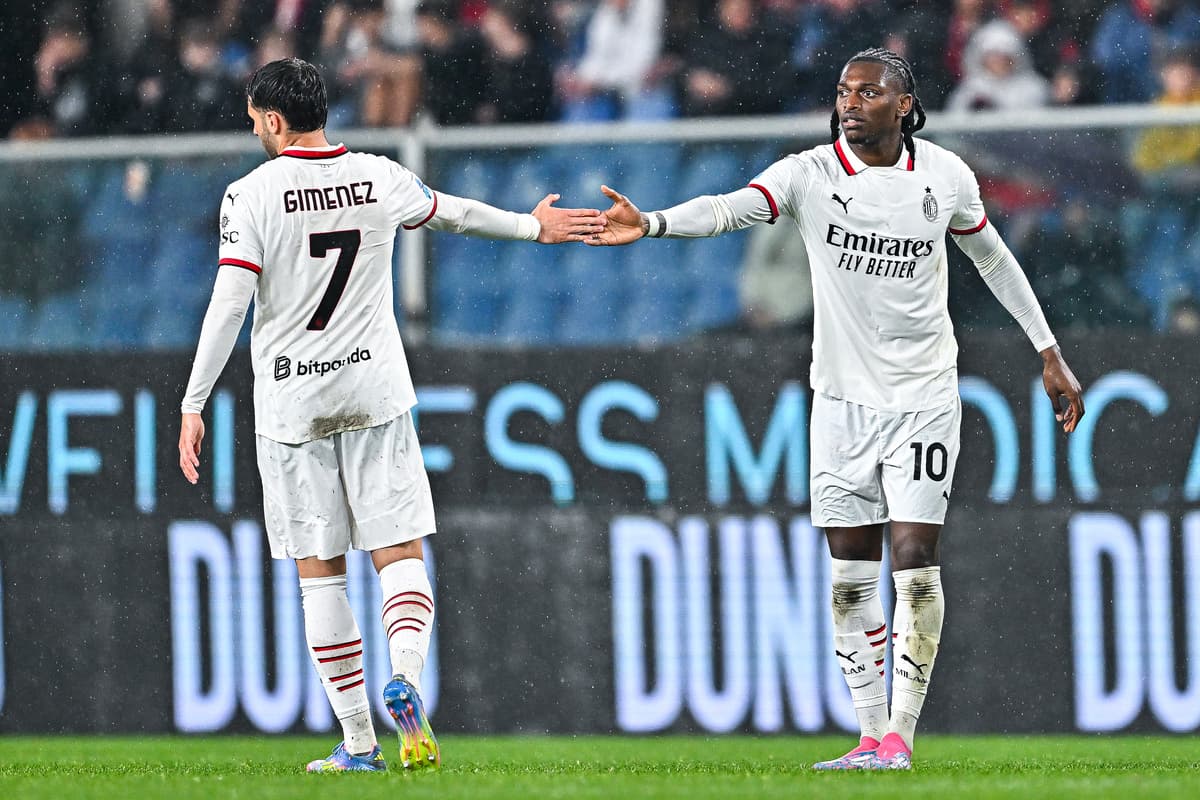
Milan’s voids were more concentrated but just as sharp. P. Estupiñán, Rafael Leão and A. Saelemaekers all missed out through yellow‑card suspensions. Leão’s absence, in particular, ripped away Milan’s most direct attacking outlet: he has 9 goals and 3 assists this season in Serie A, with 45 shots and 24 on target, and his ability to stretch the pitch vertically and horizontally usually pins back entire back lines. Without him, Allegri had to lean on S. Gimenez and C. Nkunku as a more central, combination‑oriented front two, and on the wing‑backs for width.
Disciplinary trends also hovered over the match narrative. Genoa have walked a fine line all season, with yellow cards peaking between 61‑75 minutes (25.40%), a period where fatigue and desperation often collide. Milan’s yellows, by contrast, surge late: 25.81% of their bookings arrive between 76‑90 minutes, a sign of a side willing to foul to protect leads and slow games down. In a contest that ended 2–1, those tendencies mattered in the closing stages, even if no red cards were produced on the day.
III. Key Matchups – Hunter vs Shield, Engine Room
Without Leão, the “Hunter vs Shield” storyline shifted from a single star to a collective test: Milan’s attack, averaging 1.5 goals away, against a Genoa defence that concedes 1.4 per game overall and 1.4 at home (26 in 19). Allegri’s front pairing of Gimenez and Nkunku operated less as pure finishers and more as mobile reference points, constantly testing the channels between A. Marcandalli and S. Otoa, and dragging J. Vasquez out of the line.
Genoa’s answer lay in compactness and in their layered midfield. Frendrup anchored the central trio, with Amorim and R. Malinovskyi stepping out to press A. Rabiot and A. Jashari. Malinovskyi’s season numbers tell the story of a midfielder who lives on the edge: 6 goals, 3 assists, but also 10 yellow cards, one of the highest tallies in Serie A. His aggression is both Genoa’s spark and their risk; against Milan’s technically secure midfield, every late press threatened to become a set‑piece opportunity for the visitors.
The “Engine Room” duel was particularly rich. Rabiot, flanked by Y. Fofana and Jashari, sought to control tempo and second balls, while Genoa’s double band of creators – T. Baldanzi and Vitinha behind L. Colombo – tried to exploit any looseness in Milan’s half‑spaces. Baldanzi drifted between the lines, looking to receive between Tomori and Gabbia, while Vitinha dropped off the front line to help build, turning the 4‑3‑2‑1 into a situational 4‑4‑1‑1 out of possession.
On the flanks, D. Bartesaghi and Z. Athekame were crucial for Milan. With no Leão, their width became non‑negotiable. They pinned back M. E. Ellertsson and Vasquez, limiting Genoa’s ability to step out and support counters. For Genoa, the absence of Aarón Martín from the starting XI removed their best crossing and progressive outlet from deep: across the season he has delivered 5 assists, created 60 key passes and blocked 11 shots, a rare blend of creativity and defensive work. His presence on the bench meant De Rossi’s starting back four had less natural thrust on the left.
IV. Statistical Prognosis – What the Numbers Say About the 2–1
Following this result, the numbers still frame Milan as the more stable, repeatable model. Overall they score 1.4 goals per game and concede 0.9, with 15 clean sheets and only 7 matches where they have failed to score. Their penalty record – 7 out of 7, with no misses – underlines a ruthlessness in key moments.
Genoa, by contrast, continue to live in narrower bands. They have failed to score in 14 of 37 games and keep clean sheets in only 9. Their home goals for average of 1.2 is almost completely offset by the 1.4 they concede at Stadio Luigi Ferraris. Even their tactical profile tells of a side searching for a stable identity, shifting between back threes and fours.
The 2–1 scoreline fits the underlying patterns: Milan’s superior away attack just edging past Genoa’s porous home defence, while De Rossi’s side still musters enough structure to stay competitive without quite having the weapons to overwhelm a top‑three opponent. In the end, Allegri’s well‑drilled 3‑5‑2, even shorn of Leão and Estupiñán, found the familiar balance between control and incision, while Genoa’s experimental 4‑3‑2‑1 produced moments of promise but not enough to tilt a season‑long statistical tide.