.svg&w=384&q=75 "GoalGist logo")
Nottingham Forest vs Bournemouth: Tactical Draw at City Ground
Nottingham Forest and Bournemouth produced a tactically balanced 1-1 at City Ground, with contrasting game plans cancelling each other out. Forest, in a 4-4-2 under Vitor Pereira, leaned into directness and wing-driven attacks, while Andoni Iraola’s Bournemouth, set up in a 4-2-3-1, controlled more of the ball and gradually tilted the territorial battle their way.
Forest’s structure without the ball was clear: the front two, Igor Jesus and C. Wood, acted as the first pressing line, screening Bournemouth’s double pivot of A. Toth and T. Adams. The wide midfielders, O. Hutchinson on the right and M. Gibbs-White nominally from the left but with license to roam inside, narrowed in to protect central lanes, leaving full-backs N. Williams and Cunha responsible for aggressive jumps onto Bournemouth’s wide players. This compact 4-4-2 block conceded possession (45%) but aimed to spring quickly once the ball was won.
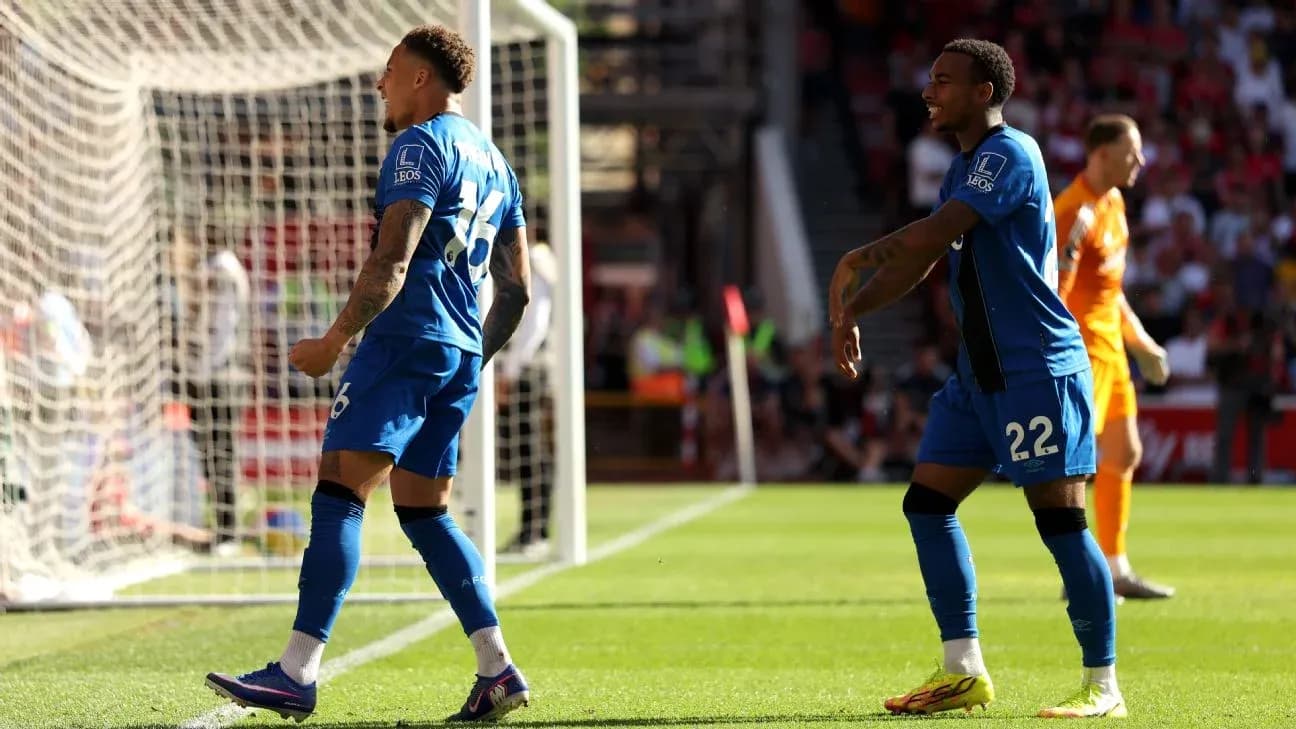
Their attacking pattern reflected that plan. Forest generated 15 total shots with 10 inside the box, a strong indicator of territorial penetration despite having less of the ball. The 1.87 xG underlines how their chances were generally of higher quality than Bournemouth’s. Crosses and cut-backs from wide areas, especially involving Hutchinson and overlapping full-backs, were key to forcing those 5 shots on target. The opening goal fits this logic: M. Gibbs-White timed his movement to exploit the half-space, finishing a move created by Hutchinson’s supply from the flank.
In possession, Forest were more vertical than patient. Their 396 total passes, at 307 accurate (78%), show a moderate passing volume with a willingness to play riskier balls into forwards early rather than circulate endlessly at the back. I. Sangare and E. Anderson provided the central platform, often looking to hit early passes into the channels for the front two, accepting a lower pass completion in exchange for quicker territorial gains. The 6 corner kicks also indicate that Forest’s direct, box-focused attacks regularly forced Bournemouth into last-ditch defending.
Defensively, Forest’s back four had a physically oriented brief. With Bournemouth fielding a lone striker in Evanilson and three mobile attacking midfielders behind him, N. Milenkovic and Morato were tasked with dominant aerial and duelling work, while Williams and Cunha had to constantly judge when to step out versus when to tuck in. The 11 fouls and a yellow card for Taiwo Awoniyi from the bench speak to Forest’s readiness to break Bournemouth’s rhythm with physical interventions when their block was stretched.
Bournemouth’s 4-2-3-1 was built around control and width. With 55% possession and 483 passes (405 accurate, 84%), Iraola’s side clearly prioritised ball retention and gradual progression. T. Adams and A. Toth operated as a double pivot, recycling play and drawing Forest’s first line out of shape before switching the ball to full-backs A. Truffert and A. Smith. From there, the attacking midfield trio of M. Tavernier, E. J. Kroupi and Rayan (with rotations as substitutions came) sought to overload the half-spaces and isolate Forest’s full-backs.
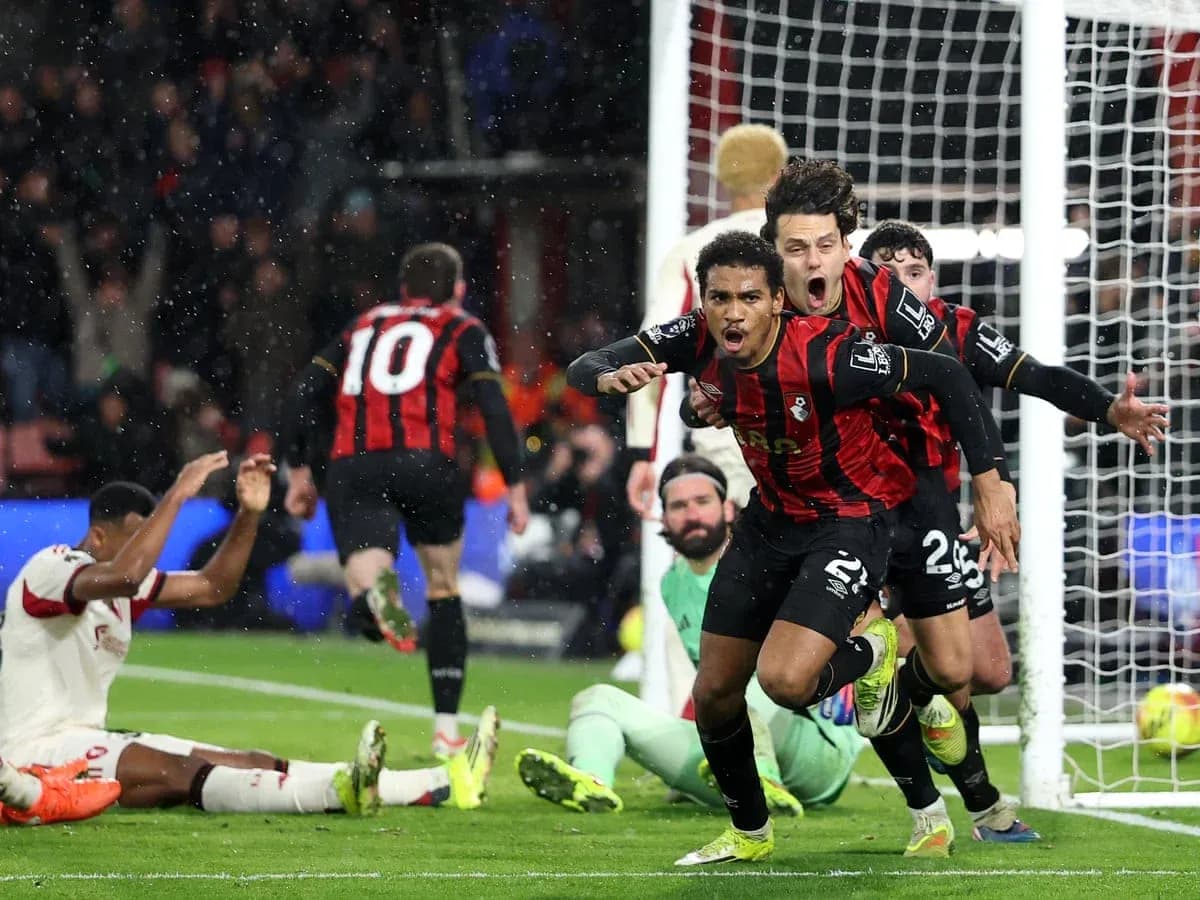
Despite their higher volume of shots (17 total, 11 from outside the box), Bournemouth’s xG of 1 shows that many of their efforts were speculative. Forest successfully forced them into shooting from range, reflected in those 11 shots from outside the area and 7 blocked shots. When Bournemouth did break through, it was typically via combinations between full-backs and wide midfielders, as seen in the equaliser: Truffert advancing from deep to provide the assist for Tavernier, who arrived from the left to finish.
The defensive approach from Bournemouth was more about counter-pressing and compactness in midfield than deep defending. With only 7 fouls and a single yellow card for James Hill, they maintained a relatively disciplined line, trusting their structure rather than constant physical duels. The back four, anchored by M. Senesi and Hill, stepped high to compress space, which helped limit Forest’s ability to turn and run at goal even when the home side managed to play through the first press.
In goal, M. Sels (Nottingham Forest) and D. Petrovic (Bournemouth) had similar statistical workloads, each recording 3 saves. For Sels, those interventions were often about dealing with Bournemouth’s mid-range efforts and crosses, with the negative goals prevented figure (-0.5 from Forest’s statistics block) suggesting that the one goal conceded aligned slightly worse than expected versus the shot quality faced. For Petrovic, the same goals prevented value from Bournemouth’s block indicates that Forest’s best chances marginally outstripped his shot-stopping on the day, even though he did enough to preserve the draw.
The substitutions subtly shifted the tactical picture. Forest’s changes — introducing T. Awoniyi for C. Wood, L. Netz for Cunha, R. Yates for E. Anderson, N. Dominguez for I. Sangare, and J. McAtee for Hutchinson — pointed towards fresh legs in midfield and renewed running power up front. Awoniyi’s presence gave Forest a more vertical outlet against a tiring Bournemouth back line, while Netz offered a more attack-minded option from full-back. Yates and Dominguez added energy and ball-winning in central areas, helping Forest stabilise after Bournemouth’s equaliser and the away side’s spell of control.
Bournemouth’s bench usage leaned into attacking variety. E. Unal for Evanilson refreshed the focal point up front, J. Kluivert for E. J. Kroupi and A. Adli for Rayan reconfigured the three behind the striker with more direct dribbling and off-ball runs, and L. Cook for A. Smith late on allowed a slight structural tweak, with Cook’s control in midfield helping manage transitions. These changes sustained Bournemouth’s territorial edge but did not significantly increase the quality of their chances, as Forest’s compactness held.
Statistically, the draw feels like a meeting of two coherent but contrasting game plans. Forest created the better chances (higher xG, more shots inside the box) through direct, wing-led football and a compact 4-4-2, but lacked the extra precision to turn that into a second goal. Bournemouth, with more possession, more passes and more total shots, imposed their rhythm for long spells yet were largely kept to lower-value efforts. The even save counts and the single goal each underline a match where structure and discipline on both sides ultimately balanced out, leaving City Ground with a fair 1-1 on the final day.