.svg&w=384&q=75 "GoalGist logo")
USA's Tactical Mastery in 2-0 Victory Over Bosnia & Herzegovina
USA’s 2-0 win over Bosnia & Herzegovina at Levi's Stadium in this World Cup Round of 32 tie was a controlled, structurally coherent performance built on a 4-3-3 against a 5-3-2 low block. The USA combined a clear right-sided attacking bias with compact central protection, while Bosnia & Herzegovina’s back five and double pivot struggled to turn marginal territorial control (52% possession) into high-quality chances, reflected in their low xG of 0.25. Even after going down to ten men, the USA managed the game intelligently, protected central spaces, and struck decisively in transition to seal progression.
I. Executive Summary
The USA, in a 4-3-3 under Mauricio Pochettino, used a front three of Sergiño Dest, Folarin Balogun, and Christian Pulišić supported by a midfield triangle of Weston McKennie, Tyler Adams, and Malik Tillman. Bosnia & Herzegovina, coached by Sergej Barbarez, lined up in a 5-3-2, with wing-backs Amar Dedić and Sead Kolašinac tasked with stretching the field and Edin Džeko–Ermedin Demirović leading the line. The game’s tactical story was USA’s superior chance quality (xG 0.92 to 0.25) and penalty-box presence overcoming a slight deficit in possession, and Bosnia & Herzegovina’s inability to convert structural width into incisive final-third play.
II. Scoring Sequence & Disciplinary Log
The USA’s plan to target the spaces between Bosnia & Herzegovina’s wide center-backs and wing-backs paid off at the key moments. On 45', Folarin Balogun (USA) broke the deadlock with a Normal Goal, capitalizing on USA’s late-half pressure. The move reflected the 4-3-3’s ability to pin the back line with three forwards and arrive from midfield, turning a relatively balanced shot count (USA 8 total shots, Bosnia & Herzegovina 10) into superior finishing.
The second half was shaped by discipline and game management. At 64', F. Balogun (USA) received a Red Card — Serious foul. Reduced to ten men, USA dropped into a more compact, vertically shorter 4-3-2/4-4-1 shape without their central striker, prioritizing control of central lanes and conceding some harmless possession outside the box.
Bosnia & Herzegovina’s response was to refresh their midfield and front line early in the half: at 51', Armin Gigović (OUT) made way as Esmir Bajraktarević (IN) came on; Ivan Šunjić (OUT) was replaced by Benjamin Tahirović (IN); and Edin Džeko (OUT) was replaced by Ermin Mahmić (IN). These triple changes aimed to inject energy and more vertical running from midfield and attack, but they did not materially change the xG profile.
At 75', Sead Kolašinac (OUT) was replaced by Haris Tabaković (IN), and Nikola Katić (OUT) made way for Amar Memić (IN), effectively morphing Bosnia & Herzegovina towards a more aggressive back four / hybrid shape, adding another forward to attack USA’s reduced numbers.
Discipline tilted slightly towards Bosnia & Herzegovina in terms of yellows. At 80', the Bosnia & Herzegovina bench was booked: S. Barbarez (Bosnia & Herzegovina) received a Yellow Card (no additionalInfo). In the same minute, Stjepan Radeljić (Bosnia & Herzegovina) was shown a Yellow Card — Holding. These incidents reflected mounting frustration as USA, even with ten men, managed the game tempo.
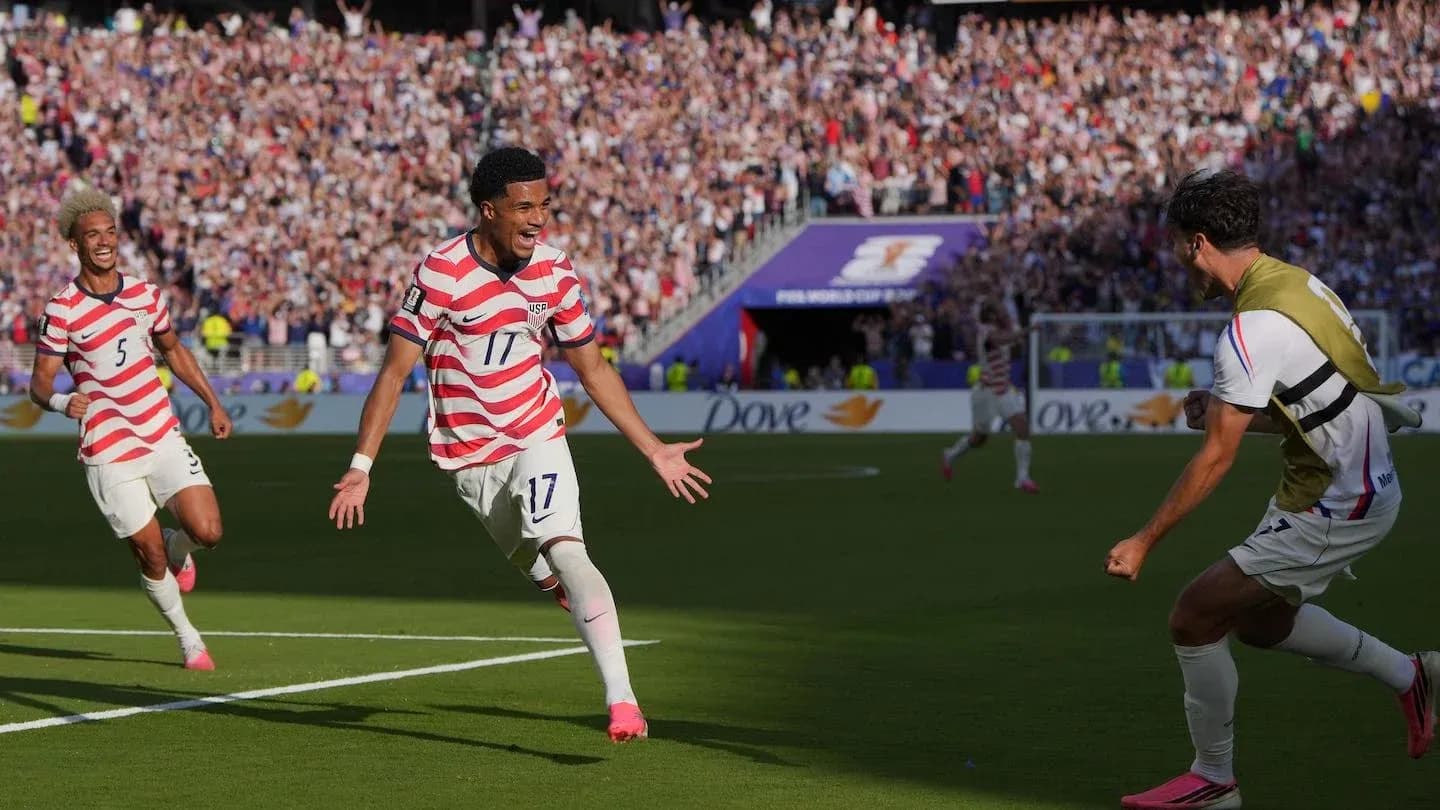
The decisive tactical blow came at 82'. Malik Tillman (USA) scored a Normal Goal to make it 2-0, a classic example of a ten-man side exploiting transition: with Bosnia & Herzegovina pushing higher and committing more numbers forward, USA found space to attack the back line and finish clinically.
Late substitutions from the USA focused on energy and control. At 87', Sergiño Dest (OUT) was replaced by Sebastian Berhalter (IN); at 88', Christian Pulišić (OUT) made way for Ricardo Pepi (IN); and at 90+5', Weston McKennie (OUT) was replaced by Giovanni Reyna (IN). All three moves signaled a shift from aggressive wing play to ball retention and defensive solidity in midfield and attack.
Card totals, locked from the events:
- USA: 1 red card (F. Balogun — Serious foul)
- Bosnia & Herzegovina: 2 yellow cards (S. Barbarez; S. Radeljić — Holding)
- Total cards: 3.
III. Tactical Breakdown & Personnel
USA’s 4-3-3 structure was the game’s dominant tactical framework. The back four of Alexander Freeman, Chris Richards, Tim Ream, and Antonee Robinson stayed relatively narrow in possession, allowing the full-backs to support but not overcommit, which helped restrict Bosnia & Herzegovina to 5 Shots inside the box from their 10 Total Shots. Tyler Adams anchored the midfield, screening passes into Džeko and Demirović in the first half, while McKennie and Tillman provided staggered heights between the lines.
In the final third, the USA’s front three stretched Bosnia & Herzegovina’s back five horizontally. Dest and Pulišić held wide positions, forcing wing-backs Dedić and Kolašinac deep and creating 1v1s against the outer center-backs. Balogun’s central positioning pinned Tarik Muharemović and Radeljić, opening lanes for late midfield arrivals. This structure underpinned both goals: pressure in the half-spaces, occupation of the box (6 Shots inside the box from 8 Total Shots), and an emphasis on quality over volume.
Out of possession, the USA pressed selectively, focusing on Bosnia & Herzegovina’s first pass into midfield. With only 7 Fouls, they maintained aggression without excessive risk, and their line of engagement often sat just beyond the halfway line, inviting Bosnia & Herzegovina into central traps where Adams and McKennie could contest second balls.
Bosnia & Herzegovina’s 5-3-2, by contrast, was more conservative. The back five plus a midfield three of Gigović, Šunjić, and Kerim Alajbegović gave them central numbers but limited advanced support for the front two. Their 52% Ball Possession and 446 Total passes (364 accurate, 82%) reflected controlled circulation, but with an xG of only 0.25, most of their play remained in front of USA’s block. The three Blocked Shots and 3 Shots on Goal indicated that, when they did reach shooting positions, USA’s defenders and Matthew Freese’s protection of his area were well-structured, even though individual goalkeeper stats are not explicitly listed here.
Defensively, Bosnia & Herzegovina’s 13 Fouls and 1 recorded Yellow Card with a specific reason (Radeljić — Holding) showed a willingness to break up USA transitions, particularly once the Americans went down to ten men. However, the lack of Goalkeeper Saves (0) for Nikola Vasilj underlined how USA’s finishing and shot selection were efficient: when they worked the ball into good positions, they tended to find the corners or finish without forcing spectacular stops.
After the red card, USA’s shift was pragmatic. Dest’s withdrawal for Berhalter allowed an extra midfielder to sit alongside Adams and Tillman/Reyna, forming a compact triangle that narrowed Bosnia & Herzegovina’s passing lanes. Pepi’s introduction for Pulišić gave USA a fresh outlet to chase long balls and relieve pressure. The result was a low-block, transition-focused approach that still produced the second goal and limited Bosnia & Herzegovina to sterile possession.
IV. The Statistical Verdict
The numbers corroborate the tactical story. USA, with 48% Ball Possession, generated 8 Total Shots, 2 Shots on Goal, and 6 Shots inside the box, converting twice from relatively modest xG of 0.92. Bosnia & Herzegovina, despite 52% Ball Possession and a slight edge in shot volume (10 Total Shots, 3 Shots on Goal, 5 Shots inside the box), produced far poorer chance quality (xG 0.25), a direct consequence of USA’s compact block and central protection.
Passing figures were nearly symmetrical: USA completed 346 of 415 passes (83%), Bosnia & Herzegovina 364 of 446 (82%). This parity in passing accuracy but disparity in xG highlights the USA’s superior verticality and structure in the final third. Bosnia & Herzegovina’s 3 Blocked Shots versus USA’s 2 suggest the USA were more proactive in defending the box, while Bosnia & Herzegovina’s 13 Fouls to USA’s 7 reflected their increasing desperation as the match slipped away.
With a final score of USA 2-0 Bosnia & Herzegovina and card totals fixed at USA 1 red, Bosnia & Herzegovina 2 yellows (Total 3), the statistical verdict is clear: the USA executed a more efficient, better-balanced game plan, turning structural clarity and disciplined defending into knockout-stage progression.