.svg&w=384&q=75 "GoalGist logo")
Thomas Tuchel's Gamble: England's World Cup Semi-Final Collapse
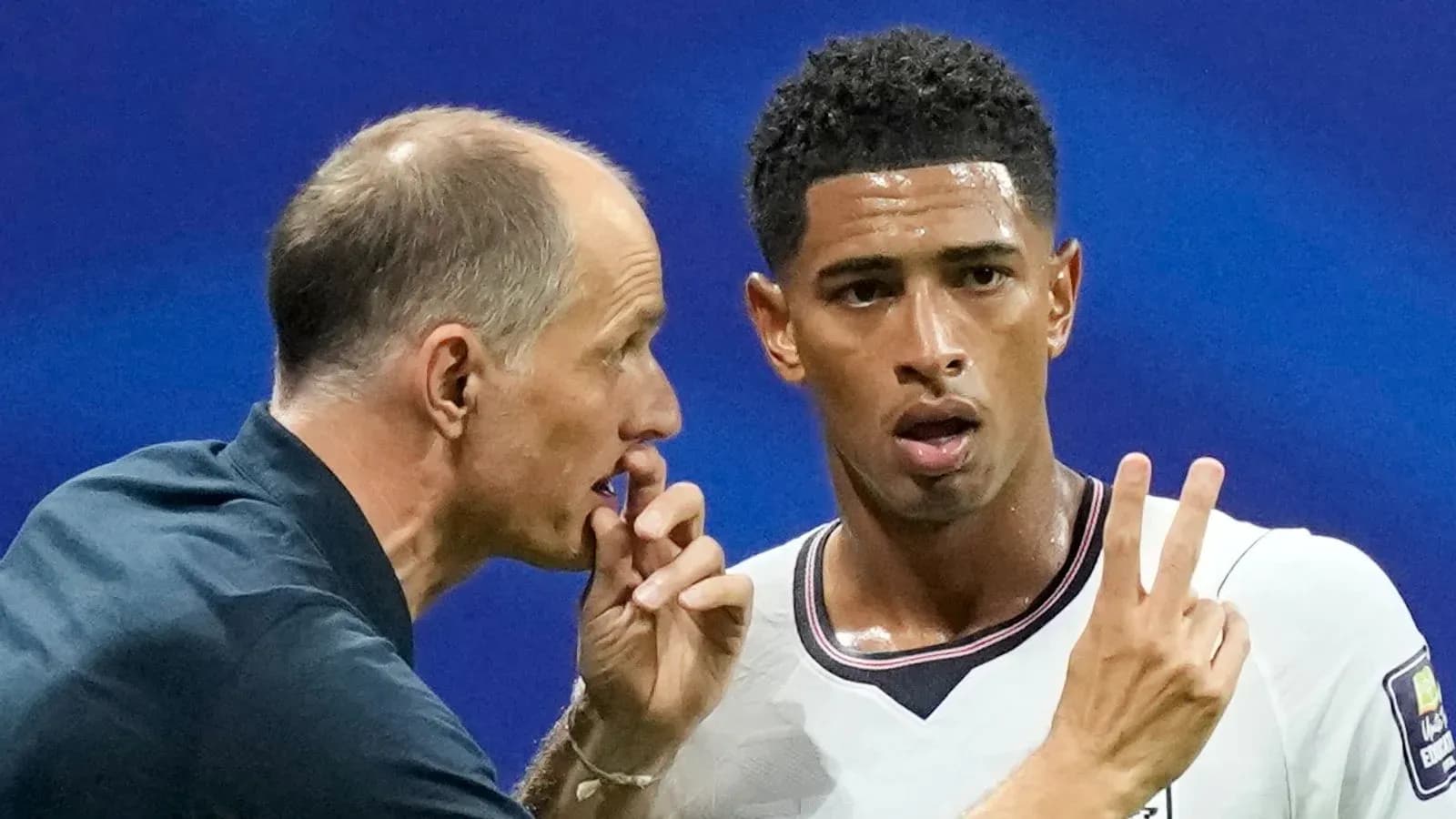
Thomas Tuchel came to this World Cup as England’s gambler-in-chief. He picked a squad few others would have dared to assemble, rode out a backs-to-the-wall win over Mexico, and started Morgan Rogers in a semi-final on what he called “a feeling from the coach”.
For a while, it looked like another bet was about to come in.
The first draft of a famous night was already being written when Anthony Gordon arrived at the back post to turn in Rogers’ cross. Tuchel’s latest hunch, vindicated in the biggest game of his England tenure. England led Argentina. The reigning world champions were rocking. The country could see the path to the final.
Seven minutes later, it was gone.
The turning point
The match will be remembered for Argentina’s late surge, for Lionel Messi’s cold-eyed orchestration of the comeback, for another England lead squandered on the biggest stage. But the hinge of the night came in the 71st minute.
Gordon’s number went up. Ezri Konsa came on. England dropped into a back five.
It is easy to savage that decision with the benefit of hindsight. It felt wrong in real time. England had scored first yet again in a knockout tie, just as they have done in seven of the 13 knockout games they have lost over the last 30 years. No other side this century has led a World Cup semi-final and failed to reach the final. England have now managed it twice.
The pattern is horribly familiar. Protect the lead. Sink deeper. Invite pressure. Pay the price.
In the 15 minutes after Gordon’s opener, England had already started to shrink. They saw just 17 per cent of the ball, mustered nine touches in Argentina’s half and, despite their lead, looked like the side hanging on for penalties rather than a place in the final. The freeze had begun, but Argentina still had not truly worked Jordan Pickford beyond Nico Gonzalez’s header.
That was the moment that demanded defiance. Tuchel chose caution.
A change that broke England
Konsa’s arrival on 72 minutes did more than alter the shape. It ripped out England’s most direct outlet. Gordon, who had stretched Argentina with his running and offered an escape route every time England cleared their lines, walked off. England’s back five shuffled in.
On paper, the plan was obvious. Djed Spence and Reece James as aggressive wing-backs in a 3-4-3 Tuchel has trusted throughout his career. Space to break into. Angles to pass out. A compact block against Messi.
On the grass, it looked nothing like that.
From the switch to the final whistle, England’s possession collapsed to 7.2 per cent. Eight touches in the opposition half. Not a single cross delivered. Spence and James combined for one touch in Argentina’s half in the rest of the game. One.
Rogers, pushed in behind Harry Kane alongside Jude Bellingham, virtually disappeared. Between the tactical reshuffle and Lautaro Martinez’s winner, he managed one touch of the ball. England were playing without a release valve, without a threat, without a way to breathe.
Argentina, given the ball and the initiative, did what Argentina do when Messi smells weakness. Wave after wave came. England could not keep it, could not win it back high, could not get out. Konsa did not regain possession once, but lost it five times. The extra defender did not bring control. It brought panic.
Tuchel has built a reputation on his ability to read a game from the touchline, to admit when a plan is failing and tear it up mid-match. At the Azteca against Mexico, he had done exactly that, shuffling pieces, taking risks, and finding a way to survive with 10 men.
Here, with the World Cup final dangling in front of him, he froze.
Trapped by his own caution
As the minutes bled away and Argentina’s pressure mounted, the changes kept coming from the England bench, but not the ones that might have changed the tone. Dan Burn. Nico O’Reilly. Fresh legs, yes, but not the attacking jolt a team drowning in its own half so clearly needed.
The contrast with Mexico was stark. That night, Tuchel had read the chaos and exploited it, knowing Mexico would sling cross after cross into the box. England could live with that. They could defend the air, soak up the pressure, and cling on.
Argentina were never going to be Mexico. A side built around the ball, with Messi prowling between the lines, was never going to simply toss it into the mixer. They probed. They passed. They waited. When the gaps opened, Messi slid through them, turning provider for both goals and ripping up England’s script.
Tuchel was hired to move England beyond the ceiling that seemed to cap the Gareth Southgate era. Southgate’s England beat the teams they were expected to beat and stumbled when the odds turned against them. Tuchel, the elite club winner, was supposed to be the man for nights exactly like this.
On this evidence, that story has not changed.
Yes, there were flashes in this tournament that suggested a different future. The rousing half-time address against Croatia. The bold attacking switches. The perfectly timed defensive tweak in the Azteca. Moments that hinted Tuchel’s in-game management might be the missing piece Southgate never quite found.
He has already committed to stay, to see out the two-year extension that runs to Euro 2028. There will be more big nights, more knockout ties, more chances to prove that this was a brutal lesson rather than a defining flaw.
But the image that will linger from this World Cup is not of Tuchel the gambler, rolling the dice and seizing the moment. It is of Tuchel retreating into the very defence-first football he had promised to leave behind, watching his team shrink into their own penalty area as Messi took control.
One substitution. One step back. One World Cup final gone.
And for the next two years, England will have to live with the knowledge that, when the moment came to stand tall, they chose to sit deep instead.