.svg&w=384&q=75 "GoalGist logo")
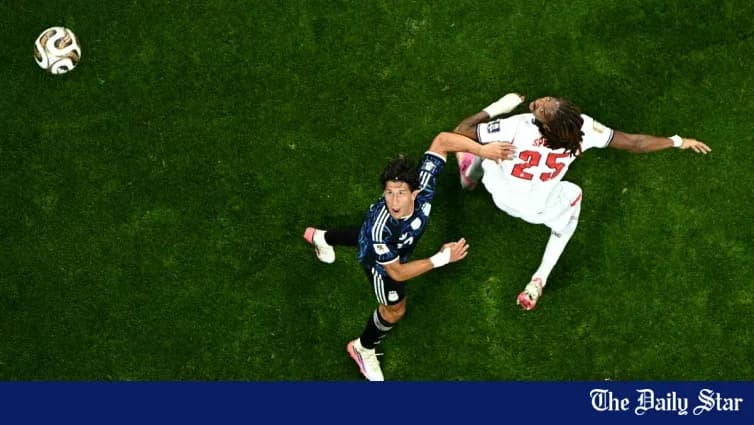
Argentina's Epic Comeback Against England: A World Cup Semifinal
They might need to check the foundations of Mercedes-Benz Stadium.
When Lautaro Martínez’s 92nd‑minute header ripped past Jordan Pickford, the roar from the Albiceleste end didn’t just rise, it detonated. Concrete shook. Flags blurred. A World Cup semifinal that had felt like a slow suffocation for Argentina exploded into a 2-1 comeback over England and another ticket to the biggest stage of all.
Messi, 39 and still rewriting logic, stood at the heart of it. Again.
He dragged Argentina back from the brink, first by slipping Enzo Fernández into space for that thunderous 85th‑minute equaliser, then by threading the decisive ball that Lautaro buried at the death. But for all the inevitable Messi headlines, this was not a night defined only by his artistry.
This was a war.
Scaloni tears up the script
For weeks, Argentina had been accused of drifting through games. Second gear. Heavy legs. Waiting for late magic rather than imposing themselves. Lionel Scaloni heard every word. In Atlanta, he ripped up the cautious blueprint and unleashed chaos.
Argentina pressed like a team insulted by the idea of patience. Enzo, Alexis Mac Allister, Leandro Paredes, Nicolás Tagliafico – they all hurled themselves into challenges, into passing lanes, into every scrap of space England tried to claim. The pitch became a battlefield, not a chessboard.
And then there was the name that jolted everyone before kick-off.
Simeone.
A ghost from 1998, a statement in 2026
Seeing “Simeone” on the team sheet against England will always trigger a flashback. Saint-Étienne, 1998. Diego Simeone on the turf, David Beckham sent off, a rivalry deepened and poisoned in equal measure.
This time, the surname belonged to Giuliano, Diego’s 23-year-old son, and his inclusion felt like a psychological jab before the ball even rolled. Scaloni didn’t just spring a tactical surprise; he poked at one of England’s most painful World Cup memories.
Giuliano Simeone played as if the entire history of that name depended on his every step.
He hunted. He harried. He sprinted as if the grass was on fire beneath him. Operating off the right with Nahuel Molina overlapping and his Atlético Madrid teammate Julián Álvarez leading the line, Simeone stretched England’s left flank to breaking point. He didn’t just press; he suffocated.
Three years ago, a horrific leg fracture threatened to derail his career. In Atlanta, he looked like a man who had circled this night on a calendar in his head and refused to let it pass without leaving a mark.
His running became Messi’s oxygen. Every sprint, every duel, every recovery opened pockets of space for the captain to receive, to turn, to dribble. Simeone’s work didn’t show up on a highlight reel, but it tilted the pitch.
By the time Scaloni finally dragged him off in the 73rd minute, Simeone was spent. Four ball recoveries – joint-second highest among Argentines on the night – told only part of the story. He had emptied the tank for the cause.
England strike, Argentina reload
For all Argentina’s ferocity, England drew first blood.
Anthony Gordon struck in the 55th minute, and suddenly the pattern flipped. Thomas Tuchel’s side dropped deep, lines compressed, and the familiar image appeared: England guarding a narrow lead, Argentina forced to chase.
Tuchel parked the bus. Scaloni reached for a different key.
With Simeone’s initial storm having blown itself out, Scaloni turned to a player who knows everything about football as a street fight: Rodrigo De Paul.
The substitution carried its own poetry. De Paul, once Diego Simeone’s relentless lieutenant at Atlético, the midfielder who built his reputation on exactly this kind of warfare, stepped on to replace the younger Simeone who had taken his starting spot. The generational baton passed in real time, under the glare of a World Cup semifinal.
De Paul immediately mirrored the intensity. Four ball recoveries in a frantic cameo, one curling effort that nearly turned into an assist, and a constant, snarling presence between England’s lines. He didn’t just join the fight; he escalated it.
The pressure finally told.
Enzo Fernández, who had been driving Argentina forward all night, unleashed a rocket in the 85th minute. The stadium froze for a fraction of a second as the ball flew, then erupted as it crashed in. 1-1. Argentina, somehow, were alive again.
From there, the match became a blur of tackles, counter-attacks, and raw emotion. England staggered. Argentina smelled blood.
Messi, as he has done for nearly two decades, took control of the chaos. One more decisive moment, one more perfectly measured pass, and Lautaro Martínez rose in the 92nd minute to complete the resurrection. His header, firm and ruthless, sent Pickford the wrong way and an entire nation into delirium.
More than a semifinal
By the final whistle, the noise in Atlanta felt bigger than a single game. Argentina had come back from the dead again, but this time not by drifting and praying for a late spark. They refused to lift their foot off England’s throat for even a heartbeat.
This rivalry has never needed much fuel. Argentina and England carry a history that stretches far beyond football – from the Falklands War in 1982 (Las Malvinas) to every politically charged meeting since. Every tackle in this fixture carries a shadow. Every goal carries a memory.
Messi will, rightly, dominate the front pages. Another final. Another decisive performance at 39. Another chapter in a career that should have run out of superlatives long ago.
But deep inside this story, Giuliano Simeone carved out his own place.
He didn’t score. He didn’t assist. He left the field before the comeback was complete. Yet his relentless, uncompromising shift – those sprints, those recoveries, that refusal to yield – set the tone for everything that followed.
On a night soaked in history and hostility, the son of Diego Simeone ran himself straight into Argentine folklore.

