.svg&w=384&q=75 "GoalGist logo")
England vs Argentina: Outthinking Messi in the World Cup Semi-Final
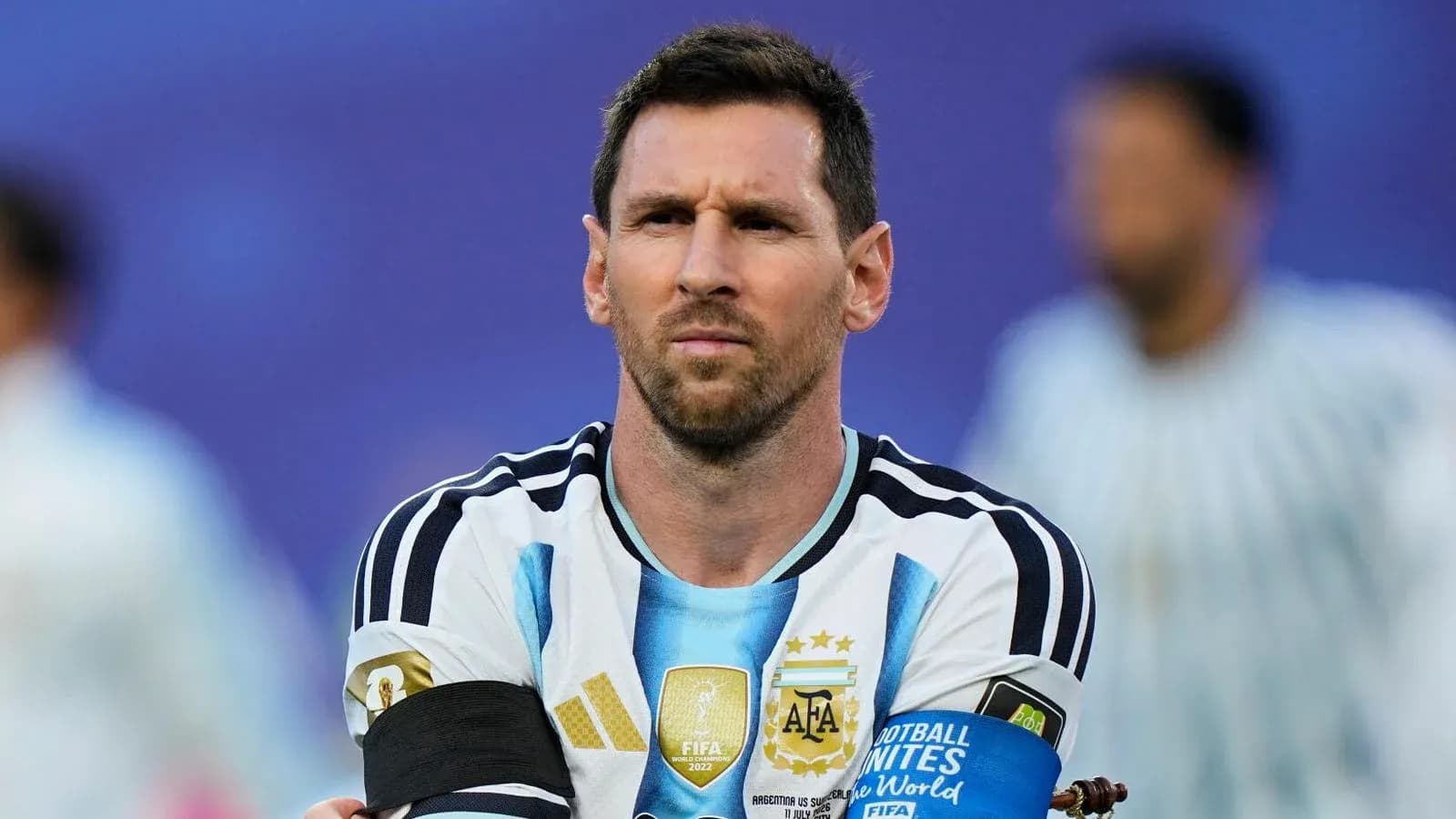
Jamie Carragher has seen enough of Lionel Messi to know one thing: you don’t stop him, you survive him. But as England prepare for a World Cup semi-final against Argentina in Atlanta, he sees a different angle – not just how to contain Messi, but how to hurt him.
Messi, 39 and still dictating tournaments, has dragged Argentina to the brink again. Eight goals, two assists, and the same hypnotic command of big moments. He is chasing a second straight World Cup final, and Thomas Tuchel’s England stand in his way, still chasing their first final in 60 years.
Carragher’s message is blunt. Respect Messi, yes. Fear him, no.
“There has to be a plan,” he says. Not a panicked man-marking job, not a defender glued to his shirt for 90 minutes, but a clear idea. England’s players, he insists, will demand that structure when they walk into the dressing room in Atlanta. You don’t bluff your way through a semi-final against “arguably the greatest player of all time.”
But Carragher’s eye is drawn to something else. The other side of Messi.
He walks.
When Argentina lose the ball, Messi doesn’t sprint back into shape or snap into tackles. He drifts, watches, waits. It’s always been part of his genius with the ball; Carragher believes it can be part of England’s opportunity without it.
“He walks about when the opposition have got the ball,” Carragher points out. That, in his view, should change the way England think about their left flank. This is not a night for the left-back to be chained to Messi, terrified of leaving him alone. It’s a night to ask questions of Argentina’s structure.
“They can exploit the fact that Argentina only defend with nine outfield players,” he says. If Messi isn’t tracking, that’s a channel to attack, not a trap to avoid.
Carragher expects a game that breathes, not a siege. He looks back to England’s opening match against Croatia and sees a template: an opponent that backs its own quality, steps forward, and leaves space to be attacked.
“I don’t think there’s too much between the teams,” he says. Argentina, in his view, won’t spend the evening camped on the edge of their own box. They’ll try to play. They’ll try to press. Their full-backs like to push high and wide, but they don’t use traditional wingers. That, again, looks like a gap England can run into.
Will Tuchel’s side finally get the kind of open, stretched contest that has largely eluded them in this tournament? Carragher hopes so. He doesn’t hide his view of England’s displays so far.
“I still don’t think England have been anywhere near the best performance-wise,” he admits. Results have come, but not the kind of performance that convinces you a World Cup is coming home. Argentina, with their ambition and their risk, might force England into a higher gear – or expose them.
Tuchel’s blunt verdict – and Bellingham’s response
If England are still searching for their top level, Tuchel hasn’t been shy about saying so. His post-match comments after the quarter-final win over Norway were laced with frustration. He questioned England’s quality on the ball and said they almost threw the tie away.
Jude Bellingham, fresh from scoring twice in brutal Miami heat, bristled slightly when those remarks were put to him. He hinted that Tuchel didn’t fully grasp what it felt like to play in such extreme conditions, with temperatures above 33C and humidity pushing it towards 40C on the pitch.
From the outside, it sounded like a potential flashpoint. Carragher doesn’t buy that.
“I didn’t think there was anything wrong at all with Tuchel’s comments,” he says. To him, it was classic Tuchel: emotional after a poor performance, honest to the point of discomfort, and utterly unconcerned about softening the message.
“We know what he was like at Chelsea,” Carragher adds. “He tells you straight.” He points to Tuchel’s handling of Djed Spence earlier in the tournament as another example of that ruthless clarity.
In a World Cup, Carragher argues, that edge is a strength, not a flaw. There is no time for dithering, no room for gentle diplomacy. “A manager’s got to be decisive. He’s got to make big decisions, he’s got to tell people straight. You can’t wait. Things need to happen right away.”
He even goes as far as to call Tuchel’s interview “brilliant” – a manager refusing to let a fortunate win paper over the cracks.
As for Bellingham, Carragher sees nothing more sinister than a young star riding an emotional high in brutal conditions.
He’d just scored twice. He’d emptied himself in the heat. Of course he was going to defend the players’ perspective. Carragher is convinced there is no lasting damage there: Tuchel, he says, “will be absolutely fine with that.”
Saka over Madueke – no holding back now
If Tuchel’s authority is clear, so is his final major selection dilemma. Declan Rice is fit. Reece James is back and has minutes in his legs after returning against Norway. The real question lies on the right flank.
Noni Madueke has started four times this summer. Bukayo Saka, his Arsenal team-mate, has started three. Saka has been nursing fitness issues all tournament, flickering in and out of rhythm, never quite hitting his usual level.
Carragher still thinks the choice is obvious.
“I think Madueke’s had a lot of chances in this tournament,” he says. “It hasn’t quite happened for him.” Saka, he concedes, “certainly hasn’t been at his best,” but context matters. Everyone knows he’s not fully fit. Everyone also knows what his best looks like.
Carragher’s logic is rooted in the stage, not the past few weeks.
“These are the games you take a chance in,” he insists. If Saka is capable of giving Tuchel anything close to his usual threat – the tight control, the sharp angles inside, the calm in big moments – then he has to start. This is not the time to think about managing minutes for a hypothetical final.
“I’m just hoping with each minute or longer he’s on the pitch and other appearances, we start to see a little bit of what we know of Bukayo Saka,” Carragher says. The only way to unlock that, in his view, is to trust him from the start, not hold him back as an impact substitute.
“There’s no worrying about what comes after that,” he adds. The semi-final comes first. Everything else is noise.
It all funnels into one night in Atlanta: Messi roaming between the lines, England hunting for space behind Argentina’s adventurous full-backs, Tuchel demanding more, and a place in Sunday’s final on the line.
If England are going to end six decades of waiting, they will have to do it the hard way – by outthinking Messi, outplaying Argentina, and finally delivering the performance this campaign has been threatening but never quite produced.