.svg&w=384&q=75 "GoalGist logo")
England's World Cup Heartbreak Against Argentina
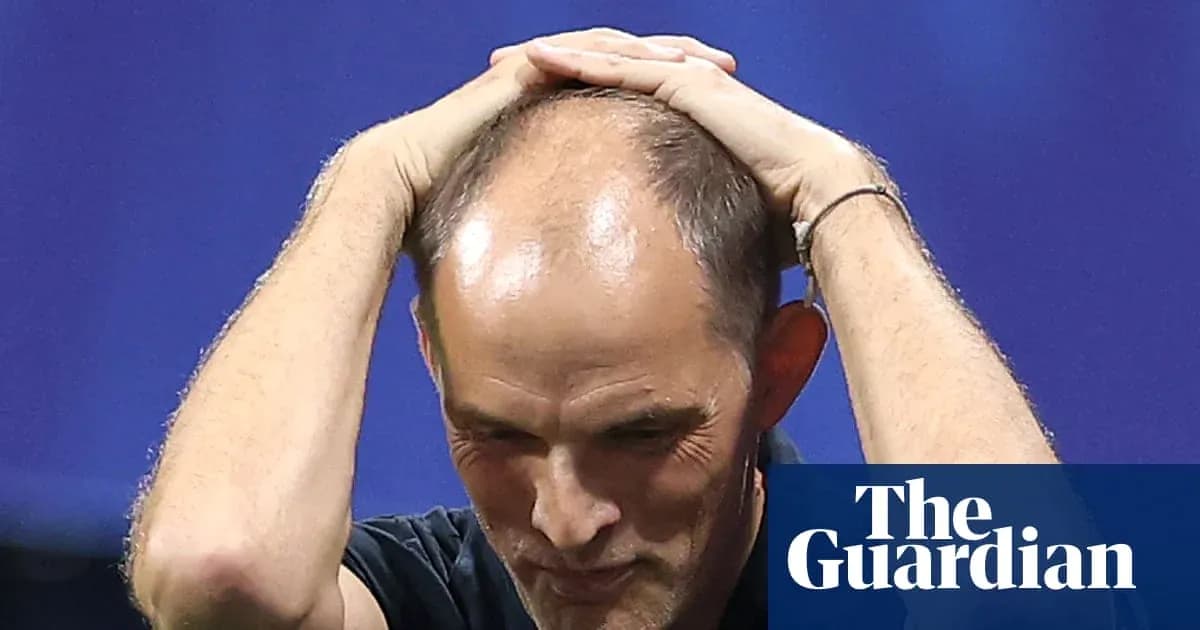
Thomas Tuchel took the blame. England took the pain.
On a night that promised history, they were minutes from a first men’s World Cup final on foreign soil, leading Argentina and holding their nerve. Then the game turned, violently and irrevocably, and England’s World Cup dream was ripped away in stoppage time.
England retreat, Argentina rise
Anthony Gordon’s goal early in the second half had tilted the stadium, the occasion, the narrative. England were sharp, front-footed, and for a spell they looked like the better side against the reigning champions. Tuchel’s team pressed, passed and probed with a conviction that has so often deserted them in the latter stages of major tournaments.
Then they stepped back.
From the moment Gordon struck, England managed just 12% possession before conceding the winner. The initiative they had earned was handed back, slowly at first, then all at once. Argentina sensed it. The pressure mounted, the pitch seemed to shrink, and white shirts drifted ever deeper towards their own penalty area.
Tuchel blinked.
With England under growing strain, he chose to withdraw Declan Rice and Reece James, switching to a back five. Three minutes later, Enzo Fernández detonated the match.
The midfielder thundered a piledriver beyond the England goalkeeper to drag Argentina level, a strike that felt like the release of an hour’s tension in a single swing of his boot. From that moment, there was only one team playing as if it believed destiny was still theirs.
Lautaro Martínez delivered the final blow. Deep into added time, in the second minute of stoppage, the substitute found the decisive goal, completing a ruthless comeback and sending Argentina into Sunday’s final against Spain in New York. England, again, were left staring at the grass.
Tuchel stands in the firing line
Tuchel did not hide. He knew where the questions would land and met them head on.
“We decided to go to a back five because the gaps were far too open,” he said, explaining the move that preceded Argentina’s surge. “Argentina played with more risk, played with more rhythm and played with the feeling maybe that they had nothing to lose any more, which freed them up and pulled us back. Because we obviously played suddenly with a feeling that we had a lot to lose. Of course the responsibility is on the coach and if it doesn’t go well it’s easy to say it was wrong.”
He rejected the idea of some ingrained English fragility, some curse that dooms this team to repeat the same story.
“I don’t believe so much in an English thing and a curse or whatever. It’s repeating itself in different moments. It’s different coaches, different players, different situations.
“What cost us today was that we were not active enough in any structure. I can understand these discussions are out there and of course a million coaches after the game know it better. You can discuss this with a million coaches. I have to make a decision on the pitch. It’s how I analyse the match and I take the responsibility.
“At the moment no regrets. The team gave everything and we were very very close. We deserved to be up 1-0. We played one of our better matches, maybe our best match under the circumstances. The team was top – we couldn’t bring it over the line.”
That last line will sting. England had the champions where they wanted them. They just could not finish the job.
Kane’s verdict: ‘We tried to hold on’
When the final whistle went, England’s players dropped where they stood. Harry Kane, the captain, gathered himself and led them over to the travelling supporters. Jude Bellingham wiped away tears. A campaign that had flickered into genuine belief ended in silence and disbelief.
Kane did not dress it up.
“Just gutted, gutted for the boys, gutted for everyone: the team, the staff, the fans,” he told the BBC. “We played well for the vast majority of it. Once we went 1-0 up we just seemed to try to hold on which, at this level, is not enough.
“After the goal, whether it was them putting more men forward or us being able to match them man for man, it just was wave after wave and we were just trying to hold on, put the blocks in, but in the end it wasn’t enough.”
His words mirrored the numbers and the eye test. England, so assertive in building the lead, shrank into themselves once they had it. Argentina, smelling vulnerability, flooded forward.
Emotion, anger and edge
The drama did not stop with the final whistle. Bellingham, raw and raging, appeared to strike Argentina substitute Valentín Barco on the back of the head after the game had finished and had to be dragged away by reserve goalkeepers Dean Henderson and James Trafford. The officials took no action.
On the other side, the celebrations carried their own edge. Manchester United defender Lisandro Martínez paraded a banner reading “Las Malvinas son Argentinas” (“The Malvinas are Argentinian”), a pointed reference to the Falklands war and a reminder that this rivalry stretches far beyond football.
Lionel Messi, who had spent much of the night wrestling with England’s press and the weight of expectation, sank to his knees and punched the air when Argentina’s second successive final was confirmed. For him, for this Argentina, survival has become a habit.
Argentina’s refusal to yield
This was not the first time Argentina had dragged themselves back from the brink at this World Cup. They came from 2-0 down to beat Egypt in the last 16, and Lautaro Martínez framed this latest rescue act in familiar terms.
“England pressed hard for about 60 minutes. After finding the goal, they dropped back, and that gave us more composure in circulating the ball and spreading the play,” he said.
Head coach Lionel Scaloni, emotional and almost hoarse, paid tribute to his side’s appetite for adversity.
“This team plays best when they are facing adversity,” he said. “We had a challenging situation, there was blood in the water and we went for it. We had six or seven chances and the ball wouldn’t go in but the team fought until the end. After they scored, we really proved ourselves – it shows what football means to us and it goes beyond tactics.”
That last sentence cut to the heart of the night. For Argentina, the goal never felt like the end. It felt like the start of a chase.
For England, it felt like a cliff edge.
A familiar question for England
Tuchel will replay the substitutions, the shift to a back five, the long stretch of defending without the ball. England will replay the moments when they could have stepped up instead of stepping back.
They were, as their head coach insisted, “very very close”. They pushed the world champions to the limit and produced one of their best displays of the tournament. Yet the story ends the same way: a lead lost, a late punch, another opportunity gone.
Argentina move on to face Spain in New York, chasing back-to-back titles and riding a wave of belief that grows with every escape.
England fly home with something else: the knowledge that they can go toe to toe with the best, and the nagging doubt over whether they will ever learn how to finish nights like this on their own terms.

