.svg&w=384&q=75 "GoalGist logo")
France Dominates Sweden in Round of 32 Match
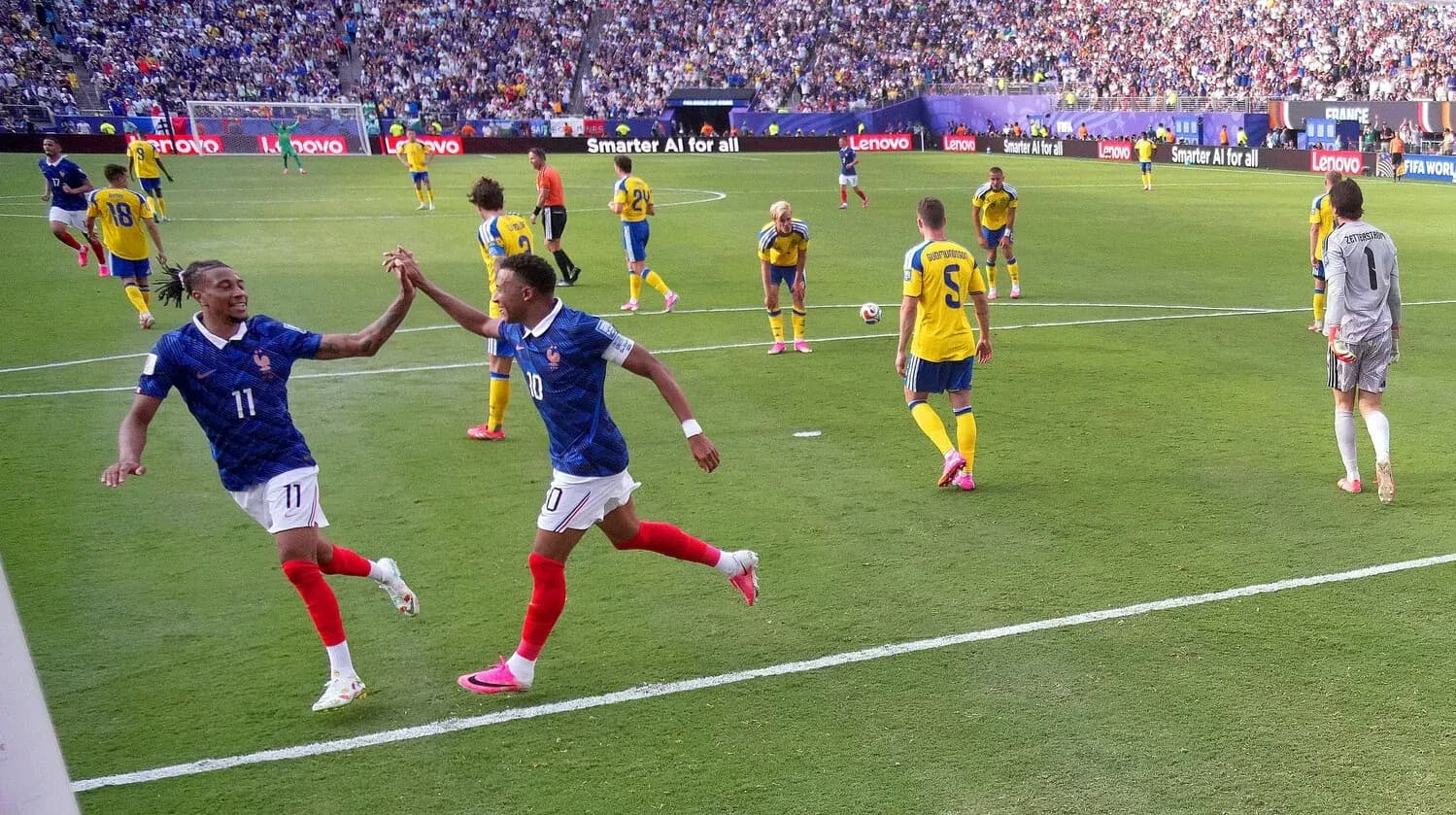
MetLife Stadium in New York staged a Round of 32 that felt more like a coronation than a contest. France, perfect in the group and already carrying the aura of a champion, arrived with a flawless record of 4 wins in 4 matches overall. Sweden, inconsistent but dangerous, came in as a side that had scored 7 goals overall yet conceded 10, a team capable of chaos at both ends. Over 90 minutes, the story crystallised: France’s structure and star power were simply too much, the 3–0 full-time scoreline echoing a wider gulf in squad balance and tactical maturity.
I. The Big Picture – France’s machine versus Sweden’s volatility
Heading into this game, France’s statistical profile was that of a ruthless front-runner. Across all venues they had played 4 matches, winning all 4, scoring 13 goals overall and conceding just 2. Their goal difference overall was therefore +11, backed by an attacking output of 3.3 goals per game overall and a defensive record of only 0.5 goals conceded per game overall. At home they had been particularly devastating: 9 goals scored and 1 conceded, averaging 3.0 scored and 0.3 conceded at home.
Sweden, by contrast, were a study in extremes. Across all venues they had played 4, winning 1, drawing 1 and losing 2. They had scored 7 goals overall (5 at home, 2 on their travels) but conceded 10 overall (1 at home, 9 away), for a goal difference overall of −3. Their attacking average was 1.8 goals per game overall, but the defensive side told a darker story: 2.5 goals conceded per game overall, including 3.0 conceded on their travels. They had yet to keep a clean sheet anywhere.
On paper, then, this was the tournament’s most efficient attack and one of its tightest defences against a side that could threaten but bled chances, especially away from their comfort zone.
II. Tactical Voids and Discipline – Control versus risk
France’s squad came into this tie largely intact, with no listed absentees. Didier Deschamps could therefore lean fully into his preferred 4‑2‑3‑1, a shape he had already used 4 times this World Cup. The double pivot of A. Tchouameni and A. Rabiot provided the platform for a devastating line of three – O. Dembele, M. Olise, and B. Barcola – behind K. Mbappe.
France’s disciplinary record in the tournament had been remarkably clean. Their yellow-card timing distribution showed only a single booking overall, arriving between 61–75 minutes, and no red cards at all. It underlined a side that dominated games without needing to resort to tactical fouling or desperate last-ditch interventions.
Sweden, however, carried a different disciplinary energy. Their yellow cards were spread across the match but with a clear late spike: 20.00% of their yellows between 31–45 minutes, 20.00% between 46–60, 20.00% between 61–75, and a heavy 40.00% between 76–90. Lucas Bergvall, starting here in midfield, embodied that edge: he had already picked up 1 yellow card in the tournament, committing 7 fouls in 4 appearances. In a knockout tie against France’s dribblers and runners, that tendency toward late, tired fouls was always likely to be punished territorially, if not on the scoreboard.
III. Key Matchups – Hunter vs Shield, and the Engine Room
The headline duel was always going to be Kylian Mbappe against Sweden’s back line, anchored by V. Lindelof and G. Lagerbielke in front of J. Widell Zetterstrom. Mbappe entered the Round of 32 as the tournament’s leading scorer with 6 goals and 2 assists in 4 appearances, averaging 19 shots overall with 13 on target, and carrying a stellar rating of 8.65. Flanked by Dembele (4 goals, 2 assists) and serviced by Olise (5 assists, 0 goals but 9 key passes and 11 successful dribbles), Mbappe operated at the tip of a fully functioning attacking ecosystem.
Sweden’s “shield” had shown cracks all tournament, especially away from home, where they conceded 9 goals on their travels. Their biggest away defeat was a 5–1 loss, a scoreline that mirrored their vulnerability when forced to defend space and transitions. Against a France side that averaged 4.0 goals on their travels and 3.3 overall, the Swedish back four in this match – Svensson, Lagerbielke, Lindelof, Gudmundsson – were always going to be stretched horizontally and vertically.
In the engine room, the contest was more nuanced. For France, Olise was the creative conductor: 211 passes overall at 87% accuracy, 9 key passes, and a willingness to carry the ball through pressure. Behind him, Tchouameni and Rabiot balanced progression and protection, giving France the luxury of committing their wide men high and early.
Sweden’s response centred on Bergvall and Y. Ayari in midfield, supported by wide runner A. Elanga. Bergvall, despite his youth, had attempted 84 passes at 88% accuracy and contributed 2 interceptions overall. Yet his role was as much destructive as constructive, trying to disrupt French rhythm. Ahead of them, the forward pairing of V. Gyokeres and A. Isak offered a different kind of threat: Gyokeres had 1 goal, 2 assists and 40 duels overall (winning 16), while Isak had 1 goal, 3 assists and 7 key passes. Their combination play could hurt in transition, but only if Sweden could escape France’s pressing net.
IV. Statistical Prognosis and Tactical Verdict
France’s seasonal DNA – 4 wins from 4, 13 scored, 2 conceded, +11 goal difference overall – translated almost perfectly into this 3–0 win. They kept Sweden at arm’s length, just as their 2 clean sheets at home and 0.5 goals conceded per game overall had suggested they would. With no penalties taken or missed by either side in the tournament so far, there was never a sense that set-piece chaos would tilt the balance.
Sweden’s profile – no clean sheets, 2.5 goals conceded per game overall, and a late spike in yellow cards – foreshadowed the way this tie would drift away from them as France accelerated. As legs tired and the yellow-card risk rose, Mbappe, Dembele, and Olise found more space between and beyond the lines.
In the end, this Round of 32 clash was less an upset risk and more a confirmation: France’s squad is built for control and incision, Sweden’s for moments and volatility. Over 90 minutes at MetLife Stadium, the numbers and the narrative aligned, and the better-balanced machine rolled on.