.svg&w=384&q=75 "GoalGist logo")
France Dominates Paraguay in Round of 16
Paraguay approached this Round of 16 tie at Lincoln Financial Field with a clearly conservative game plan, reflected in Gustavo Alfaro’s 5-4-1. The back five of Juan Cáceres, Gustavo Velázquez, Gustavo Gómez, Omar Alderete and Junior Alonso sat extremely deep, compressing the space in front of goalkeeper Orlando Gill (Paraguay). The midfield four, led by Miguel Almirón and Julio Enciso as the main transition threats, were tasked with screening central zones rather than pressing high. The outcome was a defensive block that ceded almost all initiative: Paraguay finished with just 24% possession, 183 total passes and only 5 total shots.
France, by contrast, were structurally dominant from the opening whistle. Didier Deschamps’ 4-2-3-1, with Mike Maignan (France) behind a back four of Jules Koundé, Dayot Upamecano, William Saliba and Lucas Digne, established a high territorial line and near-total control of circulation. The double pivot of Manu Koné and Adrien Rabiot underpinned this: France completed 568 total passes, 510 of them accurate at 90%, a stark illustration of how comfortably they manipulated the ball against Paraguay’s low block.
In possession, France’s shape often morphed into a 2-3-5. Koundé and Digne pushed high to pin Paraguay’s wide midfielders, while Koné dropped to assist first-phase build-up alongside the centre-backs. Rabiot frequently advanced into the left half-space, combining with Bradley Barcola and Kylian Mbappé to overload Paraguay’s right side. On the opposite flank, Ousmane Dembélé and Michael Olise offered width and inside runs, forcing Paraguay’s wing-backs into constant backward retreats rather than proactive pressing.
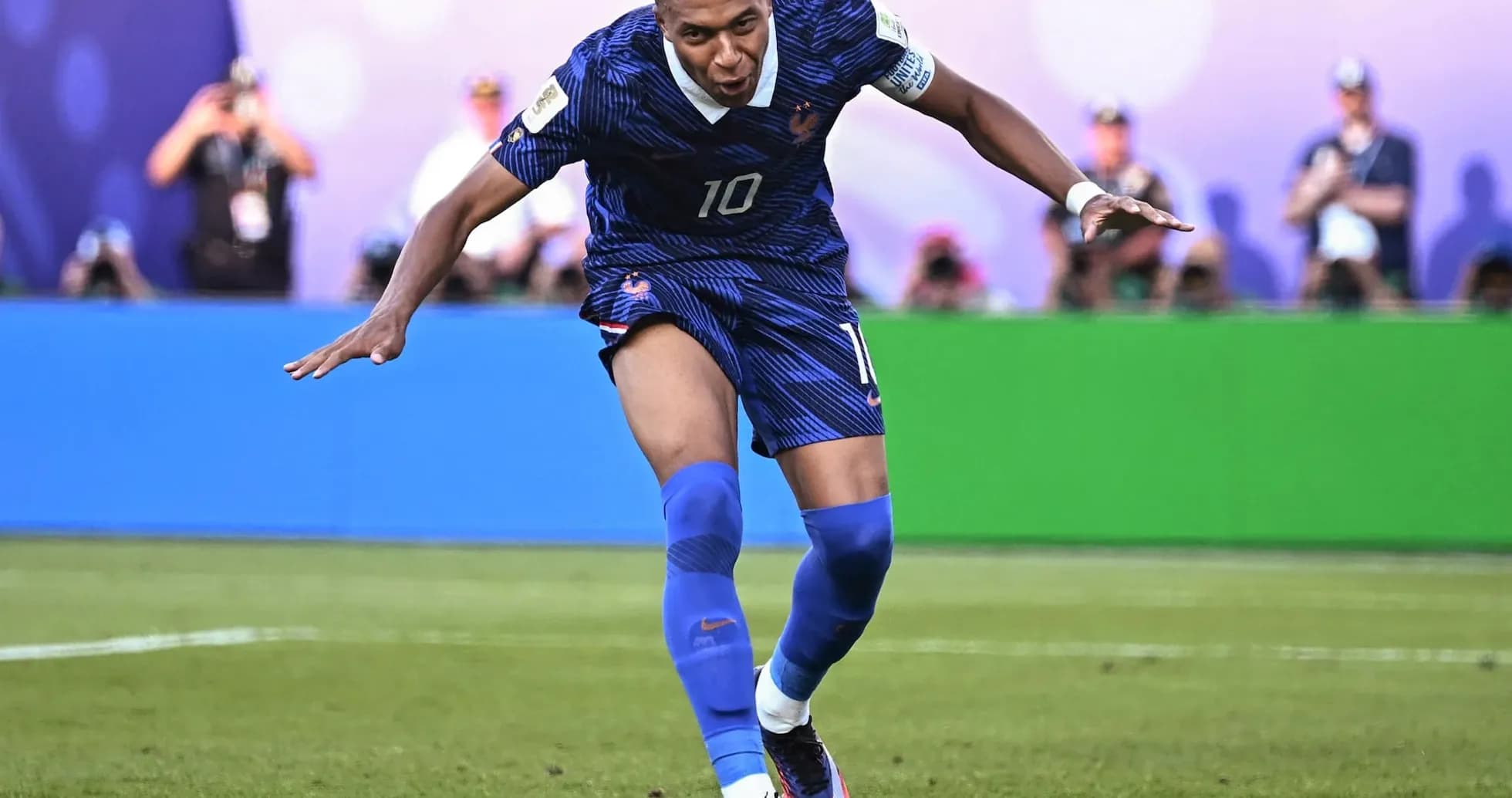
The statistical profile underlines the territorial siege. France generated 15 total shots to Paraguay’s 5, with a 5–1 advantage in shots on goal and 4 blocked shots to Paraguay’s 1. Their xG of 1.36 against Paraguay’s 0.15 reflects a steady stream of medium-quality chances rather than a flurry of clear one‑on‑ones, but it was more than enough to justify the 1-0 scoreline. The decisive moment came from the penalty spot after a VAR-confirmed incident involving Désiré Doué, with Mbappé converting on 70 minutes, neatly aligned with the expected goals pattern.
Paraguay’s attacking plan was almost entirely reactive. With only 1 shot inside the box and 4 from outside, most of their attempts were low-probability efforts, often taken from distance after rare turnovers or long clearances. The lone shot on target was comfortably dealt with by Maignan (France), who finished with 1 save. Orlando Gill (Paraguay), by contrast, had to make 4 saves as France peppered his goal, and his goals prevented figure of 0.37 suggests he slightly outperformed the post-shot quality he faced, keeping the scoreline respectable.
The defensive structure of Paraguay was built on horizontal compactness and numbers in the last line. The three central defenders stayed tight, with the wing-backs only engaging once the ball entered their third. Andrés Cubas and Diego Gómez acted as pure screeners in front of them, rarely breaking lines with forward passes. This approach did succeed in limiting France to just 5 shots inside the box despite their dominance of territory, but it came at the cost of any meaningful counter-attacking threat. With only 99 accurate passes and a completion rate of 54%, Paraguay repeatedly failed to connect the first and second passes after regaining possession.
France’s pressing and rest defence were key to that. With 76% of the ball, they still maintained good counter-pressing structure: Koné and Rabiot were positioned to immediately collapse on Paraguay’s first receiver, while Saliba and Upamecano held an aggressive line near halfway. This prevented Enciso and Almirón from turning and running at space; Paraguay’s forward Julio Enciso was often isolated, receiving with his back to goal and immediately surrounded.
Set pieces provided another window into the tactical balance. France earned 12 corner kicks to Paraguay’s 2, a direct consequence of sustained pressure and repeated forced clearances. Paraguay’s back five dealt relatively well with the first balls, but the volume of restarts further entrenched them in their own area and contributed to the growing xG gap. France’s delivery from wide areas and corners also explained part of their 10 shots from outside the box, as second balls dropped around the edge of the area for midfielders and wingers to strike.
Discipline tilted slightly toward France, who committed 11 fouls to Paraguay’s 13 but collected all three yellow cards. Bradley Barcola, Manu Koné and Michael Olise each went into the book, a by-product of France’s aggressive counter-press and occasional tactical fouls to prevent Paraguay’s rare transitions. Paraguay, despite more fouls overall, managed to avoid bookings, which aligns with their deeper, more reactive defending: most of their challenges occurred in and around their own box but were generally controlled enough not to draw cards.
From a game-state perspective, the timing of substitutions and tactical tweaks reinforced the initial patterns rather than transforming them. Paraguay’s changes, such as introducing José Canale and Gustavo Caballero, marginally refreshed legs in defence and up front but did not alter the 5-4-1’s passivity or improve progression. France’s introduction of Désiré Doué and later Rayan Cherki added dribbling and dynamism between the lines, culminating in the penalty incident that settled the tie.
The statistical verdict is clear: France combined structural superiority with technical security to control almost every dimension of the match. Their 76% possession, high passing accuracy and 1.36 xG, supported by a 5–1 shots-on-goal edge, portray a side that patiently broke down a deep block and finally found reward through Mbappé’s penalty. Paraguay’s 0.15 xG, 5 total shots and 1 effort inside the box underline how little attacking threat their ultra-defensive 5-4-1 produced. Orlando Gill’s (Paraguay) 4 saves and positive goals prevented figure kept the scoreline narrow, but the tactical and statistical balance pointed firmly toward France as deserving 1-0 winners.