.svg&w=384&q=75 "GoalGist logo")
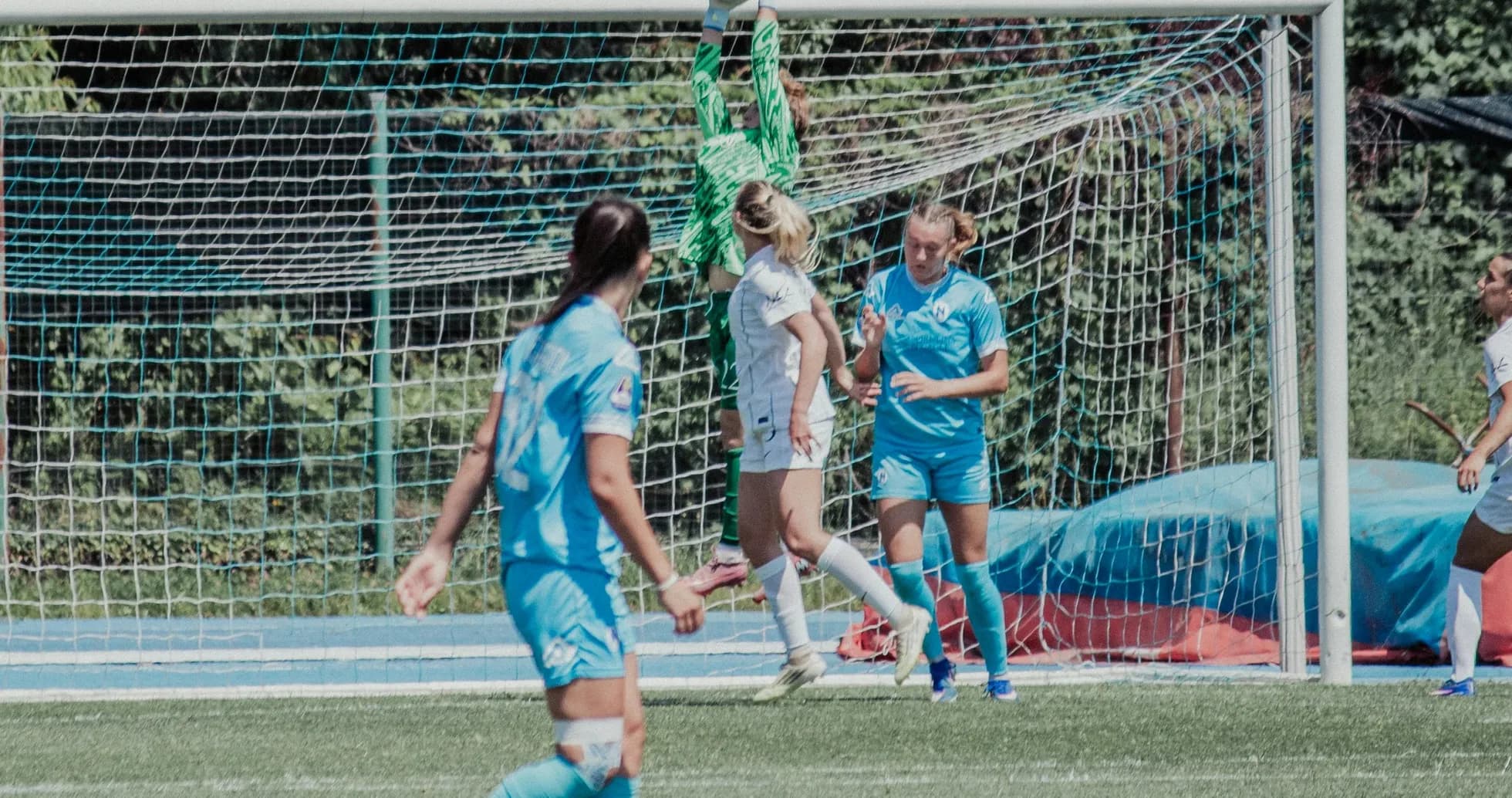
Como W vs Napoli W: Tactical Analysis of a Goalless Draw
Stadio Ferruccio felt like a fitting stage for a meeting of near equals. Following this result, Como W and Napoli W remain locked in the same mid-table mini-league of Serie A Women, separated by only four points in the standings and by the finest of margins in their footballing identities. The 0–0 tells one story; the underlying structures tell another.
Heading into this game, Como W sat 8th with 27 points and a goal difference of -1, built on 21 goals scored and 22 conceded overall. They have been the archetype of balance: 1.0 goals for per match in total, 1.0 goals against per match in total, and a season that has swung between short winning streaks and frustrating stalemates. Napoli W, 7th with 31 points and a goal difference of 5 (29 scored, 24 conceded overall), arrived with a slightly sharper attacking edge, especially on their travels where they average 1.5 goals for and 1.2 goals against per game away.
I. The Big Picture – Two Identities Colliding
Como W under Selena Mazzantini have built their season on structure. Their most used shape has been a 4-3-3, deployed 8 times, with occasional shifts to a 4-3-1-2 or 4-1-4-1. The starting XI here reflected that flexible backbone: A. Gilardi in goal behind a defensive line anchored by A. Marcussen and S. Howard, with K. Ronan and M. Kruse offering width and progression. In midfield, M. Pavan and L. Vaitukaityte knitted play, while further forward the creativity of A. Chidiac and the direct threat of N. Nischler and M. Bergersen gave Como their cutting edge.
Napoli W, guided by David Sassarini, have leaned on a more defined 4-4-2 this season (13 matches with that shape), with hints of a 4-1-4-1 when game states demand control. At Stadio Ferruccio, B. Beretta marshalled a back line featuring the rugged presence of T. Pettenuzzo and M. Jusjong, with M. Giordano and B. Vergani providing balance. In midfield, the industrious pairing of M. Bellucci and K. Kozak sat beneath the creative and transitional threats of G. Langella and L. Faurskov, while up front the attacking axis of M. Banušić and C. Fløe carried the bulk of Napoli’s goal threat.
II. Tactical Voids and Discipline
There were no listed absentees in the data, which meant both coaches could lean heavily on their season-long cores. For Como, that meant leaning into the chemistry between Pavan and Nischler, and the experience of Marcussen at the back. For Napoli, it ensured continuity for their central spine: Pettenuzzo–Jusjong in defence, Bellucci–Kozak in midfield, Fløe–Banušić in attack.
Discipline shaped the risk profiles. Como’s card data shows a clear pattern: 35.00% of their yellow cards arrive between 46–60 minutes, with another 25.00% between 31–45 minutes. That mid-game spike forces Mazzantini to manage aggression carefully around half-time, particularly with committed defenders like Marcussen, who already has a yellow-red on her seasonal record. Napoli’s yellow-card spread is more evenly distributed, with notable peaks at 31–45 minutes (23.08%) and 61–75 minutes (23.08%). Pettenuzzo’s 6 yellows this season underline her role as an enforcer; Bellucci’s 4 yellows and 25 fouls committed mark her as the tactical fouler in midfield.
III. Key Matchups – Hunter vs Shield, Engine Room vs Engine Room
Hunter vs Shield
For Napoli, the primary hunter is Cecilie Fløe. With 6 goals and 2 assists in 20 league appearances, she is both finisher and creator, generating 39 shots (25 on target) and 25 key passes. Her partner, Marija Banušić, adds 4 goals and 2 assists, and offers a more back-to-goal, link-play dimension. Together, they test back lines in different ways: Fløe attacks space and half-channels; Banušić thrives between the lines.
Their challenge was to unpick a Como defence that, heading into this game, conceded 1.2 goals per match at home and 1.0 overall. Gilardi’s presence behind a back line that has kept 4 home clean sheets overall reflects a team that, while not impermeable, can dig in. Marcussen’s 21 tackles and 3 blocked shots, plus S. Howard’s physical presence, form a shield that is more about positioning than last-ditch heroics.
On the other side, Como’s leading scorer N. Nischler (5 goals, 1 assist overall) represents their own “hunter”. She is not a pure penalty-box striker; her 270 passes and 14 key passes show she drifts and links play. Her battle was primarily with Napoli’s central pairing of Pettenuzzo and Jusjong. Jusjong, in particular, has been a quiet pillar: 622 passes at 81% accuracy and 14 successful blocks show a defender who reads danger early and steps in front of shots.
Engine Room – Pavan vs Bellucci and Kozak
The midfield duel was the game’s true metronome. For Como, Matilde Pavan is the central engine: 3 assists, 331 passes at 71% accuracy, and a strong defensive output (26 tackles, 15 interceptions, 2 blocked shots). She is the pivot through which Como transition from their 4-3-3 base into more fluid attacking shapes.
Across from her, Napoli fielded a double engine. Melissa Bellucci, with 733 passes at 76% accuracy and 27 tackles, is the tempo-setter and screen. K. Kozak, with 3 goals and 1 assist from midfield and 71% pass accuracy, adds forward thrust and late runs into the box. Together, they seek to pin opponents back and feed Fløe and Banušić early.
In a tactical sense, this was a battle between Como’s single pivot and Napoli’s double pivot. When Pavan found time, Como could build patiently and release Nischler and Chidiac between the lines. When Bellucci and Kozak pressed in tandem, Como were forced longer, where Napoli’s centre-backs could dominate.
IV. Statistical Prognosis and xG-Style Reading
Heading into this match, the numbers hinted at a marginal Napoli edge in attacking volume. They averaged 1.4 goals for per match in total and 1.5 away, compared to Como’s 1.0 overall and 0.9 at home. Defensively, the sides were near parity: Como conceded 1.0 goals per match in total (1.2 at home), Napoli 1.1 overall (1.2 away). That combination suggests a slightly higher “expected goals” profile for Napoli, especially in transition and on set plays.
Yet Como’s 9 clean sheets overall and Napoli’s 7 underline that both teams know how to close games down. Como’s 8 matches failing to score overall, and Napoli’s 7, also point to the possibility of stalemates when structure wins out over risk.
Following this result, the goalless draw feels like the logical intersection of those trends: Napoli’s superior firepower blunted by Como’s compactness, Como’s balanced but low-output attack unable to consistently break a Napoli side anchored by disciplined defenders and a hard-working midfield. In xG terms, this was always likely to be a contest of half-chances rather than clear ones.
The narrative moving forward is clear. Como must find ways to turn Nischler’s all-round game and Pavan’s control into higher-quality chances, especially at home where their 0.9 goals for per match is limiting. Napoli, meanwhile, will continue to lean on Fløe and Banušić, but the real marginal gains may come from Kozak’s late surges and Bellucci’s line-breaking passes.
Two mid-table sides, two coherent identities, and a 0–0 that, beneath the surface, tells of a league where tactical detail and small statistical edges decide everything.