.svg&w=384&q=75 "GoalGist logo")
Sevilla's Narrow Victory Over Espanyol: A Tactical Analysis
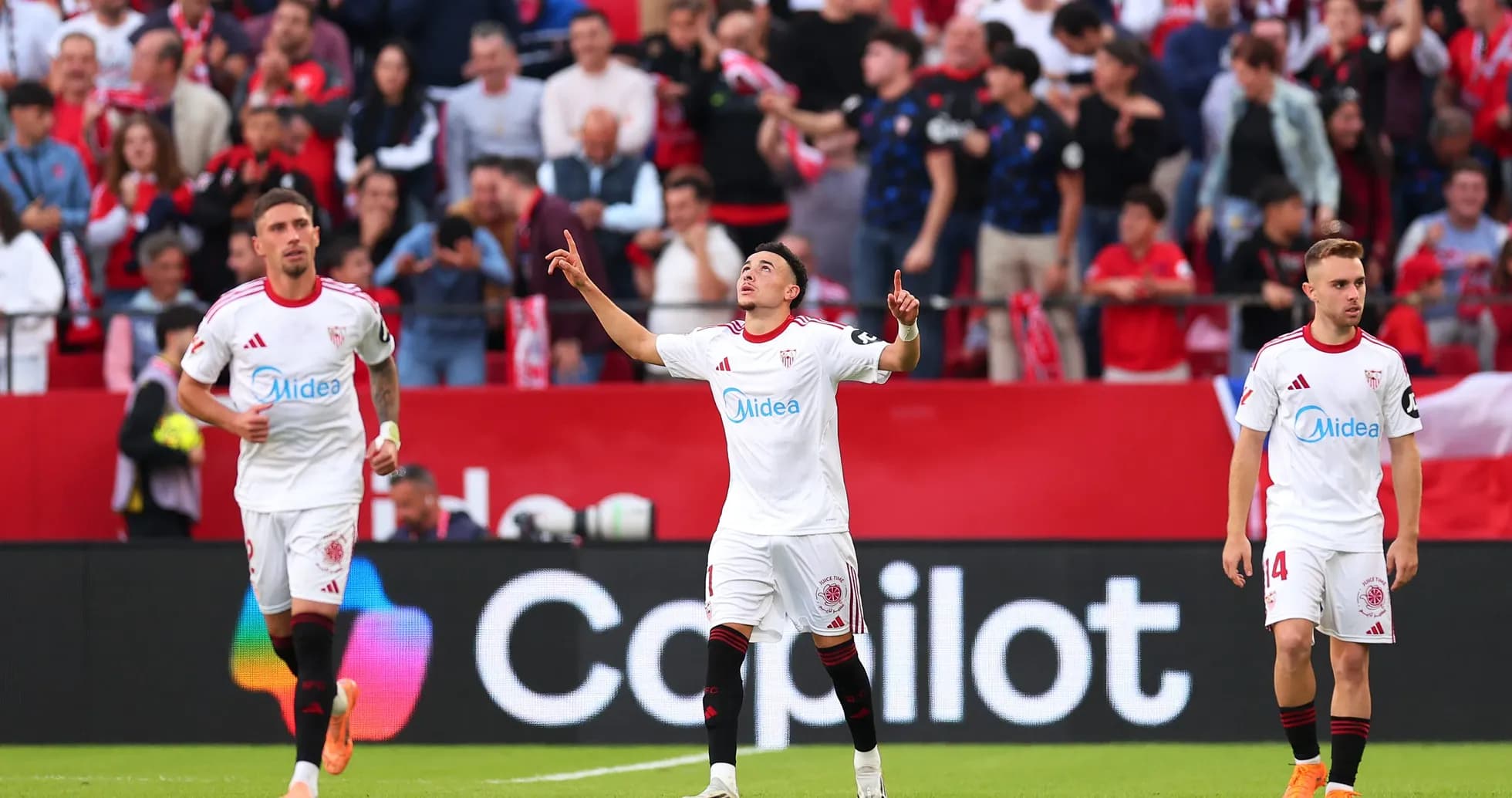
Under the late afternoon light of the Estadio Ramón Sánchez Pizjuán, Sevilla’s 2–1 win over Espanyol felt less like a dead‑rubber in Round 35 and more like a knife‑edge duel between neighbours in the La Liga table. Following this result, 13th‑placed Sevilla and 14th‑placed Espanyol remain locked in the same mid‑table band, but the nuances of how they got there were written all over the tactical choices, the absentees, and the personalities on the pitch.
I. The Big Picture – Sevilla’s volatility against Espanyol’s fragility
Sevilla came into this fixture with a season that has been anything but stable. Overall they had played 35 matches, winning 11, drawing 7 and losing 17. Their goal difference of -13 is the product of 43 goals scored and 56 conceded, underlining a side that can punch but is equally prone to being hit back. At home, though, the numbers are more balanced: 18 games, 7 wins, 4 draws, 7 defeats, with 24 goals for and 24 against. The Sánchez Pizjuán is no fortress, but it is no open door either.
Espanyol’s campaign has carried a similar mid‑table chaos. Overall they had 10 wins, 9 draws and 16 losses from 35 games, scoring 38 and conceding 53 for a goal difference of -15. On their travels, they had played 18 times, winning 4, drawing 5 and losing 9, with 20 goals for and 30 against. The away profile is clear: competitive but vulnerable, especially once the game stretches.
Against that backdrop, the final 2–1 scoreline fits the broader seasonal DNA. Sevilla, whose total scoring average sits at 1.2 goals per game and total concession rate at 1.6, once again lived in that narrow margin where their attacking intent has to outpace their defensive lapses. Espanyol, averaging 1.1 goals for and 1.5 against overall, again found themselves needing to overperform offensively to mask structural fragilities at the back.
II. Tactical Voids – Injuries and disciplinary shadows
Both managers were forced to write around absences. For Sevilla, M. Bueno and Marcao were ruled out with knee and wrist injuries respectively. In a side already conceding 56 goals overall, the loss of Marcao’s experience particularly matters. It pushed Luis Garcia Plaza toward a back four of J. A. Carmona, Castrin, K. Salas and G. Suazo in a 4‑4‑2, a structure that leans on collective aggression rather than a dominant organising centre‑back.
Carmona’s presence is double‑edged. He tops La Liga’s yellow‑card charts with 12 cautions this season, and his profile – 61 tackles, 7 blocked shots and 35 interceptions – screams front‑foot defending. He is a defender who wants to solve problems early, sometimes too early. In a match that demanded control of transitions, his tendency to step out and engage risked opening seams for Espanyol’s runners, but it also set an aggressive tone that Sevilla needed.
In midfield, L. Agoume, another card‑heavy figure with 10 yellows, anchored the central band. His 62 tackles and 47 interceptions show why he is trusted as the screen, but his 54 fouls committed underline how often Sevilla live on the disciplinary edge. That matters for a team whose yellow cards spike late: 18.81% of their yellows arrive between 76–90 minutes, and a further 19.80% between 91–105. This is a side that ends games walking a tightrope.
Espanyol’s voids were higher up the pitch. C. Ngonge and J. Puado were both out with knee injuries, stripping Manolo Gonzalez of attacking variety. Without them, the burden fell on R. Fernandez Jaen as the lone striker in a 4‑2‑3‑1, supported by T. Dolan, R. Terrats and R. Sanchez. Behind them, U. Gonzalez and Exposito formed the double pivot, with Exposito not just a metronome but one of the league’s most productive creators.
Disciplinary risk for Espanyol is spread differently. Their yellow‑card data reveals a late‑game surge: 29.89% of their bookings land between 76–90 minutes, and another 16.09% between 91–105. Add in a red‑card profile where 40.00% of their dismissals arrive in the 46–60 window and another 40.00% in 76–90, and you get a team that often loses emotional control precisely when legs are heavy and spaces open.
III. Key Matchups – Hunter vs Shield, and the engine room duel
Without official top‑scorer data, the “Hunter vs Shield” narrative shifts from pure goals to attacking influence versus defensive resilience.
For Sevilla, the twin strikers N. Maupay and I. Romero offered complementary threats. Romero, who has 4 league goals and a red card to his name, is a streaky, emotional forward. His 30 shots with 13 on target and 40 dribble attempts (9 successful) describe a player who will keep asking questions, even if the answers are inconsistent. Up against Espanyol’s centre‑back pair of F. Calero and L. Cabrera, the key was how much help they received from the flanks – particularly from O. El Hilali.
El Hilali is one of Espanyol’s most complete defenders: 68 tackles, 13 blocked shots and 38 interceptions, plus 17 key passes and 2 assists. He is both shield and outlet. His duel with Sevilla’s wide midfielders – R. Vargas and C. Ejuke – was a tactical hinge. Ejuke’s ability to drive at his man and Vargas’ tendency to arrive late into the box forced El Hilali to constantly choose between holding the line and stepping out to engage. Every time he left his station, Romero and Maupay had channels to attack.
In the engine room, the “Playmaker vs Enforcer” battle pitted Exposito against Agoume. Exposito’s season numbers are outstanding: 6 assists from 75 key passes, 925 total passes at 76% accuracy, and 41 dribble attempts with 30 successful. He is Espanyol’s creative compass. Agoume, by contrast, is Sevilla’s stabiliser – 1 goal, 2 assists, but 1,219 passes at 80% accuracy and a combined 109 defensive actions (tackles plus interceptions). Every time Exposito received between the lines, Agoume’s positioning determined whether Espanyol could turn territory into threat.
Around them, Pol Lozano and Pere Milla lurked as potential game‑changers from the bench. Lozano’s 10 yellow cards and 1 yellow‑red tell of a midfielder who will happily foul to break rhythm, while Milla brings 6 goals and a red card in a profile that mixes aggression with end‑product. For Sevilla, the bench answers lay in the experience of C. Azpilicueta and the creative unpredictability of A. Januzaj, while Joan Jordan offered a different passing tempo if the match turned into a control exercise.
IV. Statistical Prognosis – xG‑style verdict and defensive solidity
Even without explicit xG values, the season metrics sketch a clear expected‑goals landscape. Heading into this game, Sevilla at home were averaging 1.3 goals for and 1.3 against, while Espanyol on their travels were at 1.1 for and 1.7 against. Overlay those profiles and the “xG‑style” expectation points toward a narrow Sevilla edge in a game with both teams scoring: something in the 1.5–1.2 corridor in Sevilla’s favour. A 2–1 home win fits that projection almost perfectly.
Defensively, neither side could claim true solidity. Sevilla’s total concession rate of 1.6 goals per match and Espanyol’s 1.5 highlight why both sit in mid‑table rather than pushing higher. Sevilla’s six clean sheets overall and Espanyol’s nine suggest that, on their day, both can lock things down – but the more common pattern is that their games open up, especially in the second half when card risk and fatigue collide.
In narrative terms, this 2–1 felt inevitable. Sevilla’s aggressive, card‑streaked defenders and combative midfield tilted the duels in their favour just enough, while Espanyol’s reliance on Exposito’s craft and El Hilali’s defensive range could not fully mask their structural fragility away from home. The Sánchez Pizjuán did not witness a transformation of either side’s identity; it simply amplified who they have been all season – volatile, flawed, but compelling.