.svg&w=384&q=75 "GoalGist logo")
Belgium's Tactical Comeback Against Senegal in World Cup Clash
Belgium’s 3-2 extra‑time win over Senegal at Lumen Field in this World Cup Round of 32 tie unfolded as a classic of structural adjustment versus transitional threat. Across 120 minutes, Belgium’s 4-2-3-1 gradually wrestled control from Senegal’s aggressive 4-3-3, with the European side leveraging possession and positional rotations to overturn a 0-2 deficit and then exploit late‑game fatigue.
Belgium’s Structure
Belgium’s base structure under Rudi Garcia was clear: Thibaut Courtois in goal behind a back four of Timothy Castagne, Brandon Mechele, Arthur Theate and Maxim De Cuyper; a double pivot of Youri Tielemans and Hans Vanaken; and a fluid line of Leandro Trossard, Kevin De Bruyne and Jérémy Doku supporting Charles De Ketelaere as the nominal striker. The aim was to control central zones through Tielemans–Vanaken while letting De Bruyne and Trossard drift inside, with Doku stretching the left half-space.
Senegal’s Structure
Senegal’s 4-3-3 under Bouna Thiaw Pape was built for verticality and pressing triggers. Mory Diaw started in goal, protected by Krépin Diatta, Pathé Ismaël Ciss, Moussa Niakhaté and Ismail Jakobs. The midfield trio of Habib Diarra, Idrissa Gana Gueye and Pape Gueye sat behind a front three of Iliman Ndiaye, Ismaïla Sarr and Sadio Mané. Early on, Senegal’s structure was extremely compact without the ball, then exploded forward once possession was regained.
Opening Goals
That plan paid off with the opener: at 25', Habib Diarra (Senegal) struck the first goal, a direct reward for Senegal’s willingness to spring quickly after Belgian turnovers. Belgium’s double pivot struggled to manage Senegal’s inside runs from midfield, leaving Tielemans and Vanaken overloaded as Diarra arrived from deeper positions. With Belgium committing numbers forward, the African side’s first line of pressure forced rushed passes, and the second line attacked loose balls.
The second Senegal goal at 51' — Ismaïla Sarr (Senegal), assisted by Moussa Niakhaté — underlined the same pattern. Senegal’s front line targeted the channels between full-back and centre-back, particularly on Belgium’s left. Niakhaté’s involvement as the assister shows how Senegal’s centre-backs were encouraged to step into space when Belgium’s front four failed to apply coordinated pressure, creating numerical superiority in the build-up and then releasing Sarr into advanced positions.
Belgium’s Tactical Response
Belgium’s tactical response came through substitutions and a rebalancing of the attacking structure. At 46', Romelu Lukaku (IN) came on for Charles De Ketelaere (OUT), adding a true penalty-box reference point. At 56', Nicolas Raskin (IN) came on for Kevin De Bruyne (OUT), and Dodi Lukebakio (IN) came on for Jérémy Doku (OUT), refreshing the attacking lanes and adding more direct running from wide areas. Belgium’s shape remained broadly 4-2-3-1, but the function changed: more early crosses and direct entries into Lukaku, with second balls targeted for Tielemans and Trossard.
Statistical Analysis
The numbers reflect this shift. Belgium finished with 52% possession, 19 total shots, and 11 attempts inside the box. Their xG of 1.8 indicates they created a steady stream of medium-quality chances rather than a flood of clear-cut opportunities. The 699 passes, with 602 accurate at 86%, show a team intent on controlling tempo and territory, especially once behind. The full-backs pushed higher, with De Cuyper later replaced by Thomas Meunier (IN) at 78', which not only solidified the right flank but also directly influenced the comeback.
Senegal, despite only 48% possession, matched Belgium’s 19 shots and produced a significantly higher xG of 3.54. That gap speaks to the clarity of their transition chances: when they broke Belgium’s rest defence, they reached high‑value zones quickly. Their 10 shots inside the box against Belgium’s 11 show how often they penetrated central areas. However, Senegal’s 639 passes (536 accurate, 84%) confirm they were less focused on prolonged circulation and more on vertical, risk‑accepting progression once the first line was beaten.
Turning Point
The turning point came from Belgium’s improved occupation of the half-spaces and more aggressive rest defence. With Lukaku pinning the centre-backs, Trossard and Lukebakio could receive between the lines, forcing Senegal’s midfield to collapse centrally and opening lanes for overlapping full-backs. At 86', Lukaku (Belgium) converted, assisted by Thomas Meunier, a move that encapsulated Belgium’s adjusted pattern: wide overload, early delivery, and a dominant target man finishing inside the area.
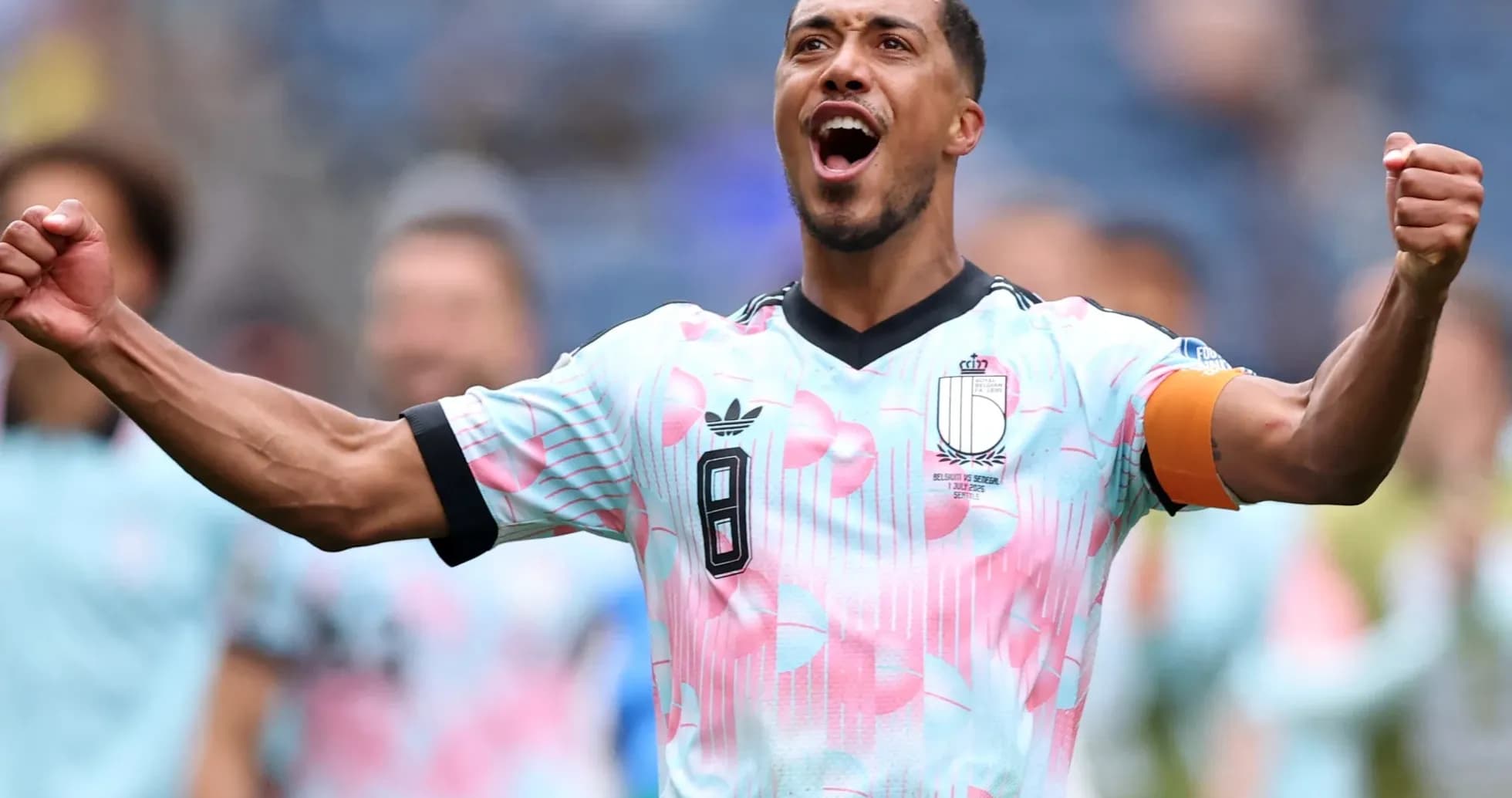
Just three minutes later, at 89', Tielemans (Belgium) struck from a Trossard assist, illustrating the benefit of Belgium’s second-line presence. With Senegal’s midfield now deeper to protect the box, clearances fell into zones where Tielemans could dictate, stepping into shooting positions and recycling attacks. Belgium’s blocked shots count (5, versus Senegal’s 3) also suggests a sustained siege phase where Senegal were forced into last-ditch interventions.
Extra Time
Extra time became a contest of physical and mental resilience. Senegal’s bench was used to maintain intensity — Lamine Camara (IN) for Pape Gueye at 66', Pape Matar Sarr (IN) for Habib Diarra and Ibrahim Mbaye (IN) for Iliman Ndiaye at 73', El Hadji Malick Diouf (IN) for Ismail Jakobs and Nicolas Jackson (IN) for Sadio Mané at 93', and Bara Sapoko Ndiaye (IN) for Idrissa Gana Gueye at 96'. Belgium responded with Amadou Onana (IN) for Trossard at 109', seeking fresh legs in midfield to protect transitions and support late surges.
Decisive Moment
The decisive moment came at 120+5', when Tielemans (Belgium) converted from the penalty spot, a decision confirmed by VAR at 120'. Tactically, this was the culmination of Belgium’s relentless pressure in and around the box, with repeated incursions forcing Senegal into risky defensive actions. Belgium’s 22 fouls to Senegal’s 12 highlight how often they were forced to break up counters, but also how much of the game was played in Senegal’s half late on.
Goalkeeping and Discipline
Defensively, both goalkeepers were tested equally in terms of shots on target — 5 apiece — and both Thibaut Courtois (Belgium) and Mory Diaw (Senegal) made 3 saves each. The identical goals prevented figure of -0.61 for both teams indicates that, relative to the quality of chances conceded, neither side’s goalkeeping outperformed the underlying shot quality; finishing and defensive shot suppression were more decisive than elite shot-stopping.
Discipline also shaped the rhythm. Brandon Mechele (Belgium) was booked at 64' — “Foul” — a reflection of Belgium’s need to halt a dangerous situation. Lamine Camara (Senegal) received a yellow card at 67' — also “Foul” — as Senegal tried to disrupt Belgium’s growing momentum. With one yellow card each (total 2), the match was intense but not chaotic, and neither side suffered the structural disruption of a dismissal.
Conclusion
Statistically, Senegal can argue they generated the better chances, but Belgium’s superior passing volume, territorial control and late structural tweaks — especially the introduction of Lukaku, Meunier and Onana, plus the repositioning of Tielemans as an advanced threat — allowed them to bend the game toward a scenario where a decisive moment in extra time was likely. In a knockout context, their capacity to shift from a possession‑control model to a more direct, penalty‑box‑oriented approach proved the tactical edge that ultimately decided a finely balanced contest.