.svg&w=384&q=75 "GoalGist logo")
Belgium Edges Senegal in Thrilling Round of 32 Clash
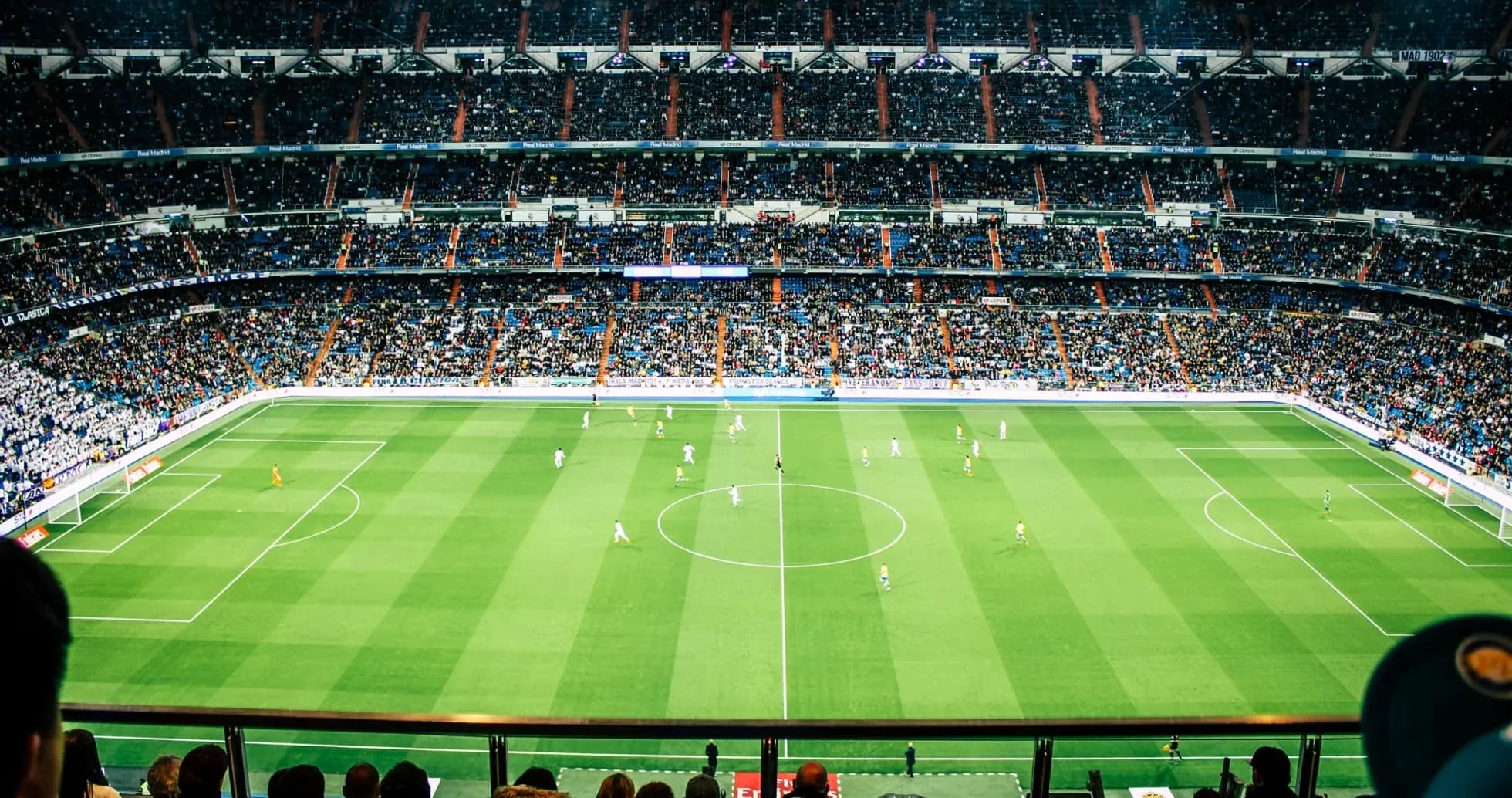
Lumen Field in Seattle has seen its share of drama, but this Round of 32 tie between Belgium and Senegal stretched the evening to its limits. Over 120 minutes, a 2-2 deadlock at full time broke only in extra time, Belgium finally edging it 3-2 after a contest that felt like two different games stitched together: Senegal’s vertical fury against Belgium’s methodical control.
I. The Big Picture – Styles Colliding on the Knockout Stage
Heading into this game, Belgium arrived as a group winner with a controlled, almost understated dominance. Overall this campaign, they had played 4 matches, winning 2 and drawing 2, without a single defeat. They had scored 9 goals in total and conceded 4, an overall average of 2.3 goals for and 1.0 against per match. At home venues, they had been more measured: 4 goals for and 3 against, averaging 1.3 scored and 1.0 conceded.
Senegal, by contrast, were volatility personified. Across their 4 matches in total, they had 1 win and 3 defeats, but with 10 goals scored and 9 conceded. On their travels, they were wild: 5 away goals but 9 conceded, an away average of 1.7 scored and 3.0 allowed. They could rip you apart or unravel just as quickly.
The formations told the story of intent. Belgium, under Rudi Garcia, set up in a 4-2-3-1, a framework designed to funnel possession through K. De Bruyne and L. Trossard, with J. Doku and C. De Ketelaere providing width and penetration. Senegal, guided by Bouna Thiaw Pape, answered with a 4-3-3 that placed S. Mane, I. Sarr, and I. Ndiaye on the same forward line – a trident built for transition and chaos.
II. Tactical Voids and Hidden Fault Lines
Both sides came into Seattle missing a piece of their defensive puzzle. Belgium were without Z. Debast, ruled out with a leg injury. His absence pushed B. Mechele and A. Theate into central command, with M. De Cuyper and T. Castagne flanking them. For a side whose overall defensive record had been solid – 4 goals conceded in 4 games – losing a rotation centre-back might not sound seismic, but it subtly reduced their options to adjust if Senegal’s pace began to stretch the line.
Senegal’s void was more glaring: É. Mendy, out with a knee contusion. In his place, M. Diaw took the gloves. For a team that had already conceded 9 goals overall, including all 9 on their travels, the loss of their most experienced goalkeeper added a layer of vulnerability behind an already high-risk defensive profile.
Disciplinary trends added another thread of tension. Belgium’s card pattern this campaign skewed early and mid-game. Half of their yellow cards had arrived in the opening 15 minutes, the other half between 61-75 minutes. More tellingly, their only red card overall had come in that 61-75 window – shown to N. Ngoy, who had nonetheless impressed with 4 tackles, 1 blocked shot, and 3 interceptions in his minutes so far. It painted a picture of a back line that could occasionally overstep when the tempo spiked.
Senegal, meanwhile, spread their yellows across three distinct bands: 33.33% of their cautions between 16-30 minutes, another 33.33% between 61-75, and the final 33.33% from 76-90. This suggested a side that began to accumulate risk as the halves wore on, particularly when chasing games or defending leads.
III. Key Matchups – Hunter vs Shield, Engine vs Enforcer
The headline duel was always going to be “Hunter vs Shield”: I. Sarr against Belgium’s back four and T. Courtois. Sarr arrived in Seattle as one of the tournament’s most dangerous wide forwards: 4 goals and 1 assist in total, from 13 shots (6 on target), with a rating of 7.65. He had drawn 9 fouls and completed 2 successful dribbles from 5 attempts, a winger who forced defenders into decisions they did not want to make.
Belgium’s defensive “shield” was multi-layered. Courtois anchored a line where Mechele and Theate had to manage depth against Sarr’s diagonal runs and Mane’s drifting movement. De Cuyper and Castagne were tasked with closing the channels where Sarr loves to receive early and drive inside. Given that Belgium’s home record showed 3 goals conceded in 3 home-type fixtures, the matchup hinged on whether their positional discipline could neutralize Sarr’s directness.
In midfield, the “Engine Room” duel was fascinating. For Belgium, Y. Tielemans and H. Vanaken formed the double pivot, sitting behind De Bruyne. Tielemans offered circulation and tempo, Vanaken the late surges and aerial presence. Ahead of them, De Bruyne remained the conductor – the player most likely to exploit even the smallest crack in Senegal’s block.
Opposite them, Senegal’s trio of I. Gueye, P. Gueye, and H. Diarra had to compress space between the lines. I. Gueye, with his experience and reading of danger, was effectively the enforcer, while P. Gueye linked to the front three. Layered into this was the creative threat of I. Ndiaye, whose tournament numbers – 1 goal, 2 assists, and 4 key passes from 59 total passes at 89% accuracy – marked him as the secondary playmaker. His ability to drift from the flank into half-spaces threatened to overload Belgium’s double pivot and drag one of the centre-backs out.
On the flanks, Doku versus I. Jakobs and K. Diatta was another hinge. Doku’s 1v1 ability forced Senegal’s full-backs to choose between tight marking and protecting the space behind. Given Senegal’s away tendency to concede – 9 goals on their travels overall – any miscalculation here risked exposing M. Diaw to high-quality chances.
IV. Statistical Prognosis and Tactical Verdict
From a pure numbers perspective, Belgium entered the tie with the more balanced profile. Overall, they had a positive goal difference of +5 (9 scored, 4 conceded) and had yet to lose. Their reliance on a single formation – 4-2-3-1 in all 4 matches – spoke to tactical continuity. They had also shown composure from the spot, converting their only penalty of the campaign with 100.00% efficiency and no penalties missed.
Senegal’s overall goal difference of +1 (10 scored, 9 conceded) told a different story: potent but porous. Their clean sheet record was narrow – just 1 in total, and only at home. On their travels, they had never failed to score, but they had also never kept the opposition out. Alternating between 4-2-3-1 and 4-3-3, they were still oscillating between control and chaos.
Tactically, the match in Seattle unfolded almost exactly along those lines. Senegal’s front three, led by Sarr and Mane, repeatedly threatened in transition, especially in the first half when Belgium’s full-backs pushed high and the pivots were slow to cover. Belgium, in turn, grew into the game through De Bruyne’s passing lanes and Trossard’s drifting between lines, gradually pinning Senegal deeper and forcing their midfield three to defend longer phases.
The late-game patterns hinted at by the card distributions also surfaced. As the minutes ticked into the 60-75 band, challenges sharpened, and both sides flirted with disciplinary risk in that zone where Belgium had previously seen red and Senegal often picked up yellows. Extra time, though, belonged more to Belgium’s structure than Senegal’s spontaneity. The Red Devils’ superior control, deeper bench options like R. Lukaku and A. Witsel, and their comfort in the 4-2-3-1 framework allowed them to manage the chaos and finally find the decisive goal in the additional 30 minutes.
Following this result, the statistical prognosis feels validated: Belgium’s blend of stability and star quality edged Senegal’s volatility. Yet the narrow 3-2 after extra time underlines a simple truth of this World Cup campaign – against a side with I. Sarr and I. Ndiaye in full flow, even the most finely tuned structure can be dragged to the brink.