.svg&w=384&q=75 "GoalGist logo")
England's World Cup Exit: Tuchel Under Fire but Backed
England’s World Cup dream died in Atlanta on Wednesday night, and with it came a familiar soundtrack: anger, doubt, and the inquest into what might have been.
Argentina’s 2-1 win at the Atlanta Stadium denied England a place in the World Cup final, a brutal end for a team that had spent a month convincing the world it finally belonged on this stage. Anthony Gordon’s 55th-minute goal had them staring at destiny. Then the tide turned, and so did the mood back home.
Tuchel under fire, but still backed
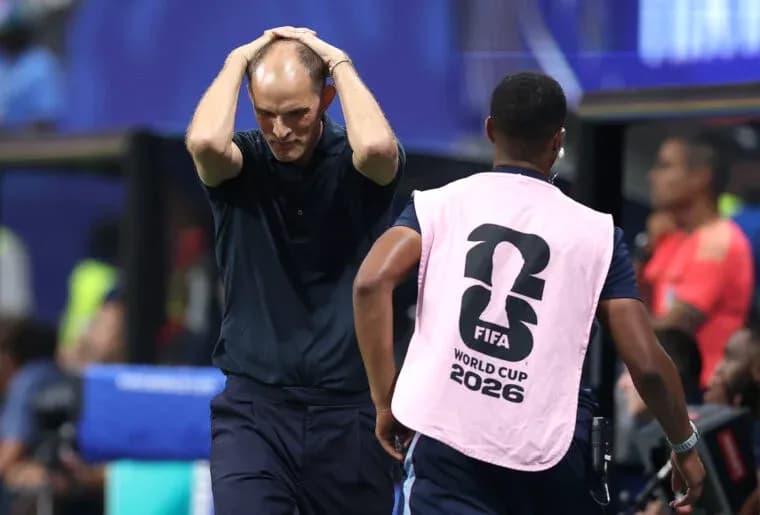
Thomas Tuchel walked into this World Cup as the man trusted to turn England’s promise into silverware. He walks out of it with a semi-final exit and a storm of criticism over his game management.
The flashpoint came straight after Gordon’s breakthrough. Instead of pushing on, England retreated. Tuchel’s decision to tighten up and protect the lead infuriated fans and pundits alike, who watched Argentina seize the initiative and punish England’s caution.
The pressure finally told. Argentina wrestled control of the match, and England never truly recovered.
Yet despite the noise, Tuchel’s job is not on the line. According to BBC Sport, the German retains the firm backing of the Football Association and is expected to lead England into Euro 2028. There will be no dramatic reset, no emergency search for a new face in the dugout. The FA has nailed its colours to Tuchel’s mast.
It is a significant show of faith. Tuchel, 52, only took the job in January 2025 on a deal initially set to run until the end of this World Cup. The FA doubled down in February, handing him a two-year extension through to Euro 2028. One painful night in Atlanta will not undo that planning.
A campaign that promised more
This was not a shambolic tournament. Far from it. England arrived as one of the favourites and, for long spells, played like it.
They burst out of the blocks by dismantling Croatia 4-2 in their opening game, a statement win that set the tone. It was bold, attacking football, the sort of performance that feeds belief in dressing rooms and living rooms alike.
The group stage then stuttered. Performances against Ghana and Panama lacked the same conviction. England got the results they needed, but the fluency disappeared. Questions surfaced about balance, control, and whether this side could handle the pressure when the stakes rose.
They answered those questions in the knockouts.
Against DR Congo, England found a more ruthless edge, managing the game with maturity. Then came the night at the Estadio Azteca, where they produced a genuine masterclass to beat Mexico. It felt like a defining moment, the kind of performance that turns a good campaign into a special one.
Norway posed another awkward test. England handled it with authority, coming through with the kind of composure that suggested this group had learned from past scars. Step by step, they built a case as genuine contenders, not just hopefuls.
A lead, a retreat, and a collapse of nerve
That is what made the semi-final so jarring. For 55 minutes against Argentina, England looked on course to finish the job.
Gordon’s goal, a sharp, decisive finish, seemed to tilt the night in their favour. The confidence surged. The spaces opened. Argentina looked rattled.
Then England blinked.
Tuchel’s switch towards a more defensive posture changed the temperature of the match. Lines dropped. The press eased. Instead of hunting a second goal, England tried to suffocate the game. Against a side with Argentina’s quality and resilience, it was an invitation.
The momentum shifted. Argentina grew into the contest, and England’s control evaporated. From there, the outcome felt grimly inevitable.
Euro 2028 and the Tuchel question
So where does that leave England?
They exit the World Cup with credit for their run, but also with a sense of waste. This was a golden route: a strong squad, a favourable path, a manager of proven pedigree. The pieces were in place. The final still slipped away.
The FA’s stance is clear. Tuchel stays. He will be the man on the touchline at Euro 2028, carrying both the weight of this near miss and the expectation that the next tournament must end differently.
He has time, he has backing, and he has a squad that has shown it can go deep at the biggest tournament of all.
What he no longer has is the benefit of doubt.