.svg&w=384&q=75 "GoalGist logo")
10 World Cup Stars Ready for the Premier League 2026-27 Season
The World Cup is over. The medals are packed away, the anthems fade, and the glare of the spotlight swings back to the Premier League. A summer dominated by the 2026 men’s World Cup has reshaped reputations, supercharged a few careers, and reminded everyone that England’s top flight is still the league where the biggest stars come to prove it every single week.
Some of those stars shone brightest on the global stage. Now they return to a very different kind of pressure: cold nights, packed schedules, and no room for error. Here are 10 World Cup standouts who look ready to tear up the 2026-27 Premier League season.
10. Pedro Porro – finally in his element
Pedro Porro returns to Tottenham as a World Cup winner and a full-back who looked completely at home in Spain’s triumphant campaign. He didn’t just hold down the right side; he drove it, bombing on, combining, and defending with conviction.
At Spurs, Roberto De Zerbi feels like the right coach at the right time for him. A marauding full back needs structure around him and license ahead of him. Porro now has both. Expect goals, expect assists, and expect a player who finally looks like he’s found a system built for his strengths rather than exposing his weaknesses.
9. Elliot Anderson – City’s new conductor
Elliot Anderson’s rise from Nottingham Forest to Manchester City is the kind of leap that usually comes with warning signs. The step up is brutal. The scrutiny is unforgiving. Yet his World Cup suggested he’s built for it.
For England, Anderson’s reading of the game and work out of possession underpinned their third-place finish. He snapped into tackles, pinched the ball back, and then used it calmly. Under Enzo Maresca at City, that blend of intelligence and intensity is gold. Maresca wants a midfielder who can “run the show.” Anderson has already shown he can be the heartbeat of a side. Now he gets to try it at a club that expects to win everything.
8. Martin Ødegaard – a captain with a point to prove
Last season with Arsenal was stop-start for Martin Ødegaard: injuries, dips in form, and a rhythm he never quite found. Then came the World Cup, and with Norway on a magical run, he looked like himself again – sharp, inventive, influential in all the right areas.
He returns to north London energized, but the landscape has shifted. Arsenal have brought in Bruno Guimarães, a major signing who will not come to sit on the bench. Ødegaard now has to scrap for his spot, to reassert himself as the creative hub. For a player of his quality, that kind of internal competition can be exactly the jolt that turns a good season into a defining one.
7. Florian Wirtz – the forgotten World Cup gem
Germany’s early exit pushed a lot of good performances into the shadows, and Florian Wirtz is one of the biggest victims of that short memory. He was bright, brave on the ball, and constantly looking to thread passes between the lines.
Now he’s back at Liverpool, where his preseason form has been eye-catching. In his second Premier League campaign, he looks ready to step up a level. Andoni Iraola plans to use him as the No. 10, right in the thick of the high press and the chaos. That means more touches in the final third, more chances to slip runners through, and more moments where Wirtz can decide games rather than just decorate them.
6. Youri Tielemans – United’s new grown-up in midfield
Youri Tielemans dragged Belgium into the last eight with a string of big-game contributions. He drove them forward, picked his moments, and delivered when the stakes rose. That tournament form helped seal his dream move from Aston Villa to Manchester United.
United have been crying out for exactly this kind of midfielder. Someone who does the ugly work without fuss, who plugs gaps, but then appears from nowhere to score an important goal. Tielemans thrives in that space between responsibility and risk. Old Trafford can be a harsh judge, but his blend of character, experience, and timing feels tailor-made for a club desperate for reliability in the middle of the pitch.
5. Bukayo Saka – Arsenal’s main man, again
Bukayo Saka’s World Cup was a mix of frustration and brilliance. Managed carefully through injury, he never quite got the run of games his form deserved. Missing England’s semifinal defeat to Argentina was a major blow for Gareth Southgate’s side.
When he did play, he reminded everyone exactly what he brings. An assist against Mexico. A hat trick in the third-place game against France. Sharp cameos off the bench that changed the tempo. Arsenal already know this version of Saka well. He will once more be their primary attacking outlet, the player they trust when the game tightens and the margins shrink. If he stays fit, he shapes their title defense.
4. Lisandro Martínez – United’s edge at the back
Manchester United’s defensive record tells the story: when Lisandro Martínez plays, they look like a different team. His World Cup underlined that importance. Argentina’s run to the final leaned heavily on his no-nonsense defending, his aggression, and his leadership.
His early exit from the final with a minor injury felt like a turning point. It showed how much his teammates rely on his presence. Back at United, he walks into a dressing room that needs that same edge. As the club tries to sustain its comeback, Martínez will be expected to lead the line, set the tone, and drag standards up around him.
3. Bruno Guimarães – Arsenal’s statement signing
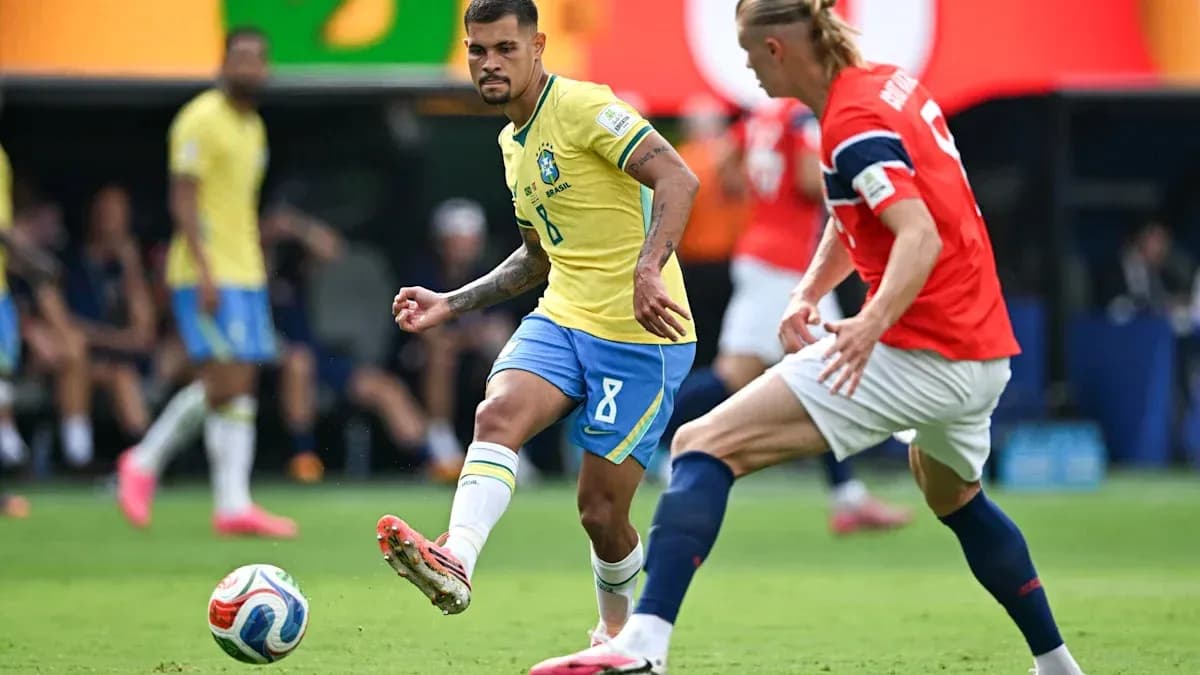
Four assists for Brazil at the World Cup. Only Michael Olise created more goals at the tournament. That kind of output on the biggest stage tends to get noticed, and Arsenal did more than just notice it – they acted.
Bruno Guimarães’ move from Newcastle United to the Emirates is huge in every sense. At $101 million, it’s a statement of intent. On the pitch, he brings hunger, bite, and authority. Arsenal want leaders all over the pitch; Guimarães plays like one, talks like one, and competes like one. Dropping him into a title-winning squad doesn’t just add quality. It raises the temperature for everyone else.
2. Declan Rice – the barometer of Arsenal and England
When Declan Rice isn’t fully fit, both Arsenal and England feel it. The energy dips. The press loses its edge. The control in midfield starts to fray. Even as he managed illness and injury at different stages of the World Cup, he still produced a strong tournament, anchoring England’s structure and rhythm.
For Arsenal, his role is non-negotiable. He sets the tone without the ball and dictates the tempo with it. If they’re serious about winning back-to-back Premier League titles, Rice’s form and fitness are central. He doesn’t just plug gaps; he defines how they play.
1. Erling Haaland – the inevitable
There was only ever going to be one name at the top of this list. Erling Haaland used the World Cup to expand his legend even further, hammering in seven goals as Norway surged to the quarterfinals and turning himself into an even bigger global phenomenon.
Everyone already knows what he is in the Premier League: a machine. Under Enzo Maresca, Manchester City should create a new wave of chances on the counter, with Haaland lurking, waiting, and then finishing with his usual ruthlessness. Another 30-goal league season feels less like a prediction and more like a scheduling note.
The World Cup showed who can handle the brightest lights. The Premier League will show who can do it from August to May.