.svg&w=384&q=75 "GoalGist logo")
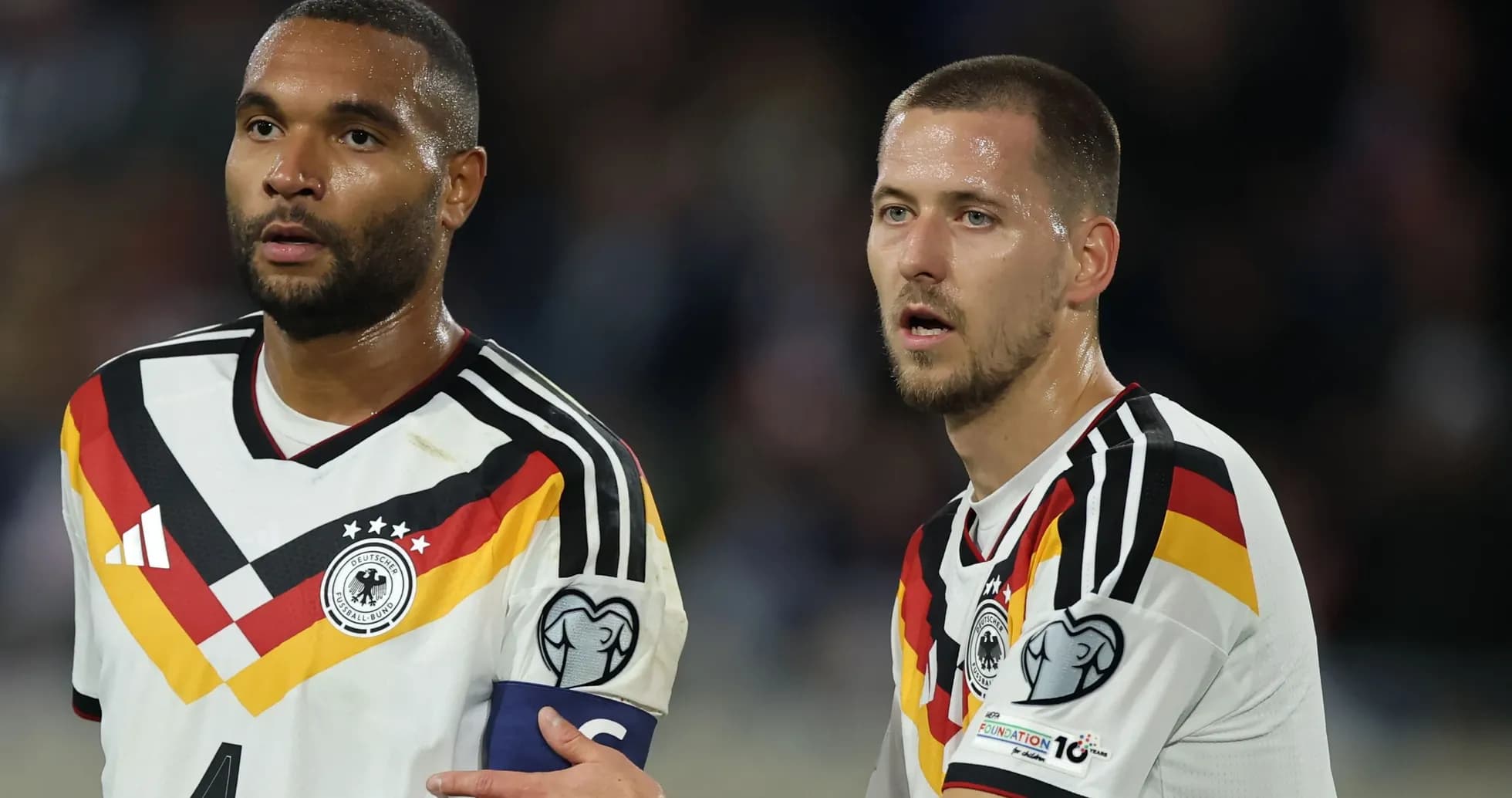
Waldemar Anton: The Iron Backbone of Dortmund
Waldemar Anton and Serhou Guirassy shout at each other every game. That’s how Anton tells it. No drama, no scandal – just two players who have known each other “so long” that they can say exactly what they think, even when it comes out a bit too sharp.
On Saturday night in Stuttgart, Anton had fresh material.
Guirassy trudged off in the 74th minute of Borussia Dortmund’s 1-0 win at his old club, taking an age to reach the touchline. Under the new rules, Fabio Silva then had to wait 60 seconds before he could come on. For a full minute BVB played with ten men. Niko Kovac fumed on the sideline, clearly unhappy with his striker’s stroll.
Anton didn’t waste time sulking about it. He stayed locked in on what matters most to him: defending.
Booed back “home”
Every time Anton touched the ball at the Mercedes-Benz Arena, the whistles rained down. Stuttgart fans still have not forgiven the 30-year-old for his abrupt move to Dortmund two years ago. The hostility is loud, persistent, and personal.
It doesn’t move him.
Once again, neither he nor his team were beaten. Dortmund’s 1-0 win was another statement in a season that is quickly being built on defensive steel.
Kovac has drilled this back line hard. Last season BVB already boasted the best defence in the league with just 34 goals conceded. Four matchdays into the new campaign, they have three clean sheets and sit joint top of the defensive charts with Bayern Munich on only two goals against.
At the centre of it all stands Anton.
From injury doubts to “total constant”
His rise in Dortmund colours has not been smooth. In his first season, two muscle fibre tears in quick succession sidelined him longer than ever before in his career. Rhythm gone, doubts growing.
Since then, he has turned himself into exactly what Kovac once called him months ago: a “total constant” at BVB.
Kovac rarely misses a chance to underline Anton’s importance. Labels like “defensive leader” don’t interest the defender much, but his coach doesn’t hesitate. Before the Champions League opener against Villarreal, Kovac described Anton as “a leader. Someone who leads the way. He thinks, eats, sleeps, drinks football 24/7. Someone who supports his team-mates, never gives up and gives everything for the team – a role model.”
Those are big words. Anton’s numbers are bigger.
The Ironman of Dortmund
Last season he outperformed his partner Nico Schlotterbeck defensively, and when Schlotterbeck was injured at the start of this year, Anton simply kept carrying the load. Kovac has dubbed him the “Ironman” of this Dortmund side, and the statistics back that up.
Out of 47 competitive games in 2025/26, Anton missed only three. In league and cup, he played all 35 matches from first whistle to last. No rotation, no early substitutions, no complaints.
He went to the World Cup with Germany and had less preparation time than almost anyone else in the Dortmund squad before this season. It barely left a mark. The 15-cap international returned and just continued where he had stopped: in outstanding form.
Why he matters so much
Availability is only one part of the package. Anton leads through discipline and mentality. He doesn’t do show. He does work.
He defends without fuss, tackles with edge, and plays with a relentlessness that has turned him into a warrior at the heart of Kovac’s project. His anticipation has become a defining trait. Since Mats Hummels, no one at BVB has defended on the front foot with such intelligence and timing.
The data underline the impression: Anton ranks among the league’s best for duel success rate, aerial duels won, interceptions and clearances. He is not just a cog in Dortmund’s machine; he is one of the main reasons the machine runs so smoothly.
On current form, there is no German centre-back playing better.
Klopp’s blueprint and Anton’s place in it
That form makes him almost impossible to ignore at national-team level. Jürgen Klopp wants Germany’s restart to rest on a rock-solid defence. For that, he needs players who bring experience, physical sharpness, mental toughness and the ability to organise those around them.
Anton ticks every box. He guides younger defenders, holds the line, and brings exactly the stability Klopp wants for his new DFB side.
Long term, Schlotterbeck’s strong left foot and his diagonal balls in build-up might give him a slight tactical edge for certain roles. And at Bayern Munich, Jonathan Tah remains the undisputed number one at centre-back. That hierarchy is clear.
But the gap below is closing. Fast.
Quiet, humble, indispensable
Self-promotion? Not Anton’s style. Kovac has described him as “very calm, very modest, very humble. Putting his own ego to one side and the team to the fore – simply outstanding.”
That attitude, combined with his reliability, has ended any internal debate at Dortmund. In a side that sits top of the table and prides itself on its defensive record, his name is inked in, not pencilled.
The whistles in Stuttgart will keep coming. So will the duels, the clearances, the sprints to cover a teammate.
The real question now lies elsewhere: in a Germany back line searching for a new identity, how long can anyone afford to build it without Waldemar Anton at its core?