.svg&w=384&q=75 "GoalGist logo")
Bournemouth vs Liverpool: Tactical Insights and Match Analysis
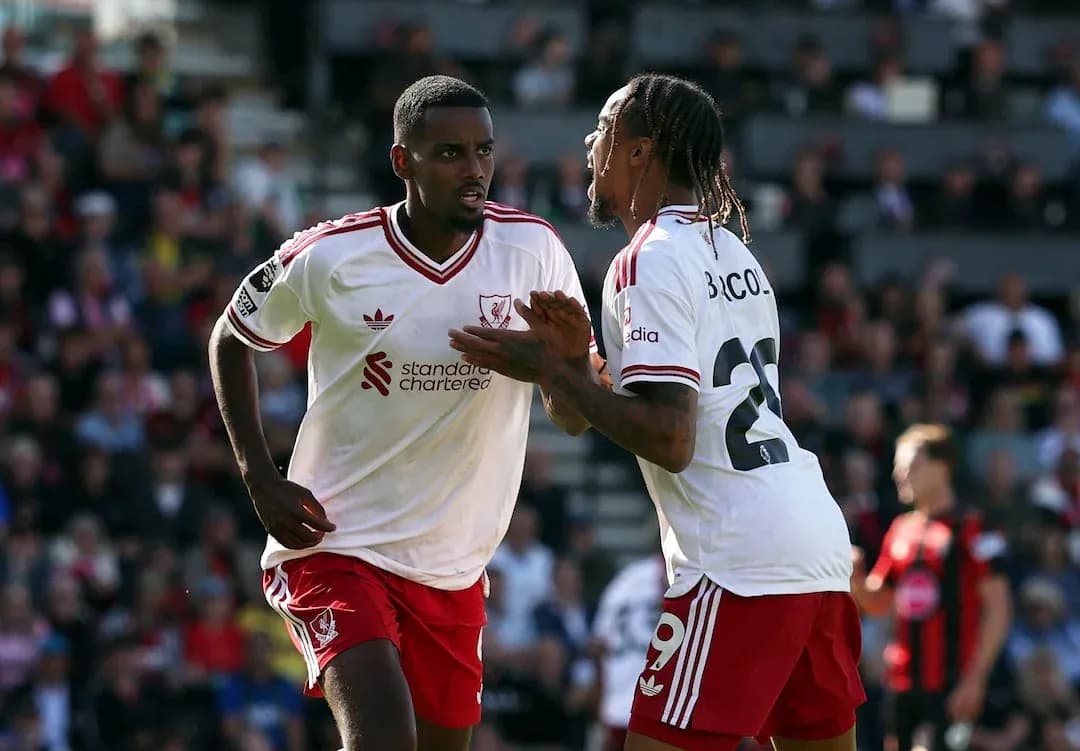
The Vitality Stadium closed on a familiar note for Bournemouth: effort, structure, but ultimately no points. Liverpool’s 1–0 win in regular time felt like a crystallisation of where both clubs stand after five Premier League rounds in 2026.
I. The Big Picture – Two 4-2-3-1s, Different Ceilings
Both sides arrived locked into the same base shape, but with very different seasonal identities.
Bournemouth, 17th in the table with 3 points from 5 matches, are a team defined by narrow margins. Overall this campaign they have yet to win, with 3 draws and 2 defeats. Their overall goal difference of -2 is the simple product of 6 goals for and 8 against. At home they have been stubborn but brittle: 3 matches, 0 wins, 2 draws, 1 loss, scoring 3 and conceding 4. The average tells the story of tight games – 1.0 home goals scored per match against 1.3 conceded – but also of a side that has failed to keep a single clean sheet anywhere and has already failed to score once at home.
Liverpool, by contrast, arrived as a quietly efficient contender. Sixth in the standings with 9 points from 5 matches, they remain unbeaten with 2 wins and 3 draws, and an overall goal difference of +3 (7 scored, 4 conceded). On their travels they have been particularly authoritative: 3 away games, 2 wins, 1 draw, 5 goals scored and only 2 conceded, for an away scoring average of 1.7 and away concessions of just 0.7. Three clean sheets overall, including 2 away, underline a defensive platform that can carry them through days when the attack does just enough – as it did here.
II. Tactical Voids – Who Was Missing, and What That Changed
Bournemouth’s squad was stretched in precisely the zones where creativity and rotation would have helped against an elite press. A. Adli (calf injury), J. Araujo (thigh injury), J. Kluivert (injury), E. J. Kroupi (foot injury) and V. Milosavljevic (injury) were all unavailable. That cluster of absentees stripped M. Rose of alternative profiles between the lines and fresh legs in wide areas. It forced him to lean heavily on M. Tavernier and Evanilson as his primary attacking reference points, with R. Christie and Rayan asked to cover huge distances in the 4-2-3-1.
Liverpool had their own absentees, but they were better insulated. C. Bradley (knee injury), F. Chiesa (back injury), H. Ekitike (Achilles tendon injury) and G. Leoni (knee injury) all missed out. On paper, losing Chiesa and Ekitike takes away explosive depth in the front line, but Andoni Iraola could still field a high-calibre attacking quartet of B. Barcola, F. Wirtz, C. Gakpo and A. Isak, with R. Ngumoha, L. Koumas and Víctor Muñoz as bench options.
Disciplinary trends also framed the risk landscape. Bournemouth have taken their yellow cards late this season: 42.86% of their bookings arrive between 76–90 minutes, with further spikes between 46–60 and 61–75. That late-game surge in cautions hints at a side that is often chasing, stretched and forced into recovery fouls. Liverpool’s bookings peak earlier, with 50.00% of their yellows between 46–60 minutes, suggesting an aggressive restart after half-time that can tilt games but also invites refereeing scrutiny.
III. Key Matchups – Hunter vs Shield, and the Engine Room
Hunter vs Shield: A. Isak vs Bournemouth’s Back Four
Alexander Isak came into this fixture as one of the league’s sharpest weapons. In total this campaign he has 4 goals from 5 appearances, supported by 13 shots (7 on target) and a strong overall rating of 7.47. His movement as the lone striker in Liverpool’s 4-2-3-1 is multi-layered: he drifts wide, drops to link, and then explodes into the box.
Bournemouth’s defence, meanwhile, has conceded 8 goals overall, with 4 at home at an average of 1.3 per match. There is no clean sheet to their name. The back four of A. Smith, J. Hill, António Silva and A. Truffert is capable but still calibrating. Smith is a combative presence, but his disciplinary profile is a flashing warning light: 3 yellow cards in 5 games, plus a top-division ranking among the most-booked players, and 7 fouls committed against 8 drawn. Against a striker who enjoys running the channels and drawing contact, that is a precarious balance.
The matchup naturally tilted towards Liverpool. Isak’s duel volume – 27 contests, 13 won – and his ability to occupy both centre-backs made it hard for Bournemouth to compress the middle. Even when he was not on the scoresheet, his gravity created pockets for Wirtz and Gakpo to exploit.
Engine Room: Tavernier and Adams vs Mac Allister and Szoboszlai
If Isak was the spear, the battle behind him determined whether Liverpool could keep Bournemouth pinned. A. Mac Allister and D. Szoboszlai formed a double pivot that is as comfortable on the ball as it is in counter-pressing. Liverpool’s defensive numbers – only 4 goals conceded overall, with an away average of 0.7 – are not just about the back line; they start with this pair strangling central progression.
On the other side, Bournemouth’s heartbeat is M. Tavernier. In total this season he has 3 goals, 12 shots (8 on target), 155 passes with 9 key passes and a superb rating of 7.52. He is also combative: 11 tackles and 56 duels contested, winning 26. Alongside him, T. Adams and A. Scott were tasked with both screening and springing transitions.
The tension here was clear: Tavernier wanted to receive on the half-turn between Liverpool’s lines; Mac Allister and Szoboszlai wanted to suffocate that space. Liverpool’s compactness, supported by Virgil van Dijk and J. Jacquet stepping in behind, meant Tavernier was more often forced wide or backwards. Bournemouth’s overall scoring average of 1.2 goals per match (1.0 at home) reflects that they can create, but not consistently carve open elite midfields.
Flanks and Creativity: Gakpo and Barcola vs Bournemouth’s Full-backs
Cody Gakpo arrived as one of the league’s leading creators, with 3 assists in total, 11 key passes and 123 completed passes at 82% accuracy. His role from the right half-space, with licence to drift inside, posed a direct challenge to A. Truffert and J. Hill. On the opposite flank, B. Barcola’s width stretched Bournemouth horizontally, preventing them from simply collapsing centrally around Wirtz and Isak.
Bournemouth’s full-backs, Smith and Truffert, were thus caught in a double bind: step out to Gakpo and Barcola and risk space in behind for Isak; stay compact and allow Liverpool’s wide men to dictate the tempo. Given Bournemouth’s late-card tendencies, there was always a risk that tired legs and repeated isolation would lead to cautions and set-piece pressure.
IV. Statistical Prognosis – Why a Tight Liverpool Win Made Sense
Even before a ball was kicked, the numbers pointed towards exactly the kind of contest that unfolded: Liverpool controlling the margins in a low-scoring game.
Liverpool’s away scoring average of 1.7 goals per match, combined with Bournemouth’s home concessions at 1.3 and their lack of any clean sheet, suggested the visitors were likely to find at least one breakthrough. Defensively, Liverpool’s overall concessions at 0.8 per match, and only 0.7 away, set them up to protect a lead once established, especially with van Dijk anchoring a back four that has already delivered 3 clean sheets in total.
Bournemouth’s own attacking metrics – 1.0 home goals per match, 1.2 overall – implied they would generate moments, particularly through Tavernier’s late surges and Evanilson’s link play. Evanilson’s 3 assists in total and 6 key passes show his value as a facilitator rather than a pure finisher. But against a side that compresses space as well as Liverpool and is comfortable winning 1–0 away from home, those half-chances were always more likely to fall just short.
Add in Liverpool’s perfect penalty record this season – 1 taken, 1 scored, no misses – and their ability to turn small advantages into decisive moments is clear. Bournemouth, by contrast, have yet to win a penalty at all, another small window into why tight games are not tilting their way.
In the end, the match at the Vitality Stadium felt less like an upset and more like a confirmation. Bournemouth remain a combative, structurally sound side whose margins are too fine at both ends. Liverpool, under Andoni Iraola, look like a team that can travel, suffer, and still emerge with three points – the hallmark of a serious top-six contender.