.svg&w=384&q=75 "GoalGist logo")
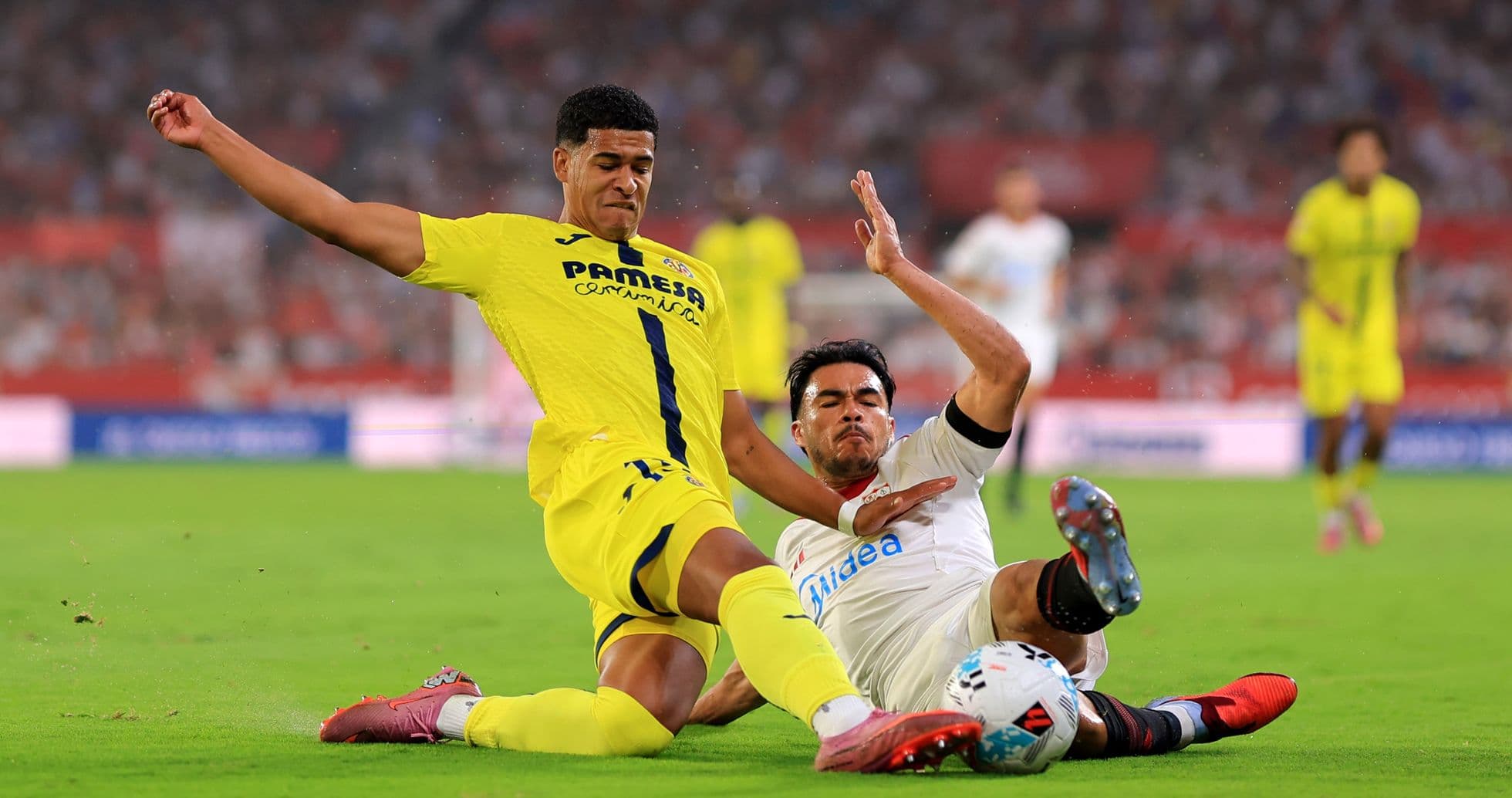
Villarreal vs Sevilla: A Clash of Tactics at Estadio de la Cerámica
Under the evening lights of Estadio de la Cerámica, this was supposed to be another affirmation of Villarreal’s home supremacy. Heading into this game they sat 3rd in La Liga with 69 points, powered by an imposing overall goal difference of 24 (67 scored, 43 conceded) and a ferocious home record: 14 wins from 18, with 43 goals for and only 18 against. Sevilla arrived in a very different skin – 12th in the table on 43 points, their overall goal difference a fragile -12 (46 for, 58 against), and their away form marred by 10 defeats in 18 outings.
Yet the final scoreline – Villarreal 2, Sevilla 3 – told a story of a script torn up and rewritten. The hosts, usually so assured in front of their own crowd, were picked apart by a Sevilla side that embraced the role of spoiler with a five-man back line and ruthless transitions.
I. The Big Picture: Structures and Season DNA
Marcelino doubled down on Villarreal’s season-long identity, rolling again with the 4-4-2 that has underpinned 35 of their 36 league fixtures. A. Tenas anchored a back four of A. Pedraza, Renato Veiga, P. Navarro and A. Freeman, with a midfield band of four: N. Pepe wide, D. Parejo and P. Gueye in the middle, and Alberto Moleiro drifting inside from the left. Up front, the partnership of G. Moreno and G. Mikautadze was the purest expression of their attacking DNA – a side that at home averages 2.4 goals per match and rarely fails to create.
Luis Garcia Plaza answered with pragmatism. Sevilla lined up in a 5-3-2: O. Vlachodimos behind a defensive line of Oso, G. Suazo, K. Salas, C. Azpilicueta and José Ángel Carmona. In midfield, R. Vargas and L. Agoume flanked D. Sow, with A. Adams and N. Maupay as a hard-running front two. It was a shape designed to absorb Villarreal’s waves and then break, a logical approach for a team that on their travels has conceded 34 goals – an away average of 1.9 – yet still carries enough punch to score 1.2 away goals per game.
II. Tactical Voids and Discipline
Both sides came into this fixture with notable absences that subtly reshaped the contest. Villarreal were without P. Cabanes (convalescence) and J. Foyth (Achilles tendon injury), depriving Marcelino of an experienced, defensively robust option in the back line. That absence placed even more responsibility on Renato Veiga, whose season profile – 30 blocked shots and a red card on his disciplinary ledger – speaks of a defender constantly on the edge of the duel.
Sevilla’s list was longer: M. Bueno (knee injury), Marcao (wrist injury) and Isaac Romero (injury) all missing. The latter’s season is particularly telling: 4 goals, 1 red card and a missed penalty underline both his threat and volatility. Without him, Plaza leaned heavily on Adams and Maupay, betting on their movement rather than sheer depth of options.
Discipline was always likely to be a fault line. Villarreal’s yellow-card distribution shows a clear late-game spike: 25.64% of their cautions arrive between 76-90 minutes, with a further 8.97% in added time. Sevilla’s pattern is even more stretched, with 18.63% of yellows in 76-90 and 20.59% between 91-105 minutes. Two squads that grow more reckless as fatigue sets in were always primed for a chaotic closing stretch – and a match that finished 3-2 duly delivered that sense of edge.
III. Key Matchups: Hunter vs Shield, Engine Room vs Enforcer
The headline duel was “Hunter vs Shield”: Villarreal’s front line, led by G. Mikautadze, against Sevilla’s often porous away defence. Mikautadze came into the fixture with 12 league goals and 6 assists, a striker who combines penalty-box instincts with link play – 26 key passes and 65 dribble attempts across the season. Partnered with G. Moreno, he was meant to stretch Sevilla’s back five horizontally, forcing Carmona and Suazo into constant decisions: step out, or hold the line?
On paper, Sevilla’s shield looked fragile. On their travels they had already conceded 34 goals, and their heaviest away defeat – 5-2 – was a warning of what can happen when the structure breaks. Yet the presence of C. Azpilicueta at the heart of the line, alongside K. Salas and Oso, gave them an experienced axis to handle Villarreal’s rotations between the lines.
In midfield, the “Engine Room” battle was as nuanced as it was brutal. For Villarreal, D. Parejo’s role as conductor was complemented by the vertical running of P. Gueye and the creative drifts of Moleiro, whose 10 goals and 5 assists this season make him one of La Liga’s most complete attacking midfielders. N. Pepe, with 8 goals, 6 assists and 121 dribble attempts, is the chaos agent, constantly driving at defenders and drawing fouls.
Opposite them, L. Agoume was Sevilla’s enforcer and metronome in one. Across the campaign he has made 66 tackles and 47 interceptions, with 10 yellow cards underscoring his readiness to foul to break rhythm. Alongside him, R. Vargas – 6 assists and 25 key passes – offered the vertical outlet, the player to turn a turnover into a counter within two touches.
The duel between Pepe and Carmona on Villarreal’s right flank was especially combustible. Carmona, La Liga’s leading yellow-card collector with 13 bookings, is aggressive in the challenge and proactive in stepping out. Against a dribbler of Pepe’s volume and success rate, every one-v-one carried the risk of a booking or a decisive breach of the line.
Up front for Sevilla, A. Adams embodied the “Hunter” in reverse. With 10 goals and 3 assists, and a perfect 3-from-3 record from the penalty spot this season, he is a constant central reference. His duels with Renato Veiga and P. Navarro – both tasked with holding a high line in a team that loves to attack – were about timing: could they step in front of Adams early, or would they be dragged back towards their own box, where Sevilla’s wing-backs and Vargas could flood the second wave?
IV. Statistical Prognosis and What This Result Means
From a pure statistical vantage point, Villarreal should have been favourites to control the xG battle. At home they average 2.4 goals for and concede just 1.0, backed by 5 home clean sheets and only 2 failures to score. Their penalty record is spotless: 6 taken, 6 scored, 0 missed. Sevilla, by contrast, arrive with an away profile that screams volatility – 22 goals scored, 34 conceded, 3 clean sheets and 4 away matches where they failed to find the net.
And yet, following this result, the narrative is of a Sevilla side that maximised their moments and a Villarreal team that lived too dangerously on the edge of their own attacking ambition. The visitors’ season-long habit of living in disciplinary and structural chaos was, for once, channelled into resilience: the back five bent but did not break, and the front two, led by Adams, punished the spaces that Villarreal’s adventurous full-backs left behind.
For Villarreal, the defeat is a reminder that even a Champions League-chasing side with a strong goal difference and a dominant home record cannot simply rely on volume of attacks. The late-game yellow-card surge, the reliance on individual brilliance from Mikautadze, Moleiro and Pepe, and the absence of experienced defensive depth in the wake of Foyth’s injury all converged into a fragile underbelly.
For Sevilla, this 3-2 away win feels like a microcosm of what they could be: a team whose tactical flexibility – they have used nine different formations this season – can, on the right night, smother a superior opponent and strike with precision. Their away xG profile will still be modest, but the psychological impact of overturning a top-three side in their own fortress may be worth more than any metric.
In the end, Estadio de la Cerámica witnessed not just a five-goal thriller, but a clash of identities: Villarreal’s expansive, high-risk football against Sevilla’s rugged, adaptive pragmatism. On this night, the underdog’s shield and counterpunch proved sharper than the favourite’s blade.