.svg&w=384&q=75 "GoalGist logo")
Switzerland vs Algeria: A Tactical Analysis of the Round of 32 Clash
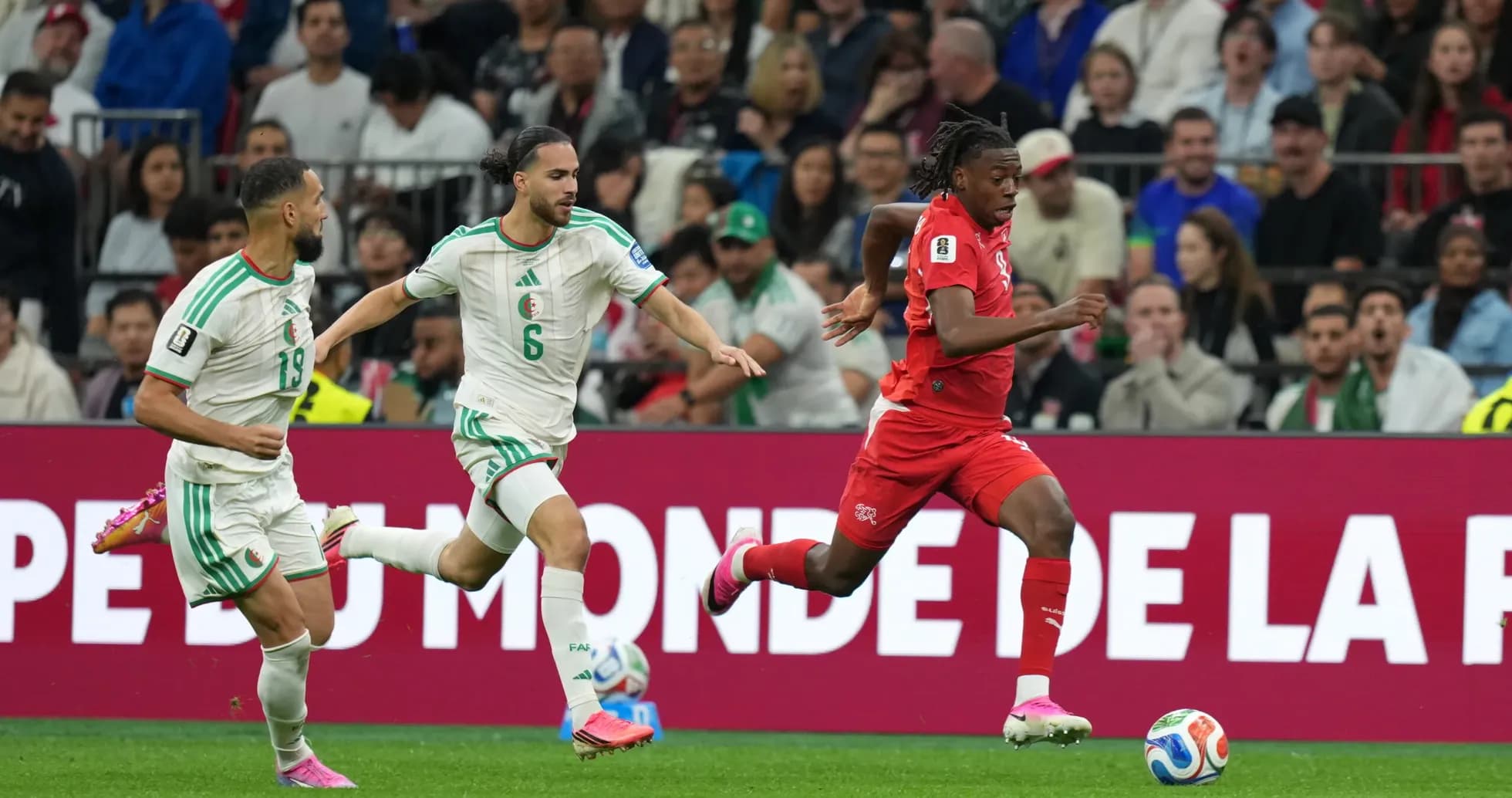
Under the closed roof of BC Place, this Round of 32 tie felt less like a neutral‑venue knockout and more like a referendum on two very different footballing identities. Switzerland arrived as the quietly efficient machine of Group B, top of their section with 7 points and a goal difference of 4, their overall record across the tournament to this point reading 3 wins and 1 draw from 4 matches. Algeria, third in Group J with 4 points and a goal difference of -2, came in as a volatile proposition: capable of scoring, but conceding heavily and still searching for a clean sheet.
The 2–0 scoreline in Switzerland’s favour at full time did not just settle the night; it underlined the broader statistical story. Overall this campaign, Switzerland have scored 9 goals and conceded 3, an overall goal difference of 6 built on control and balance. At home in this tournament context, they have averaged 2.7 goals for and 0.7 against; on their travels, 1.0 for and 1.0 against. Algeria, by contrast, have 5 goals for and 9 against overall, their overall goal difference of -4 mirroring a defensive structure that has yet to find stability. On their travels they average only 0.7 goals scored and 2.0 conceded, numbers that foreshadowed the difficulties they would face against a Swiss side comfortable dictating tempo.
Tactical Setup
Murat Yakin doubled down on that identity with his selection. Switzerland lined up in a 4‑2‑3‑1, a shape they have used more than any other this tournament, with Gregor Kobel behind a back four of Denis Zakaria, Nico Elvedi, Manuel Akanji and Ricardo Rodriguez. In front of them, Remo Freuler and Granit Xhaka formed the double pivot, the metronomes and safety valves of the system. Ahead, Dan Ndoye, Johan Manzambi and Ruben Vargas supported Breel Embolo as the lone striker.
The tactical spine is clear: Kobel’s composure, Akanji and Elvedi’s control of depth, Xhaka and Freuler’s passing geometry, and Embolo’s ability to both stretch and link. The numbers support that approach. Overall this campaign, Switzerland have failed to score in zero matches and have already produced one clean sheet; their biggest home win, 4–1, showcases the same blend of aggression and defensive assurance that appeared again here.
On the other side, Vladimir Petkovic trusted a 4‑3‑3, a shape Algeria have also leaned on in this tournament. Lukyan Zidane started in goal, protected by a back line of Rayan Belghali, Aissa Mandi, Ramy Bensebaini and Rayan Ait‑Nouri. In midfield, Ramiz Zerrouki, Nabil Bentaleb and Farès Chaibi formed a technical triangle, tasked with resisting Swiss pressure and finding the front three of Riyad Mahrez, I. Maza and Houssem Aouar.
On paper, that front line is Algeria’s “hunter” unit, but their campaign data paints a more complicated picture. Overall, Algeria have failed to score in 2 of their 4 matches, and have yet to keep a clean sheet. Their heaviest defeat on their travels, 3–0, hints at what happens when the midfield screen is bypassed and the back four are forced to defend large spaces without support.
Absentees and Discipline
The absentees sharpened those contrasts. Switzerland were without L. Jaquez, missing with a muscle bruise. While not a headline name in this squad, his absence slightly thinned Yakin’s defensive rotation options, making the selection of Zakaria at right‑back and the bench presence of Eray Cömert, Miro Muheim and A. Amenda even more significant. Algeria, for their part, were without A. Benbouali due to a wound, removing one more attacking alternative from a bench already tasked with changing games rather than simply holding them.
Discipline, too, told its own story. Heading into this game, both teams showed a similar pattern in yellow cards: 2 bookings in the 31–45 minute window accounting for 66.67% of their cautions, and 1 more between 61–75 minutes (33.33%). That statistical late‑first‑half spike aligned with the narrative of this match: a Swiss side that often ramps up pressure before the interval, against an Algerian team whose defensive structure can fray when chased backwards.
Key Players
In the “Hunter vs Shield” duel, Switzerland’s attacking trident behind Embolo found its focal point in Manzambi. Heading into this match, Manzambi had 3 goals and 2 assists in the tournament, from 4 appearances and 200 minutes, with a rating of 7.7. His shot profile—4 attempts, 3 on target—and 3 key passes underline his dual role as scorer and creator. Algeria’s shield against that came in the form of Mandi and Bensebaini, supported by Zerrouki and Bentaleb. Yet Algeria’s overall defensive numbers—9 conceded, an overall average of 2.3 goals against per match—suggested that even a well‑drilled block might struggle to hold under sustained pressure.
In the “Engine Room” battle, Xhaka and Freuler faced Bentaleb and Zerrouki. Switzerland’s preference for a double pivot was not just about protection; with an overall average of 2.3 goals scored and only 0.8 conceded, their midfield is calibrated to both recycle possession and launch vertical attacks into Embolo’s feet or into the channels for Ndoye and Vargas. Algeria’s midfield, meanwhile, is creative but less secure without the ball, and that imbalance has contributed to their inability to close games out, as reflected in a biggest away defeat of 3–0 and no clean sheets overall.
Penalties offered another small but telling contrast. Switzerland had taken 2 penalties overall before this match, scoring both for a 100.00% conversion rate and missing none. Algeria had yet to take a penalty, with 0 scored and 0 missed. In a knockout context where fine margins often decide outcomes, the Swiss reliability from the spot was another quiet edge.
Looking Ahead
Following this result, the statistical prognosis for both squads diverges sharply. Switzerland’s unbeaten overall run (3 wins, 1 draw, 0 losses) now sits atop a goal difference of 6, supported by a structure that has already produced one clean sheet and never left them scoreless. Their most‑used formation, 4‑2‑3‑1, looks increasingly like a settled identity, with depth on the bench in every line: Yvon Mvogo and M. Keller in goal, Widmer, Cömert, Muheim and Amenda in defence, and a mix of creators and runners like Djibril Sow, Michel Aebischer, Christian Fassnacht, Fabian Rieder and Ardon Jashari ready to tilt games from the bench. Up front, Noah Okafor, Cedric Itten and Zeki Amdouni give Yakin three different profiles to complement or relieve Embolo.
Algeria, by contrast, leave Vancouver needing structural answers. Their overall record—1 win, 1 draw, 2 losses—combined with 5 goals for and 9 against, and no clean sheets, points to a side still caught between the desire to unleash Mahrez, Aouar and the likes of A. Gouiri or A. Hadj Moussa from the bench, and the necessity of building a more resilient base. Petkovic has alternated between 4‑3‑3 and 4‑2‑3‑1, each used twice overall, but neither has yet delivered the balance required at this level.
In the end, this Round of 32 clash became a mirror. Switzerland saw in it confirmation of a maturing, tournament‑ready squad: tactically coherent, statistically robust, and led by emerging figures like Manzambi alongside established pillars such as Xhaka, Freuler, Rodriguez and Embolo. Algeria saw the reflection of a talented but incomplete side, their attacking flair too often undermined by a porous defensive record. The numbers, as much as the 2–0 scoreline, say the same thing: in this World Cup, Switzerland are built for the long road; Algeria are still searching for a map.