.svg&w=384&q=75 "GoalGist logo")
Spain's Transformation Ahead of the 2026 World Cup
Spain’s empire once felt permanent. Between 2008 and 2012, La Roja walked into every stadium on earth with the swagger of a side that believed trophies were a birthright. Euro, World Cup, Euro. The rest of the world chased shadows; Spain collected silver.
Then it all collapsed.
A decade of false dawns and failed resets followed, a painful comedown that stripped away the arrogance and left something more useful behind: perspective. As Spain head into the 2026 World Cup in North America, the mood is transformed. Not submissive. Not hysterical. Just quietly convinced.
This is no longer a nation demanding perfection. It is one that has remembered how to enjoy its team again.
From entitlement to equilibrium
The Euro 2024 title changed everything. Luis de la Fuente’s side didn’t just win the tournament; they ripped through it. Croatia, Italy, Germany, France, England – all taken apart by a Spain that looked, at last, like Spain again.
The doubts had been loud. The coach was questioned. The squad was dismissed as too young, too raw, too short of star power. That noise became fuel.
According to Spanish-American journalist and ITV World Cup presenter Semra Hunter, the suffocating “win or bust” culture that once stalked every Spain camp has eased. Fans, she argues, have been forced to grow up.
They were spoiled by the golden era. They thought it would last forever. When it didn’t, the crash was brutal. That pain hardened into scepticism in the build-up to Euro 2024, when De la Fuente’s appointment and selections were picked apart and hope was in short supply.
The players noticed. They went to Germany with a chip on their shoulder and came back with a trophy. Now the relationship has shifted. Supporters are confident again, they trust this team again, but the ultimatum has softened. Failure is no longer a national trauma. It is a possibility, not a betrayal.
Spain arrive at this World Cup not as fragile favourites, but as a “beautifully structured” machine, as Hunter describes them, a side that knows exactly what it is.
Waiting on the wingers
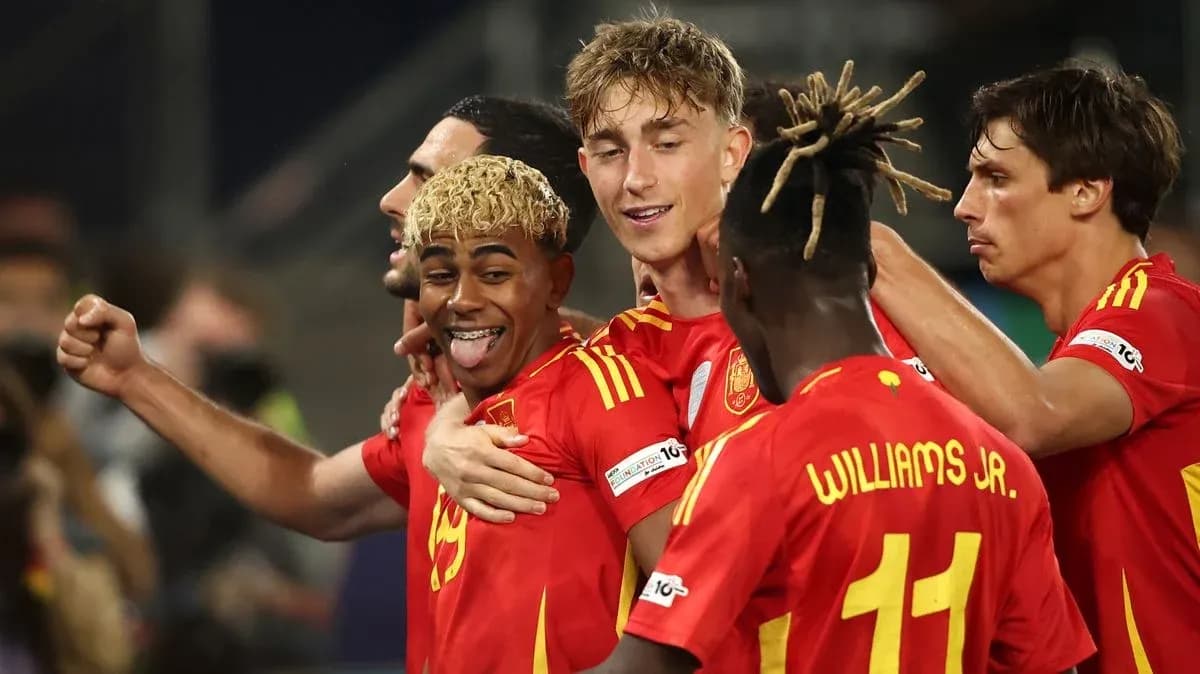
If Spain are to climb to the summit once more, their two most electrifying weapons must be ready to sprint, not limp. The camp is living with a double dose of anxiety: Lamine Yamal on one flank, Nico Williams on the other.
Both are generational talents. Both have hamstrings that have recently betrayed them.
Yamal, still only 18, suffered a hamstring problem in April. He is expected to feature in the tournament, but no one can say yet how sharp he will be when the first whistle blows. Spain need more than his presence. They need his chaos.
He is the destabiliser. The one who twists games off their axis. Hunter points to the way he has started to drift infield, flirting with a Messi-like role, dropping into pockets where he can conjure something from nothing. When matches tighten, when the patterns break down, he is the player who can pick the lock.
On the opposite wing, Williams – arguably Spain’s standout performer at Euro 2024 – also went down with a hamstring injury in May. The initial diagnosis, at least, brought some relief. His issue is not believed to be as severe, and he should return in time to train fully.
Spain’s structure is strong enough to function without them. It is not the same without them. To go all the way, both need to be at full tilt, stretching defences, forcing full-backs to turn and run towards their own goal.
Without that threat, Spain become easier to read. With it, they are terrifying.
Midfield riches, one brutal loss
If there is one area where Spain still resemble the old empire, it is in midfield. The options are absurd.
Rodri, the metronome and enforcer at Manchester City. Pedri, the silken Barcelona conductor. Gavi, all bite and bravery. Dani Olmo, the line-breaker who drifts between midfield and attack. Arsenal’s Martin Zubimendi and Mikel Merino. PSG’s Fabian Ruiz. It is an embarrassment of riches.
Within that wealth, two names sit above the rest. For Hunter, Rodri and Pedri are non-negotiable. If they are fit, they start. Everything else bends around them.
Rodri gives Spain control and security, the pivot who dictates tempo and shuts down transitions. Pedri supplies the imagination between the lines, the player who turns sterile possession into something more dangerous. After that, De la Fuente can choose his flavour: Gavi’s aggression, Olmo’s goal threat, Merino’s balance, Ruiz’s elegance.
There is, however, a sting. Barcelona’s Fermin Lopez, who delivered 30 goal contributions this season and looked primed to explode on the international stage, has been ruled out with a broken foot and has undergone surgery. It is a major individual blow and a genuine loss of a potential wildcard.
Spain, though, remain stacked. Versatility is their insurance policy. Zubimendi stands as a clean, like-for-like deputy for Rodri. Others can shuffle roles without the system collapsing. This is a squad built on players who can interpret multiple positions, not just fill them.
The old wound up front
For all that sophistication in the middle, the same old question hangs over Spain’s attack.
Where is the killer?
The country that mass-produces midfielders has long struggled to churn out the ruthless, penalty-box predators that define other great sides. David Villa and Fernando Torres once filled that role. No one has truly replaced them.
Hunter doesn’t hide from it. The absence of a true “fox in the box” remains, in her eyes, Spain’s most obvious weakness. Alvaro Morata has carried the No.9 shirt with dignity and effort, but he has never been that one-chance, one-goal striker who terrifies defenders simply by existing between the posts.
At this World Cup, Real Sociedad’s Mikel Oyarzabal is expected to lead the line, the same player who scored the winner against England in the Euro 2024 final. Intelligent, technically gifted, tactically reliable – but not the kind of centre forward who haunts opposition team talks.
Spain will lean on collective goals, on late arrivals from midfield, on wingers cutting inside. It is a model that can work. It has worked. Yet the nagging doubt remains: in a tight knockout game, who finishes the one big chance?
A nation of whiteboard romantics
Spain’s influence on the modern game runs far beyond its national team. The Premier League’s touchlines tell their own story: Pep Guardiola, Mikel Arteta, Unai Emery, Xabi Alonso, Andoni Iraola. Different personalities, different systems, one shared root.
The country is obsessed with tactics.
“Football is a language” in Spain, Hunter says, and it is taught early. Children don’t just play; they analyse. They talk about structures, pressing triggers, positional play. They grow up in a culture where everyone, from fans to players, fancies themselves a football philosopher.
That mindset travels. When Spanish coaches arrive in England, they bring their tactical obsession with them. Guardiola and Alonso were already “managers on the pitch” as players, constantly organising, constantly thinking two passes ahead.
The philosophy is clear: the collective over the individual. Collaboration over ego. Humility and hard work as non-negotiables. It seeps into their management, and it seeps into the way Spain play. The star is the system.
The road through North America
On paper, Spain’s group looks manageable: Cape Verde, Saudi Arabia and Uruguay.
Cape Verde are debutants. Saudi Arabia are typically well-drilled and disciplined. Spain, with their control and depth, should have too much for both. The real threat comes from Uruguay, a side that still carry that familiar South American edge.
They are intense. They are aggressive. They are streetwise. Technically, they are better than many give them credit for. If they choose to drag Spain into a fight, they can. That is the kind of test that exposes whether this version of La Roja can mix it physically as well as aesthetically.
Hunter expects Spain to handle the group, banking seven to nine points, topping the table and advancing with authority. From there, the path will tighten, the margins will shrink, and the ghosts of past tournaments will inevitably be mentioned.
She is not backing away from the prediction. For her, this Spain are not just contenders. They are favourites.
“I think they will make it all the way to the final,” she says. Then she goes further: “I think it’s going to be Spain to win it.”
After a decade of doubt, Spain walk into another World Cup not as the entitled kings of old, but as something more dangerous: a humbled giant that has remembered how to win.