.svg&w=384&q=75 "GoalGist logo")
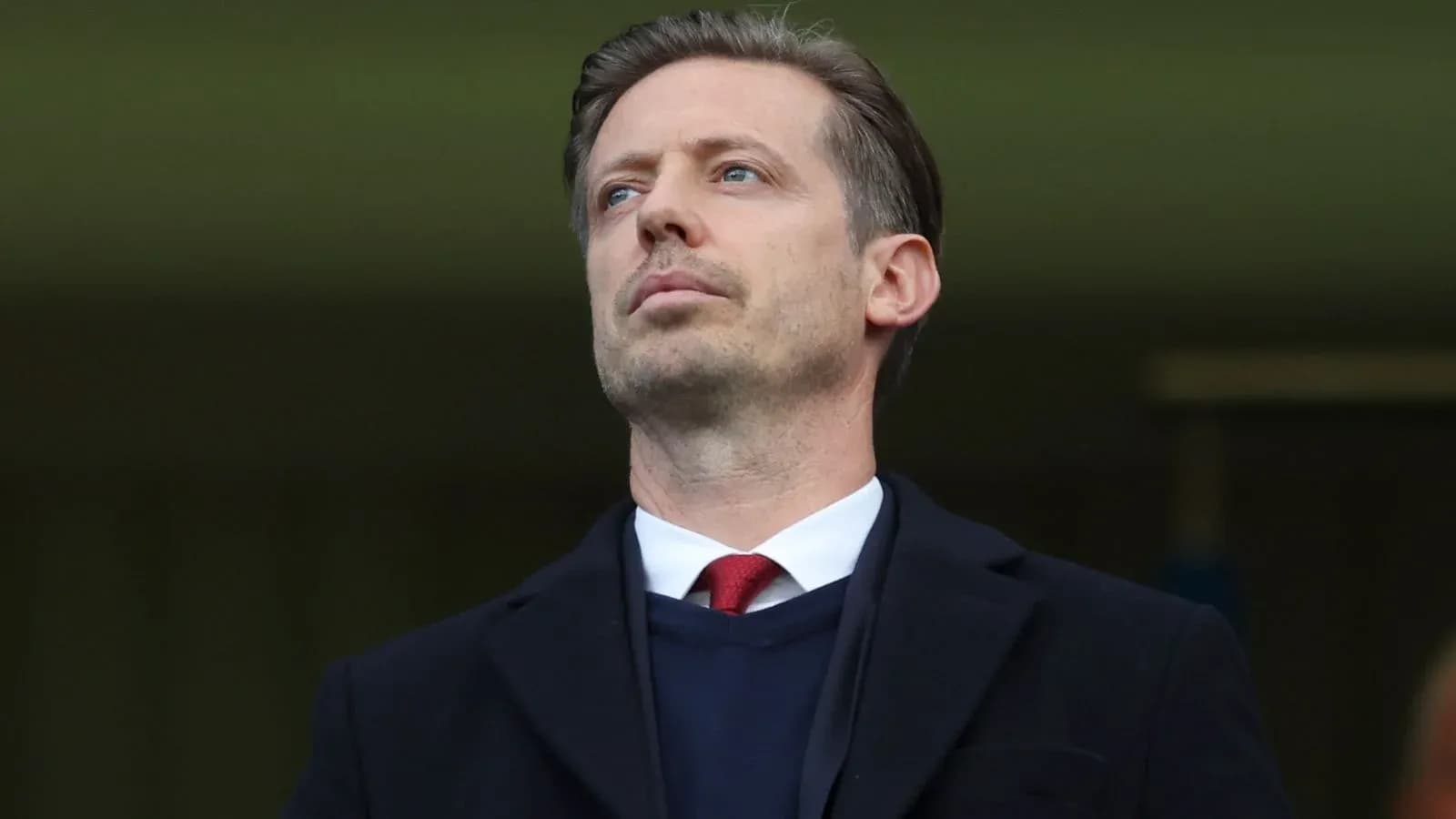
Michael Edwards Steps Down as FSG’s CEO of Football
Michael Edwards has stepped away from Fenway Sports Group and Liverpool again, this time from the top of the football pyramid, walking out as FSG’s CEO of football ahead of the 2026/27 season.
FSG insist this is no rupture, no sudden power struggle, but a “planned transition”. Either way, one of the key architects of the modern Liverpool has left the building.
The architect bows out
Edwards’ relationship with Anfield stretches back to 2011. He arrived as performance director, moved into the sporting director role in 2016 and, from there, helped shape a squad that climbed back to the summit of English football.
His fingerprints are all over Liverpool’s 2019/20 Premier League triumph, the club’s first league title since 1990. The recruitment, the balance of the squad, the timing of big calls in the market – inside the game, those decisions were routinely traced back to Edwards’ department.
He departed in 2022, his work seemingly done. Yet Liverpool called again. In March 2024, with Jurgen Klopp preparing to walk away and a new era looming, FSG brought him back as CEO of football, handing him control of all football operations.
The brief was clear: manage upheaval, redraw the structure, and plot the next phase.
Change on and off the pitch
The last two years at Liverpool have been defined by transition. Klopp’s departure, the arrival of Arne Slot in June 2024, and then the club’s push to reassert itself domestically.
Slot delivered. Liverpool claimed a historic 20th English league title in 2025, a landmark that restored them to the top of the domestic honours list. It was the kind of achievement that tends to cement a project.
Instead, the turbulence continued. After what FSG judged a below-par second season, Slot was replaced by Andoni Iraola in early June. Another reset. Another shift in direction.
Behind the scenes, Edwards had been tasked with building the framework for all this. FSG’s statement underlined his role in “the implementation of a new football leadership structure and the appointment of a new head coach” and in steering the club “through a significant period of change”.
This, they say, was always meant to end with him stepping away once those strategic priorities were ticked off.
A controlled exit – at a delicate time
The timing is striking. Liverpool stand on the brink of another pivotal summer, one in which replacing Mohamed Salah looms as the defining question of the transfer window. Losing the man who once specialised in solving precisely those problems adds another layer of intrigue.
There is also noise around sporting director Richard Hughes, whose own future has come under scrutiny. Should he move on as well, Liverpool’s football hierarchy would face a more profound shake-up than at any time since the early Klopp years.
Edwards’ own words painted a picture of a man who believes his work is complete, even if the wider FSG project did not unfold exactly as imagined.
“It has been a privilege to return to Fenway Sports Group and Liverpool Football Club at such an important moment,” he said. He spoke of leaving a club “in a strong position, with outstanding people, a clear direction and the foundations in place for continued success”.
He also acknowledged that FSG’s broader football ambitions – the idea of a wider multi-club or expanded footprint – “ultimately evolved differently to how we had originally envisaged”, but stressed his pride in the range of options presented to ownership.
The farewell was rounded off with thanks to FSG’s leadership – Mike Gordon, John W. Henry and Tom C. Werner – and, pointedly, to the supporters “whose passion makes this club so special”.
What comes next?
Liverpool now move into the 2026/27 campaign with a new head coach, questions over the sporting director, and without the executive who twice helped design their football strategy from the ground up.
The squad remains strong. The title count sits at 20. The infrastructure is modern and the pathways are clear. On paper, the foundations Edwards talks about are there.
But foundations only matter if the next decisions are right. With Salah to replace, a new coach to back, and a hierarchy potentially in flux, Liverpool are once again at a crossroads.
They have lived this story before, and thrived. The test now is whether they can do it again without the man who wrote so many of the key chapters.