.svg&w=384&q=75 "GoalGist logo")
Michael Edwards Exits FSG Role as Liverpool Faces Uncertainty
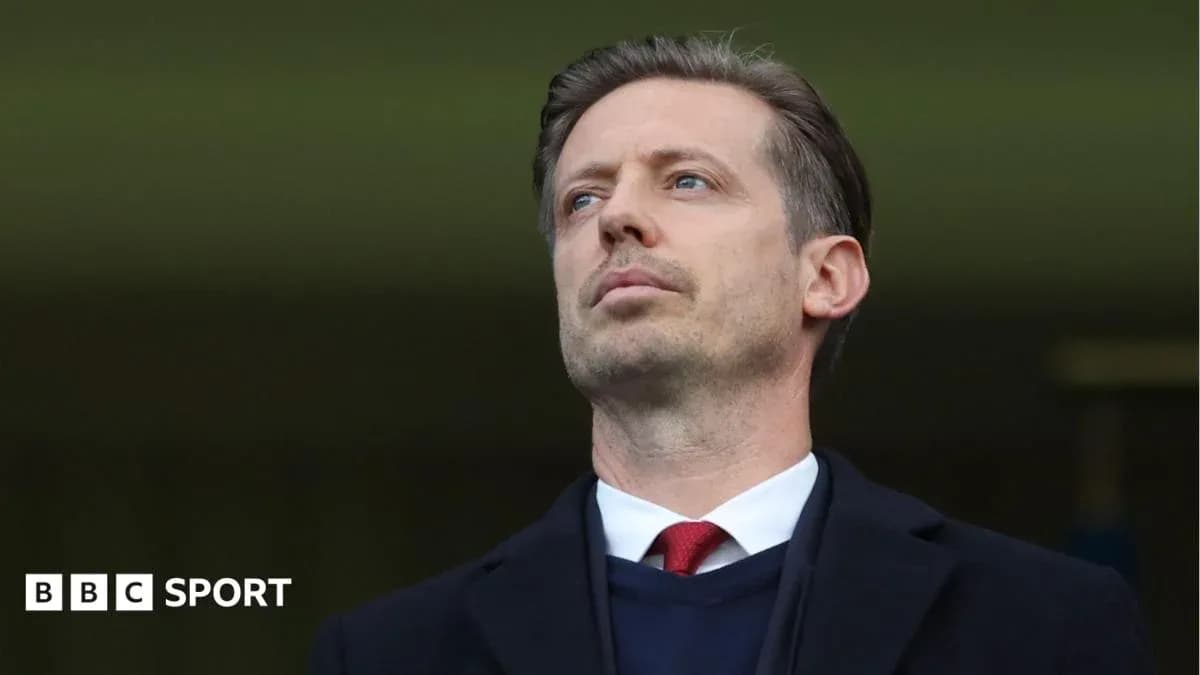
Michael Edwards has stepped away from his position as chief executive of football at Fenway Sports Group, leaving Liverpool staring at yet another strategic reset just as the post-Jurgen Klopp landscape begins to take shape.
FSG framed the move as part of a “planned transition following the completion of key strategic priorities”. The wording was calm. The timing is anything but.
Edwards departs two years into a three-year contract, having returned to work closely with Liverpool in March 2024, when FSG brought him back to steer the club through life after Klopp and to help shape the ownership’s broader football portfolio. It was supposed to be the second act of a wildly successful partnership. It has ended abruptly.
Group president Mike Gordon admitted the owners are “naturally disappointed” to see him go. That line alone hints at how central Edwards was to their vision.
In his statement, Edwards painted a picture of a club left in good health and a project that ultimately changed shape around him. Liverpool, he said, is “in a strong position, with outstanding people, a clear direction and the foundations in place for continued success.”
He spoke of returning with two missions: to guide Liverpool through a critical transition and to help define FSG’s wider football ambitions. The first part is well under way. The second, he conceded, did not unfold as first imagined. The broader project, as he put it, “evolved differently to how we had originally envisaged,” though he stressed his pride in the work done in presenting ownership with “a broad range of thoughtful and well-developed options for the future.”
That future now arrives without one of the key architects of Liverpool’s modern resurgence.
Edwards originally joined the club in 2011 and became sporting director in 2016, a role in which he built a reputation as one of the game’s shrewdest operators. His transfer record helped reshape Liverpool from nearly-men into serial contenders.
Mohamed Salah, Roberto Firmino, Sadio Mane, Andy Robertson, Virgil van Dijk – the spine of a side that stormed Europe and finally ended a 30-year wait for a league title in 2020 – all arrived on his watch. Those deals, and the trophies that followed, turned his name into a byword for smart recruitment.
Now, as Liverpool step into a season without Salah, the challenge only grows. The Egyptian forward, the club’s attacking reference point for years, departed at the end of the last campaign. Replacing his goals, his presence, his reliability in decisive moments would be daunting in any circumstances. Doing it while the club’s senior football architect walks away raises the degree of difficulty again.
Questions are already swirling around the structure that remains. Speculation has been building that sporting director Richard Hughes could also be on the move, a possibility that would deepen the sense of flux behind the scenes. For a club that has prided itself on stability and long-term planning, the churn at executive level feels stark.
FSG insist this is all part of a managed evolution, a transition mapped out in advance. The reality on the ground is more jagged: a legendary manager gone, a talismanic forward gone, and now the man trusted to plot the next phase stepping aside before his contract is up.
Liverpool have survived upheaval before and turned it into fuel. The question now is whether the structure Edwards helped build is robust enough to outlast his influence, or whether his exit marks the end of an era that cannot easily be recreated.