.svg&w=384&q=75 "GoalGist logo")
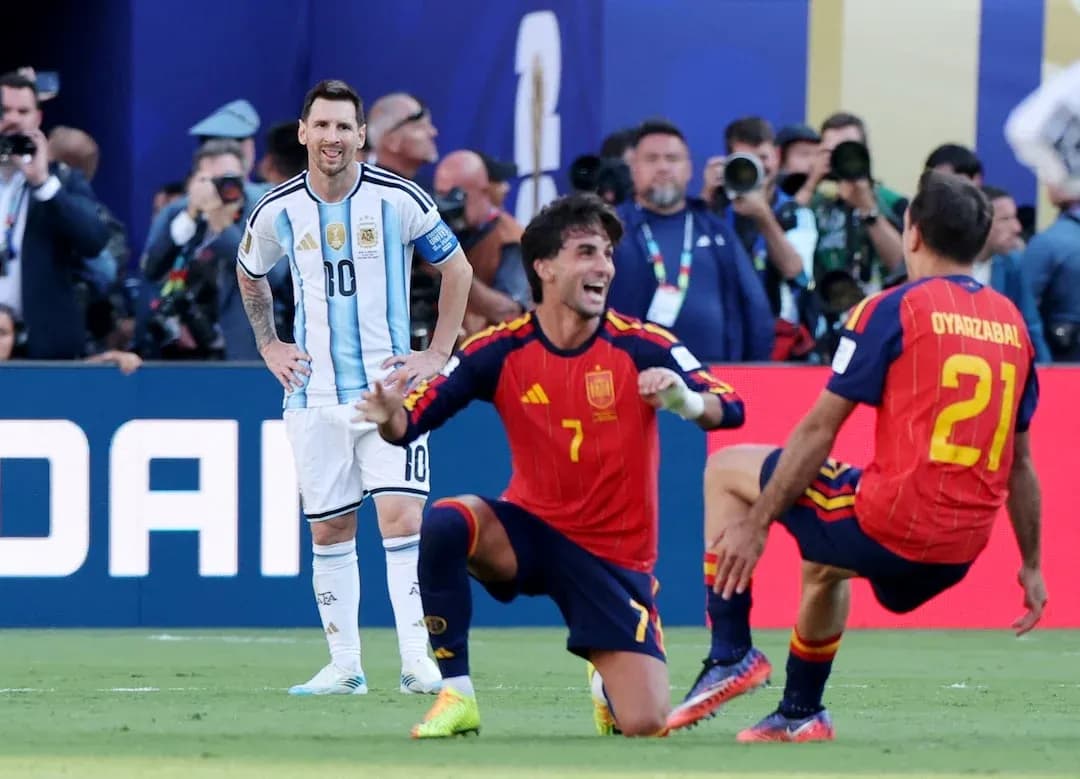
Spain vs Argentina: World Cup Final Tactical Showdown
This World Cup Final between Spain and Argentina crowns the 2026 world champion and defines a generation for both nations: Spain arrive as Group H winners with 7 points and a +5 goal difference, while Argentina come in as Group J winners with a perfect 9 points and a +7 goal difference, so the seasonal weight is absolute — legacy, rankings, and the narrative of the entire cycle hinge on this 90 minutes.
Head-to-Head Tactical Summary
The recent head-to-head record is sparse but telling. Their scheduled Finalissima clash on 27 March 2026 was cancelled and offers no tactical evidence. The last completed meeting was a friendly on 27 March 2018 at Estadio Wanda Metropolitano in Madrid, where Spain, as hosts, beat Argentina 6-1 (half-time 2-1). Spain’s aggressive, front-foot approach overwhelmed Argentina that night, with Spain sustaining pressure and converting dominance into goals, while Argentina’s defensive structure collapsed once they were forced to chase the game. However, that result came in a non-competitive context eight years ago, so tactically it serves more as a reminder of how badly Argentina can suffer against high-tempo possession sides than as a direct blueprint for this final.
Global Season Picture
- League Phase Performance: In the group stage, Spain topped Group H with 7 points from 3 matches (2 wins, 1 draw), scoring 5 goals and conceding none, for a +5 goal difference. Argentina dominated Group J with 9 points from 3 matches (3 wins), scoring 8 and conceding 1, for a +7 goal difference. Both sides qualified as group winners, with Argentina slightly more explosive in attack and Spain more watertight defensively.
- Season Metrics: In the tournament, Spain have played 7 matches, winning 6 and drawing 1, with 13 goals scored and just 1 conceded. Their goals profile — roughly 1.9 scored and 0.1 conceded per match — points to a control-first game plan, backed by frequent clean sheets (6 in 7). Spain’s card distribution shows most yellow cards arriving late in matches and extra time windows, consistent with a team that defends aggressively when protecting leads. Argentina have also played 7 matches, winning all 7, with 19 goals scored and 7 conceded, averaging about 2.7 scored and 1 conceded per game. This underlines a more open, risk-accepting style: high attacking volume, but with more space offered at the back. Their cards pattern, with a cluster of yellows late in games and into extra time, suggests intensity spikes in high-leverage phases rather than sustained early aggression.
- Form Trajectory: In the group stage, both sides were flawless on paper: Spain’s form string “WWWWW” and Argentina’s “WWWWW” reflect perfect runs in their respective groups. Extended tournament data reinforces that trajectory: Spain are unbeaten across 7 World Cup matches (6 wins, 1 draw), while Argentina are on a 7-game winning streak. Spain’s path has been built on defensive stability and incremental attacking output, whereas Argentina’s trajectory shows consistently high scoring but without the same defensive suppression Spain have managed.
Tactical Efficiency
Across the World Cup, Spain’s efficiency is defined by defensive control and structural discipline. Conceding just 1 goal in 7 matches, with 6 clean sheets, indicates an elite defensive block that limits shot quality and volume, allowing their possession-heavy style to suffocate opponents and keep matches low-variance. Their attacking output — 13 goals at roughly 1.9 per match — is solid rather than explosive, but in the context of their defensive record it is more than enough to generate winning margins without overcommitting.
Argentina’s tactical efficiency trends in the opposite direction: they trade some defensive stability for sustained attacking pressure. With 19 goals in 7 matches (about 2.7 per game), they are one of the tournament’s most potent attacks, capable of breaking games open quickly and repeatedly. However, conceding 7 times (1 per match on average) shows that their defensive unit is more vulnerable, especially when their full-backs advance and the team compresses the pitch to sustain pressure. In a final against a side like Spain, that openness can be double-edged: it creates chances to overwhelm Spain’s back line, but also leaves transition channels that Spain’s structured attacks and wide overloads can exploit.
Comparatively, Spain’s season-long numbers point to a more balanced, risk-averse efficiency profile: they win by controlling territory and tempo, minimizing defensive exposure and relying on sustained possession to generate enough high-quality chances. Argentina’s metrics indicate a higher-variance, attack-led approach: they are more likely to be involved in multi-goal contests, leaning on their offensive talent and accepting that they will concede opportunities. In a one-off final, Spain’s model reduces randomness and plays to their defensive edge, while Argentina’s model maximizes the impact of their attacking ceiling but leaves them more exposed if they cannot convert early pressure into goals.
The Verdict: Seasonal Impact
The outcome of this World Cup Final will redefine the international hierarchy. A Spain victory would validate a tournament built on defensive dominance and tactical control, confirming that their current cycle can translate group-stage solidity and knockout consistency into the ultimate prize. It would cement them as the benchmark possession side of this era and give continuity to a model that prioritizes structure and defensive security — a result that would likely keep the core of this squad and tactical identity intact through the next major cycle.
An Argentina win would crown an attack-first campaign with a perfect record, reinforcing the idea that offensive firepower and high-tempo football can still prevail at the very top level despite defensive concessions. It would elevate this group into the pantheon of the great Argentine teams and justify their willingness to play open, aggressive football in knockout environments. Conversely, defeat for either side would carry different seasonal narratives: for Spain, questions about whether their conservative attacking output limits them in the very biggest games; for Argentina, scrutiny on whether their defensive balance is sufficient against elite, control-oriented opponents. In either case, this final is not just about the trophy — it will shape tactical trends, squad planning, and psychological momentum for both nations heading into the next four-year international cycle.