.svg&w=384&q=75 "GoalGist logo")
Manchester United's Midfield Needs Manu Kone: The Final Piece
Manchester United’s midfield rebuild is missing one last piece. If the plan is to drop Manu Kone into that gap as a pure holding midfielder, they’re about to misplace a very expensive puzzle part.
Casemiro has gone, Manuel Ugarte is sidelined long term, and the club have moved quickly. Andrey Santos and Youri Tielemans bring numbers, Premier League know-how and fresh legs. On paper, the engine room looks restocked.
It isn’t. Not in the way Michael Carrick needs it to be.
Carrick the manager is crying out for a Carrick the player – a specialist who lives in front of the back four, sets the rhythm, cleans up danger and starts attacks. Not necessarily a destroyer, but a reference point. A pivot.
Kone is not that player. At least, not if you want the best version of him.
A midfielder mislabelled
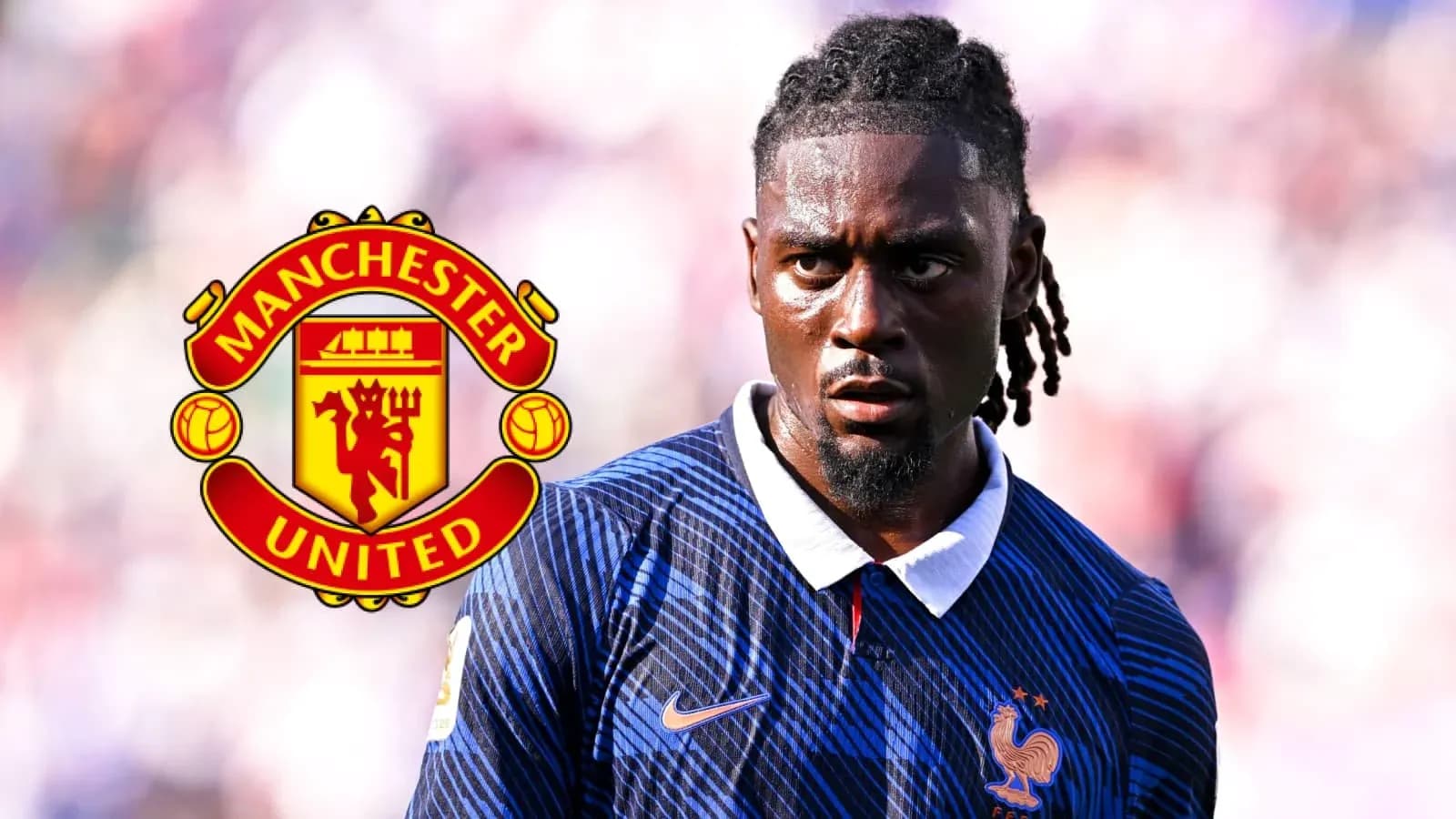
The World Cup has thrown Kone into the spotlight. He has looked at home for France, which is no small feat on a stage that often flatters and deceives in equal measure. In his case, it has simply underlined what he already is: a powerful, driving central midfielder entering his prime.
At 25, Kone has spent the last five years hardening his game in Europe’s top leagues – three seasons in the Bundesliga with Borussia Monchengladbach, two in Serie A with Roma. Roma see him as one of their jewels, a late-summer 2024 signing who immediately injected energy into their midfield.
But he didn’t stand out for his screening of the back line. He stood out because he ran.
In his first Serie A campaign, Kone played like a classic No 8. He carried the ball up the pitch, bounced off challenges, and dragged Roma forward. He gained territory, not just possession. He was the player who broke lines with his legs, not the one who sat and watched the game unfold in front of him.
That changed under Gian Piero Gasperini.
When the long-time Atalanta coach arrived, many assumed Kone would be the perfect fit for a man-to-man, high-octane system. Gasperini saw something different. He pulled Kone deeper, asking him to tuck into the defensive line in build-up, to give the team structure rather than chaos.
Kone still had a strong season, but the fireworks dimmed. The surging runs became rarer, the influence more discreet. The numbers back it up: he still ranked in the 78th percentile of Serie A midfielders for average distance of progressive carries last season – and that was in a more restrained role.
You don’t get those metrics from a pure sitter. You get them from a box-to-box midfielder who happens to be good in the tackle.
United’s recurring mistake
This is where United need to be very careful. They have already spent years paying for the consequences of misprofiling midfielders.
The Fred–Scott McTominay double pivot was the most obvious example: two willing, industrious players asked to be something they weren’t. Neither a true holding midfielder, neither a natural conductor. The result was a partnership that ran a lot and solved very little.
Casemiro, for a time, papered over the cracks. He brought authority, presence and big moments. But the club signed him at 30, when the ideal version of Casemiro for this project would have been 25. The legs faded quicker than the aura.
Ugarte looked like the next solution, his Ligue 1 tackling numbers at PSG screaming “elite ball-winner”. Those metrics have not translated cleanly into United’s structure. The problem isn’t just individuals; it’s roles.
Now comes Kone, viewed as the man to sit deepest behind Tielemans and Santos. He can do it. He can read danger, he can win duels, he can plug gaps.
But you would be paying a premium to use him with the handbrake on.
Kone is at his best when he is allowed to roam from deep, punch through midfield and carry his team 20 or 30 yards up the pitch. Turn him into a fixed No 6 and you strip away the very thing that made Roma and France trust him.
Strengths, flaws and price
None of this means Kone is a complete midfielder. Far from it.
If he wants to be considered a top-tier box-to-box player, his shooting has to improve. Four goals in 82 games for Roma tells its own story. He reaches promising positions, but the conviction often deserts him in the final third.
Gasperini said it plainly after Kone’s first goal of the 2025-26 season back in December: if he scored more, he’d already be operating at a higher level. Since that strike, he has played 22 times for club and country and found the net just once more. The numbers reinforce the eye test.
Those modest returns help feed the misconception that he is a defensive midfielder. He isn’t. He is a central midfielder who defends well and drives play, but he does not yet decide games in the opposition box.
There are other details to refine. His movement off the ball in possession phases still needs work. Too often last season he failed to drift into useful pockets to receive, or he wandered into areas that blocked passing lanes for team-mates. As a lone No 6 in a big Premier League side, that kind of positional imprecision gets punished.
Then there is the question of value.
Roma are expected to ask for £50m or more. The World Cup exposure will only harden their stance, and they have already rejected an offer of around £38m from Inter. In a market where Elliot Anderson can move to Manchester City for £116m after fewer than 10 goal contributions, and Tottenham pay £85m for Mateus Fernandes, Kone’s lack of goals and assists becomes a talking point, not a deal-breaker.
But if you are paying that kind of fee, you need to know exactly what you are buying.
How he actually fits
United’s 4-2-3-1 does offer a possible compromise. In a double pivot with Tielemans or Santos, Kone could share responsibilities: one sits, one goes, then they swap. It sounds simple, but the balance would need to be genuinely equal, not a de facto holding role for Kone with Tielemans granted permanent licence to wander.
The template is already there from France. At the World Cup he has played alongside Adrien Rabiot and Aurelien Tchouameni, both comfortable holding the fort while Kone surges on, then stepping forward themselves when the pattern flips. At Roma, Bryan Cristante often stayed deeper to let Kone drive on, even if the Italian sometimes joined the attacks more.
Used like that – as part of a pair, with clear rotation and trust – Kone can be a force. Used as a lone shield in front of the defence, he becomes a compromise signing rather than a statement one.
Other doors, other systems
United are not alone in tracking him. Atletico Madrid have been mentioned. Arsenal, too, before their gaze drifted towards Bruno Guimaraes. Liverpool’s interest has never quite gone away since his Bundesliga days.
You can see why some of those options might suit him better.
At Arsenal, the presence of Martin Zubimendi as a specialist anchor would free Kone to play the Rice role: start deeper, then break lines and arrive higher. At Liverpool, if Andoni Iraola settles on a 4-2-3-1, a partnership with someone like Ryan Gravenberch could echo his World Cup set-up – two dynamic midfielders sharing the dirty work and the fun.
Wherever he ends up, one thing is clear. Manu Kone is a high-level midfielder with time to polish his weaknesses. He will make one club’s midfield more aggressive, more vertical, more alive.
The question for Manchester United is not whether he’s good enough. It’s whether they are ready to build a role that lets him be exactly what he is, rather than what they keep hoping their next signing might become.