.svg&w=384&q=75 "GoalGist logo")
Scotland vs Haiti: World Cup Match Analysis
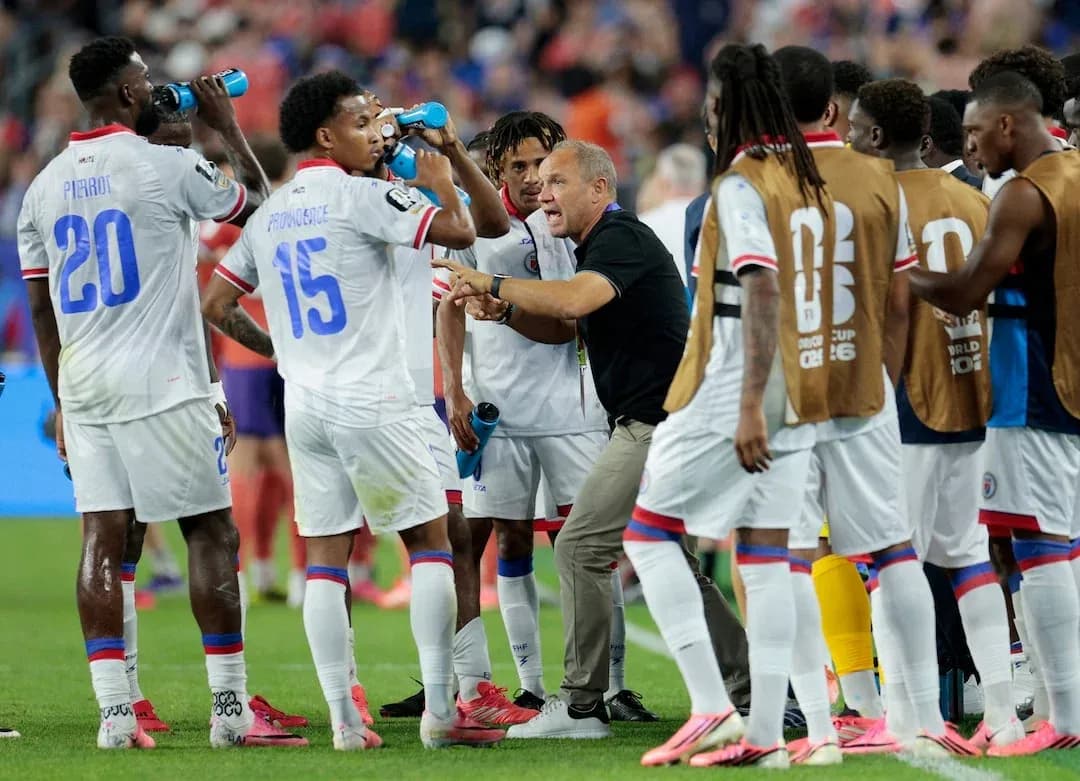
Gillette Stadium under the Boston lights hosted a meeting of contrasts: World Cup debutants Haiti against a Scotland side intent on proving they belong in the tournament’s latter stages. Following this result, Group C’s early story is sharply drawn. Scotland sit 1st with 3 points, a goal difference of +1 after a 1-0 win on their travels, while Haiti are 4th with 0 points and a goal difference of -1, still searching for their first World Cup goal.
Both coaches set up in a mirrored 4-4-2, but the systems carried very different identities. Sebastien Migne’s Haiti were compact and cautious, banking on defensive resilience and the physical presence of Frantzdy Pierrot and Wilson Isidor up front. Steve Clarke’s Scotland, also in a 4-4-2, played a more modern, asymmetrical variant: Andy Robertson high and aggressive from left-back, Aaron Hickey tucking in and stepping into midfield lanes on the right.
Haiti's Season Statistics
For Haiti, the season’s statistical DNA is brutally simple so far. In total this campaign they have played 1 match, at home, and lost it 0-1. Overall they have scored 0 goals, with an average of 0.0 goals for, and conceded 1, an average of 1.0 goals against. They have yet to keep a clean sheet and have already failed to score once in total. Their only yellow card so far came in the 31-45 minute window, a reminder that inexperience can surface just as matches approach half-time.
Scotland's Early Numbers
Scotland’s early numbers tell the opposite tale. Heading into their next game, they have played 1 match in total, on their travels, and won it. They have scored 1 goal overall, all of it away, at an average of 1.0 goals for, and have yet to concede, with an average of 0.0 goals against. Their defensive record is pristine so far: 1 clean sheet away and 1 in total, and they have not failed to score in any match. The card distribution, however, reveals a team that got increasingly ragged as the night wore on: 1 yellow card between 46-60 minutes (33.33% of their total yellows) and 2 more in the 91-105 minute window (66.67%), a late flurry that hints at game management through fouls when under pressure.
Tactical Analysis
The tactical voids in this contest were less about absentees—there is no injury list data—and more about structural gaps. Haiti’s 4-4-2, with Johny Placide in goal and a back four of Carlens Arcus, Ricardo Adé, Hannes Delcroix and Martin Expérience, defended deep but struggled to progress the ball through midfield. Danley Jean Jacques and Jean-Ricner Bellegarde formed the central axis, with Louicius Don Deedson and Ruben Providence wide, yet the lines between defence and attack often stretched too far. The consequence was isolation for Pierrot and Isidor, asked to fight for long balls rather than combine through the thirds.
Migne’s bench was rich in attacking alternatives—Josué Casimir, Lenny Joseph, Yassin Fortune, Derrick Etienne and Duckens Nazon all offered different profiles—but the underlying issue was supply, not finishing. Without a reliable route through midfield, Haiti’s forwards were hunting half-chances rather than crafted opportunities.
Scotland’s structure, by contrast, looked rehearsed and balanced. Angus Gunn anchored a back four of Hickey, Grant Hanley, Jack Hendry and Robertson. In front, Scott McTominay and Lewis Ferguson provided the central platform, with John McGinn drifting in from the left and Ben Gannon-Doak offering directness on the right. Up front, Lawrence Shankland and Che Adams formed a classic “nine and ten” pairing: Shankland as the penalty-box reference point, Adams more mobile, dropping off the line.
The “Hunter vs Shield” duel in this match-up was less about a single goalscorer—there is no top scorer data yet—and more about Scotland’s collective attacking line against Haiti’s defensive block. Overall, Scotland’s 1 goal for and 0 against underline an efficiency that Haiti have not yet matched. Haiti’s defence, which has conceded 1 goal overall at an average of 1.0 per match, is not leaking heavily, but with no goals for, their margin for error is non-existent.
Engine Room Battle
In the “Engine Room” battle, McTominay and Ferguson were the metronomes against Jean Jacques and Bellegarde. McTominay’s ability to recycle possession and Ferguson’s vertical running allowed Scotland to pin Haiti back, while McGinn’s inside drifting created overloads that Haiti’s double pivot struggled to track. On the flanks, Hickey’s performance was emblematic of Scotland’s approach: he completed 35 passes with 88% accuracy, contributed 2 key passes, and engaged in 7 duels, winning 5. He also drew 4 fouls and committed 2, picking up a yellow card that underlined his combative edge.
Substitutions Impact
Clarke’s late-game substitutions added another layer to Scotland’s disciplinary and tactical profile. Kenny McLean and Findlay Curtis both came off the bench, each playing 15 minutes, each committing a foul and collecting a yellow card. McLean still managed 2 accurate passes at 100% and chipped in with 1 tackle and 1 interception, while Curtis added 3 passes and 1 duel. Their impact supports the reading of Scotland as a side willing to use its bench to stiffen the midfield and disrupt rhythm when protecting a narrow lead.
From a disciplinary standpoint, Haiti’s single yellow in the 31-45 window suggests a side that can be drawn into pressure fouls just before the break. Scotland’s pattern—1 yellow in the 46-60 band and 2 in stoppage time—signals that opponents pressing late may find joy if they can draw contact and challenge Scotland’s game management.
Prognosis for the Group Phase
Statistically, the prognosis for the group phase ahead is clear. Haiti’s defensive solidity is not catastrophic—1 goal conceded in total—but with 0.0 goals for and a 0-1 defeat at home, they must find a way to connect their midfield to Pierrot and Isidor or turn to impact forwards like Nazon and Etienne earlier. Without an attacking spark, their World Cup could be short.
Scotland, meanwhile, carry the profile of a pragmatic tournament side. Their 4-4-2 has already delivered a 1-0 away win, a clean sheet, and enough attacking variety to suggest their 1.0 goals-for average can rise. The absence of penalty incidents so far (0 penalties taken, 0 scored, 0 missed for both teams) keeps the xG narrative incomplete, but the defensive solidity—0 goals conceded overall—gives Scotland a strong base. If they can refine their discipline in the closing stages and maintain the balance between Robertson’s thrust, Hickey’s intelligence and the midfield’s work rate, they look well equipped to turn this opening statement into a deep run.