.svg&w=384&q=75 "GoalGist logo")
Milan's Tactical Masterclass: Dismantling Lecce 3-0
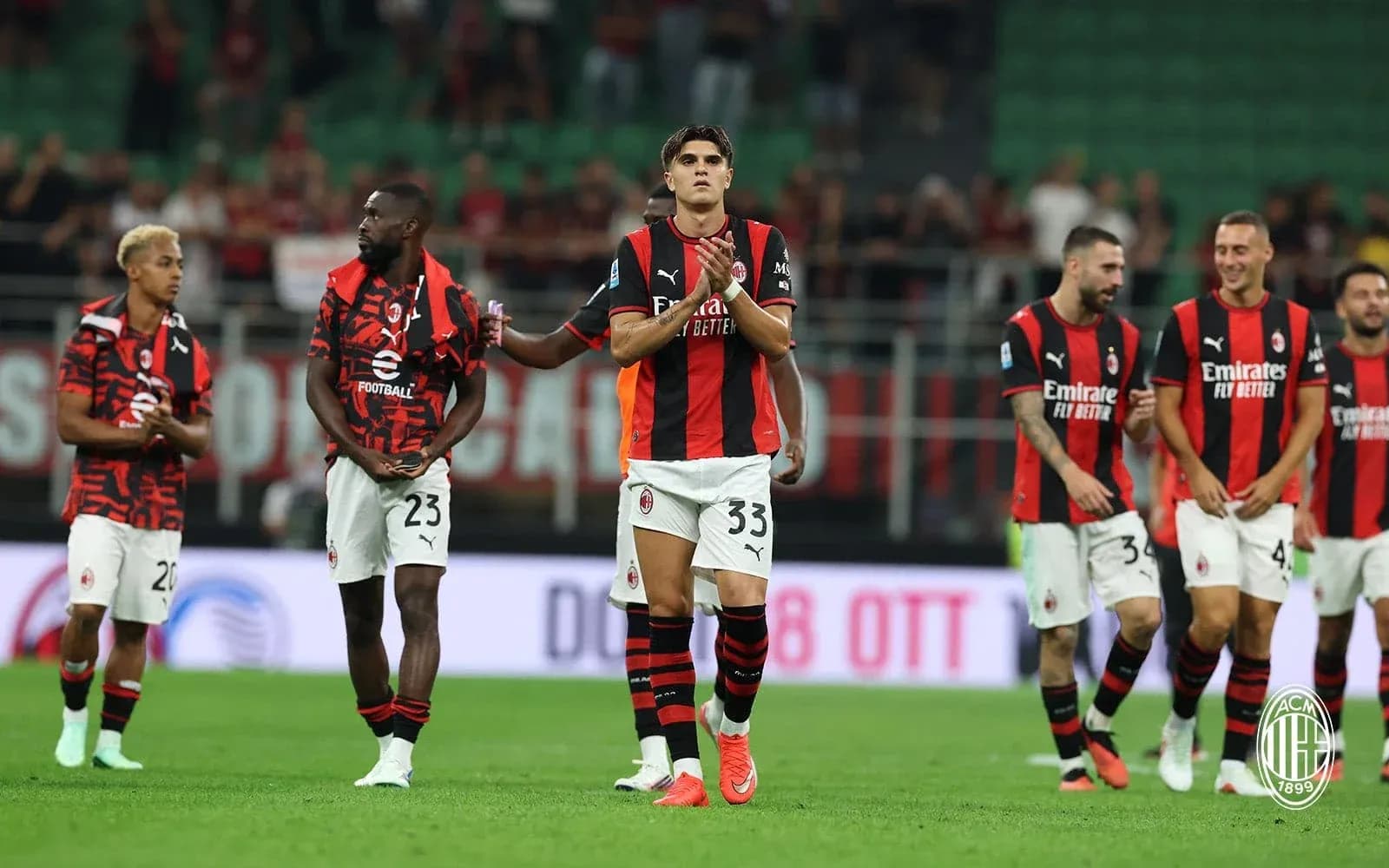
Under the San Siro lights, this was Ruben Amorim’s Milan in its purest early‑season form: a 3-4-2-1 machine that married control with incision, dismantling Lecce 3-0 and underlining why they sit 5th in Serie A with 11 points from 5 matches. The result keeps their unbeaten start intact (3 wins, 2 draws, 0 defeats), and their overall goal difference of 6 – 10 scored and 4 conceded – tells the story of a side increasingly comfortable dictating games.
Lecce arrive in this snapshot as a more volatile proposition. They stand 12th with 6 points from 5, their overall goal difference a stark -5 (5 for, 10 against). On their travels, they have 1 win and 2 defeats, scoring 2 and conceding 4, a pattern that foreshadowed the struggle they would endure in Milano.
I. The Big Picture: Structures and Seasonal DNA
Amorim stayed loyal to his blueprint: a 3-4-2-1 with Mike Maignan behind a back three of M. Gila, K. De Winter and S. Pavlovic. Ahead of them, the wing‑back duo of S. Chukwueze and P. Estupinan flanked a central axis of L. Modric and A. Rabiot, with C. Pulisic and A. Saelemaekers operating between the lines behind G. Ramos.
This shape fits the season’s numbers. Heading into this game, Milan had scored 5 goals at home from just 2 fixtures, an average of 2.5 per home match, while not conceding once at San Siro. Overall, they averaged 2.0 goals scored and only 0.8 conceded per game. The 3-0 here simply extended an established trend: a high‑functioning attack layered over a disciplined defensive block.
Lecce countered with a 4-3-3 under Eusebio Di Francesco: W. Falcone in goal, a back four of D. Veiga, K. Gaspar, J. Siebert and A. Gallo; a midfield trio of S. Pierotti, I. Ilic and Y. Maleh; and a front three of L. Coulibaly, N. Stulic and J. Monteiro. Structurally, it was a brave, front‑foot shape, but one that sat uncomfortably against their seasonal profile: overall they concede 2.0 goals per game, including 1.3 on their travels, while scoring just 1.0 overall and 0.7 away. Against a Milan side that had yet to fail to score in any league match, the risk was obvious.
II. Tactical Voids: Absences and Discipline
Lecce’s squad was stretched even before kick‑off. M. Berisha, O. Gandelman, W. Geubbels and Tiago Gabriel were all listed as missing the fixture, through a mix of injury, ankle problems, inactivity and lacking match fitness. None are present in the matchday squad, and their absence thinned Di Francesco’s options, particularly in terms of rotation and late‑game adjustments.
Milan, by contrast, fielded a deep bench: defensive cover in F. Tomori, D. Bartesaghi, M. Gabbia and S. Diawara; midfield variety through R. Loftus-Cheek, Y. Musah, A. Jashari, C. Comotto and A. Cisse; and attacking threats like D. Moreira, F. Camarda and O. Hutchinson. In a league where game states can flip after 60 minutes, that bench profile is a strategic asset.
Disciplinary trends added another layer. Milan’s yellow cards this season have been spread entirely across the second half and added time, with 25.00% of their cautions arriving in each of the 46-60, 61-75, 76-90 and 91-105 minute ranges. It paints a picture of a side that defends aggressively as intensity rises but rarely loses control. They have no reds in the league so far.
Lecce’s discipline is more precarious. Danilo Veiga leads the league’s card charts with 3 yellows already, and also appears in the red‑card leaders list, underlining how often he walks the disciplinary tightrope. The team’s yellows are scattered across all phases, with notable spikes of 20.00% in the 31-45, 46-60, 76-90 and 91-105 minute windows. Against Milan’s late‑game pressure, that volatility was always likely to be exposed.
III. Key Matchups: Hunter vs Shield, Engine Room Battles
The “Hunter vs Shield” narrative began with Milan’s attacking trident against a Lecce defence that has already been punished both home and away. G. Ramos, leading the line, benefits from the creative weight carried by Pulisic and Saelemaekers, but the real edge comes from the runners outside and behind him.
S. Chukwueze, one of Serie A’s leading assist providers with 2 so far, is pivotal. Across 5 appearances he has produced 10 key passes and 14 dribble attempts with 8 successful, numbers that make him a nightmare for isolated full‑backs. His duel with D. Veiga – who has 15 tackles, 2 blocks and 4 interceptions but also 8 fouls committed and those 3 yellows – was always going to be decisive. Milan’s right flank, with Chukwueze high and Gila stepping out, relentlessly asked Veiga to defend big spaces and repeated 1v1s.
On the opposite side, P. Estupinan’s presence as a left‑sided midfielder/wing‑back gave Milan a natural width and depth on both flanks, stretching Lecce’s back four horizontally and opening corridors for Pulisic and Saelemaekers to drift into half‑spaces. Once Lecce’s line bent, Ramos could attack the gaps between centre‑backs.
The “Engine Room” duel pitted A. Rabiot and L. Modric against I. Ilic and Y. Maleh. Rabiot has been one of the league’s most complete midfielders so far: 2 goals, 2 assists, 209 passes at 88% accuracy, plus 3 tackles and 1 blocked shot. He offers both vertical surges and defensive presence. Modric, orchestrating from deeper pockets, ensured Milan’s 3-4-2-1 never became stretched; instead, it morphed into a 3-2-5 in possession, with Rabiot joining the front line and Chukwueze and Estupinan pinning Lecce back.
For Lecce, I. Ilic’s season numbers (2 assists, 141 passes at 89% accuracy) show a player capable of threading lines, but in this game he was forced deeper, often forming a situational double pivot to protect Gaspar and Siebert. That blunted his ability to link with L. Coulibaly, who has 2 goals and 1 assist from midfield and is usually their most direct runner into the box. Instead of being a second‑wave finisher, Coulibaly was dragged wide and deep to help against Milan’s overloads.
At the back, S. Pavlovic’s presence completed Milan’s “Shield”. Across the season he has 13 tackles, 2 blocked shots and 1 interception, plus 374 passes at a remarkable 92% accuracy. Here, he anchored the left of the back three, stepping out confidently to intercept early passes into Stulic and Monteiro. With Maignan protected and Lecce’s away record of just 2 goals in 3 trips, the visitors rarely looked like breaching a line that has yet to concede at home.
IV. Statistical Prognosis and Tactical Verdict
From a statistical lens, the 3-0 scoreline sits squarely within the expected pattern. Milan’s home average of 2.5 goals scored and 0.0 conceded was actually exceeded offensively but maintained defensively. Lecce’s away profile – 0.7 goals scored and 1.3 conceded on their travels – translated into a night where they were simply overmatched, both in structure and in squad depth.
Neither side has yet taken or missed a penalty in the league, so there was no set‑piece wildcard to skew the contest. Instead, the decisive factors were systemic: Milan’s stable 3-4-2-1, their ability to rotate from the bench without losing intensity, and the way their key creators – Chukwueze and Rabiot – imposed themselves in exactly the zones where Lecce are most fragile.
Following this result, the narrative is clear. Milan look every inch a Europa League contender with Champions League ambitions, their numbers underpinned by tactical clarity and defensive solidity. Lecce, for all their flashes from Coulibaly and Ilic, remain a side whose attacking promise is undermined by structural looseness and disciplinary risk, especially away from home. At San Siro, those weaknesses were not merely exposed; they were ruthlessly punished.