.svg&w=384&q=75 "GoalGist logo")
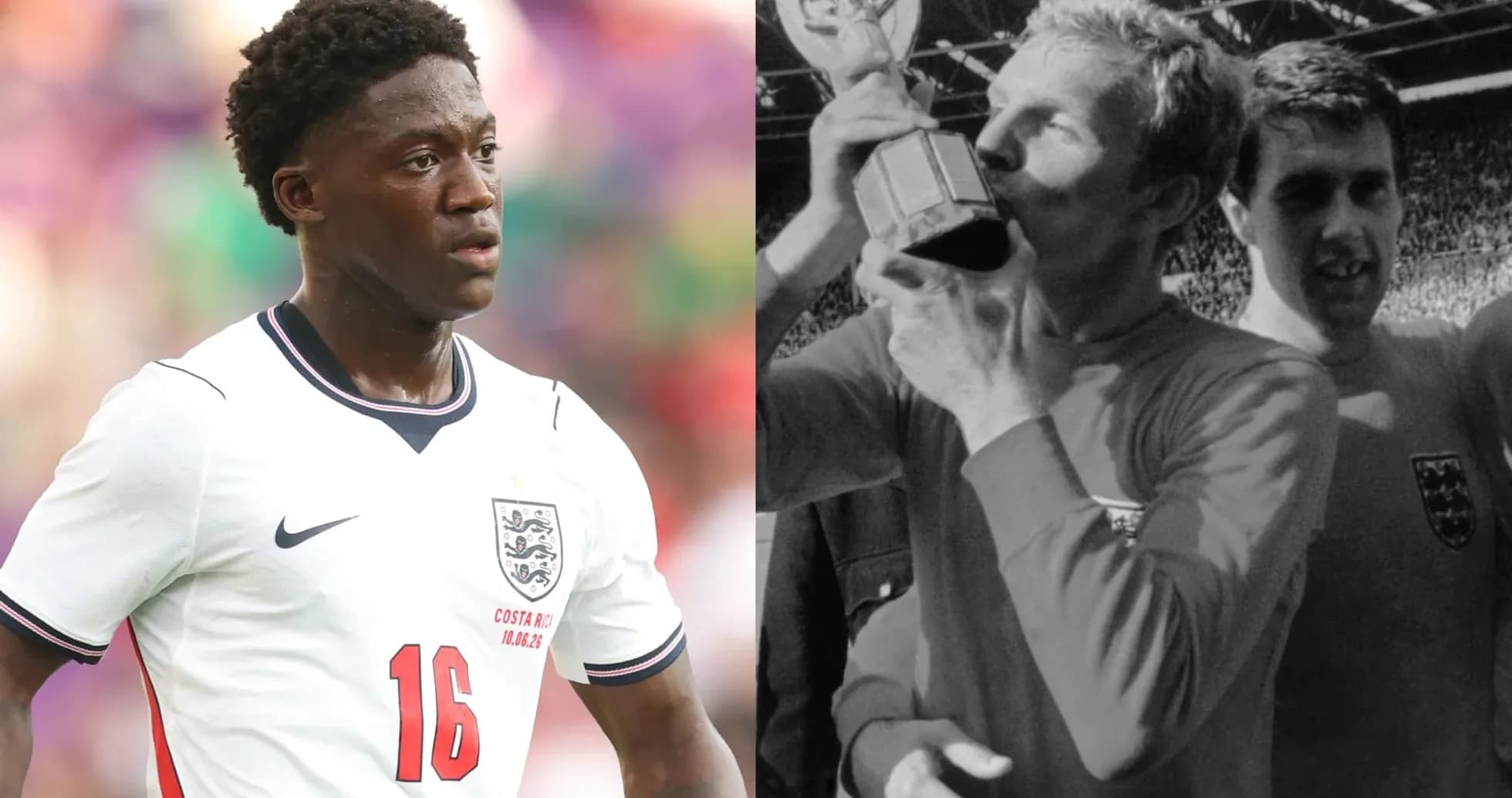
Kobbie Mainoo: England's Next Unlikely Hero?
Sixty years on from England’s greatest footballing hour, the echoes of 1966 still shape the way the nation talks about unlikely heroes.
Back then, Geoff Hurst began the World Cup as a supporting act. Jimmy Greaves was the star, the finisher everyone trusted, the name fans scribbled first when picking their dream England XI. Hurst sat in the shadows, waiting. Then came Greaves’ injury, a twist no one wanted but one that changed everything. Hurst stepped in, seized his moment and walked out of Wembley with a hat-trick, a World Cup winner’s medal and a place in English football folklore.
That story hangs over every major tournament England enter. It frames the way former players look at this current squad and, in particular, at a young midfielder like Kobbie Mainoo.
Michael Owen, speaking to GOAL in his role as a UK ambassador for Casino.org, sees the parallel. He knows how quickly a tournament can turn a squad player into a headline act.
“I do a little bit,” Owen said when asked if he feels for Mainoo, with England at times crying out for more control in midfield. “Because I think he's definitely got the ability to play a role in the World Cup. And who knows? Things change, you get unlikely heroes.”
Hurst is the benchmark for that kind of transformation. A man who went from understudy to symbol of a nation’s finest footballing moment. For Owen, the story always begins with Greaves.
“Jimmy Greaves was the best thing since sliced bread,” he said. “My dad just raves about Jimmy Greaves. When anyone's talking about the best England XI and things like that, my dad's like, ‘Jimmy Greaves’ straight away. He was insanely good. Now, things happen, and all of a sudden, Geoff Hurst plays, and look what happens.”
That is the door Mainoo is trying to edge open. He may not be first in the pecking order, but tournaments rarely follow the script. Injuries, suspensions, tactical tweaks – one decision, one knock, and a squad player becomes central to the story.
“There will be, or there could be, a surprise,” Owen said. “And it could be Mainoo, you can't switch off.”
Owen’s view of England’s campaign to this point is blunt. The results, he believes, should be the baseline, not a cause for celebration.
“Really, what we've done so far, if we had been knocked out, there would have been a huge inquest,” he said. “I mean, nobody should be really in our league.”
He bristles at the way some fixtures have been framed as epic tests.
“We've built it up as if Mexico was the hardest game of all time, but come on,” Owen added. “Norway, if we played Norway at a neutral ground, let's say we play Norway in Spain tomorrow, people would expect us to beat them two or 3-0. So when you look back, we should be beating every single team.”
That, in his eyes, is the standard for this generation. The early games? A duty, not a drama. The real examination comes now.
“This [Argentina] is now the first game, this is a proper game, this is one that is a toss of a coin, this is one that's going to challenge us,” Owen said. “But everything so far has been what you would expect from England, surely.”
Argentina changes the temperature. This is the kind of fixture that forges reputations, the type of night that can propel a young midfielder from squad option to central figure. The margins shrink, the stakes soar, and managers start to look beyond the obvious names.
“We will see,” Owen said, looking ahead. “But if we're going to win it, there are going to be so many twists and turns and so many heroes that we won't even be thinking at the moment. And Mainoo could be one of them.”
Sixty years ago, England discovered that tournaments belong not just to the icons already cast in bronze, but to the players waiting in the wings, ready for fate to crack the door open. The question now is simple: if that door swings for Kobbie Mainoo, will he walk through it the way Geoff Hurst once did?