.svg&w=384&q=75 "GoalGist logo")
Japan's Knockout Stage Aspirations Against Sweden
Hajime Moriyasu stood on the brink of the knockout rounds and pointed not to tactics on a whiteboard, but to something far simpler: players willing to bend, shift and sacrifice for each other.
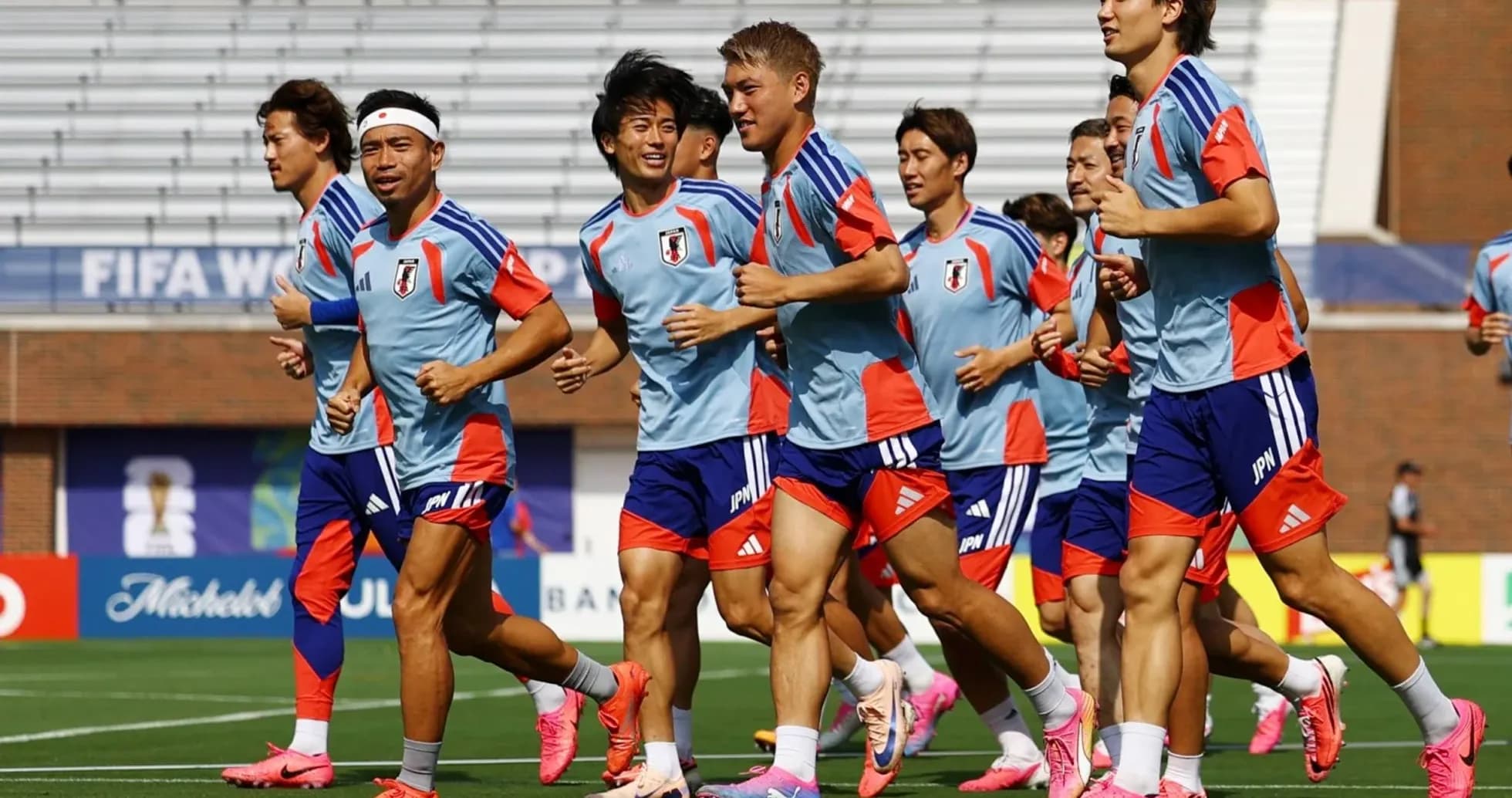
Japan arrive at their final Group F clash with Sweden on Thursday carrying four points, a 4-0 demolition of Tunisia and a breathless 2-2 comeback against the Netherlands. They also arrive patched up, stripped of stars, and yet somehow looking like one of the most coherent sides in the tournament.
Japan’s reshaped core
Takefusa Kubo, the creative livewire who limped off with a knee issue against the Dutch, is expected to miss the Sweden game. He joins an already daunting absentee list: former captain Wataru Endo, winger Kaoru Mitoma and playmaker Takumi Minamino, all ruled out of the tournament through injury.
On paper, that list should have broken Japan’s rhythm. On the pitch, it has done the opposite.
“Anyone can play with anyone else, that’s the readiness we wanted to ensure,” Moriyasu said, underlining the philosophy that has held the squad together. He knows that line sounds simple. He also knows it is anything but.
When key figures disappear, combinations vanish with them. Movements that once came naturally must be relearned with new partners. Passing angles change. Pressing triggers shift. Many teams stumble there. Japan have not.
“When there’s a change over in the team, it’s not that simple or easy to play with different players and achieve good results or be successful,” he admitted. “I’m very grateful that the other coaches and the players have been developing themselves towards such a great achievement.”
The evidence is on the scoreboard. Two games, four points, six goals scored, a tactical structure that has held firm despite constant reshuffling.
“In the last two matches the team has functioned tactically and with the teamwork they are developing and increasing their readiness,” Moriyasu said, a quiet nod to the work done far from the cameras.
Top spot in sight, but not at any cost
With four points already banked, Japan are in a strong position. Even defeat to Sweden would likely still carry them into the last 32. That safety net has not softened Moriyasu’s outlook.
“We are basically thinking of winning, that’s what’s in our mind,” he said. There was no talk of playing for permutations, no hint of settling.
The target is clear: finish top of Group F. The route to that is equally blunt — score goals, win the game. But Moriyasu will not rip up the structure that has carried them this far just to chase a bigger margin.
“If possible we would like to advance on top of the group by scoring as many goals, but distorting the balance of the team is more of a risk. We will see.”
It is a revealing line. Japan want ambition, not chaos. Control, not recklessness.
They know the knockout draw remains a mystery. “We don’t know what kind of team we will come up against in the next round,” Moriyasu said. The response is not to guess, but to fortify their own identity.
“What’s important is that we are solid and that we play against a team that we are able to deal with no matter what appears. First we want to think about ourselves and how we play tomorrow. In terms of our target we would like to win and qualify for the knockout stage on top of the table.”
The message to his players is simple: get your own house right, and the rest will follow.
Sweden’s wild swing and a stern test
Sweden arrive as one of the tournament’s great contradictions. They opened with a ruthless 5-1 win over Tunisia, then collapsed by the same 5-1 scoreline against the Netherlands. The same team, two entirely different faces.
That volatility makes them dangerous. It also makes them fascinating.
At the heart of their threat stand Alexander Isak and Viktor Gyokeres, a strike partnership with power, pace and an eye for goal. Their presence would intimidate most defences. Moriyasu chose a different word.
“They’re world class, wonderful strikers so I would like us to enjoy facing these players,” he said. Enjoy. Not endure.
For Japan’s defenders, this is the exam that follows all that talk of “readiness” and adaptability. For the team as a whole, it is a chance to prove that their tactical cohesion can hold against top-level firepower.
“It’s going to be a good opportunity for our players to develop themselves further,” Moriyasu added.
Japan stand one result away from the knockout stage, with injuries biting and expectations rising. The squad has already shown it can bend without breaking. Now comes the sharper question: can this patched-together, relentlessly unified side do more than just survive the group — can it impose itself at the business end of a World Cup?