.svg&w=384&q=75 "GoalGist logo")
Jamal Musiala's Battle: Bayern, Klopp, and a Neurological Diagnosis
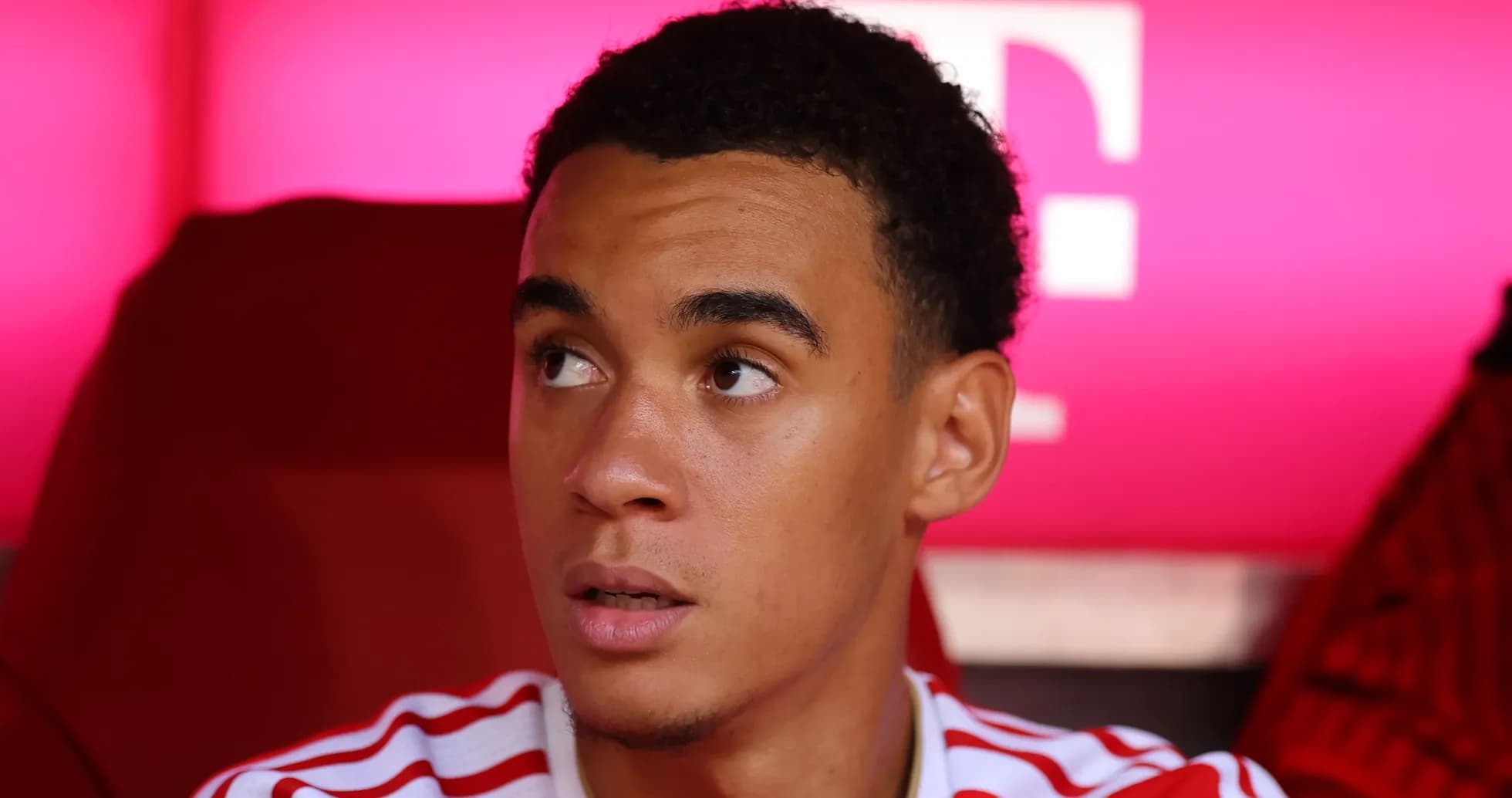
When Jamal Musiala suddenly went down in a mid-August friendly against RB Leipzig, most people watching simply saw a scare in a pre-season tune-up. Bayern won 3-1, the images flickered across social media, and the story moved on.
Inside the club, it didn’t.
By then, Bayern had already known for months that their playmaker was living with a neurological dysfunction that triggers so-called absence seizures. The collapse against Leipzig was the first time the wider public had seen a glimpse of it.
A closed-door summit at Säbener Straße
Two days after that Leipzig game, the situation moved from medical file to strategic issue.
At Bayern’s headquarters on Säbener Straße, a small group gathered, according to Sport Bild: board member for sport Max Eberl, sporting director Christoph Freund, Musiala, his management and one of the doctors treating him. On the table was a single, delicate question: how do they deal with this in public?
The club, who had been aware of Musiala’s condition throughout the whole of last season, leaned towards transparency. The record champions are said to have recommended that the 23-year-old go public with the diagnosis now, before more unsettling scenes played out in front of cameras.
Musiala wasn’t ready.
So they found a line they all could live with. As Sport Bild reports, they agreed on a compromise: Musiala would address the issue himself the moment he collapsed for a second time during a match.
That moment came almost immediately.
Second collapse, instant statement
Just one day later, in another friendly, this time away at 1. FC Heidenheim, Musiala went down again. Bayern still won 4-2, but the result was a footnote.
True to the agreement, Musiala spoke.
The statement he posted on Instagram straight after the game had been prepared with the club and written by the player himself. It was the public’s first clear window into what he had been dealing with in private.
The timing underlined how fragile the balance had become between protecting a player’s privacy and protecting him on the pitch.
Klopp picks up the phone
The reaction inside German football was immediate, and it reached right to the top of the national team.
Among the first to call Musiala, according to Sport Bild, was new Germany head coach Jürgen Klopp. The conversation was not about tactics or positions. Klopp is said to have assured the Bayern midfielder of his full backing and told him he remains a central pillar of his plans for the national side.
For a 23-year-old processing a serious diagnosis and its public fallout, that message mattered. Musiala is described as having been impressed by the talk with his new Bundestrainer, a coach whose words tend to carry weight in any dressing room he enters.
A mega contract signed before the seizures
Sport Bild also shed light on another key piece of context: the contract.
When Musiala signed his current deal in February 2025, reported to be worth around €25 million per year, there had been no absence seizures. The condition only surfaced later.
Because of that, the contract contains no special clauses, protections or performance-related safeguards tied to the illness. For Bayern, it is a straight commitment to one of their most valuable assets. For Musiala, it is a reminder that the club bought into his talent without caveats.
Medication, risk and a forced pause
The two collapses this summer did not come out of nowhere. They followed a change in his treatment.
After the World Cup, the medication used to manage his condition was reduced. The adjustment backfired. The Leipzig and Heidenheim incidents were the consequence.
“He reduced it a little, now we have to increase it a little again,” Eberl recently explained. Bayern’s sporting boss made it clear that the dosage is now being readjusted after those alarming scenes.
Neurology does not work on football’s timetable. Before the new dose reaches full effect, it can take up to 14 days. Until then, Bayern are taking no chances. Musiala is currently out of team training, working individually while the club and doctors wait for the medication to stabilise his condition.
When will Musiala be back?
The immediate question for fans is simple: when can he play again?
According to Sport Bild, Musiala will not be in the squad for Bayern’s Bundesliga opener on Friday against VfB Stuttgart. The risk is too high, the timeline too tight.
Matchday two looks more realistic. A comeback eight days later away to Schalke is considered the likelier scenario if his body responds as expected to the new dosage.
The calendar offers another milestone. On 17 September, Klopp will announce his first Germany squad as national coach. By then, Musiala could be back in competitive action, bidding not just for minutes in Munich but for his place in a new-look national team.
Backed by Bayern, driven by Kompany
Inside the club, the tone around Musiala is not one of caution alone. It is also one of conviction.
Sport Bild reports that the midfielder is very happy with how Bayern are handling his situation. The communication has been clear, the support visible. There has also been a personal, pointed conversation with head coach Vincent Kompany.
Kompany’s message was direct: since the Belgian took over in 2024, he believes Musiala has never been better than he is now.
His public comments echo that private assessment. “I know that he has made huge progress this summer,” Kompany said recently. “Look at the minutes he has played. He has done things that were not on the same level as our best players, but one level higher. We have not seen Jamal like this since his injury against Paris.”
For a player whose creativity and rhythm define so much of Bayern’s attacking play, that is a powerful endorsement.
The diagnosis has added a new layer of complexity to Musiala’s career. The club’s stance, Klopp’s phone call and Kompany’s belief have added something else: a clear statement that, as long as the medical green light comes, Bayern and Germany still intend to build around him.
The next time he steps back onto a Bundesliga pitch, the question will not be whether he is protected. It will be how high his ceiling now looks, knowing what he is playing through.