.svg&w=384&q=75 "GoalGist logo")
Iran and New Zealand Draw 2-2 in Group G Clash
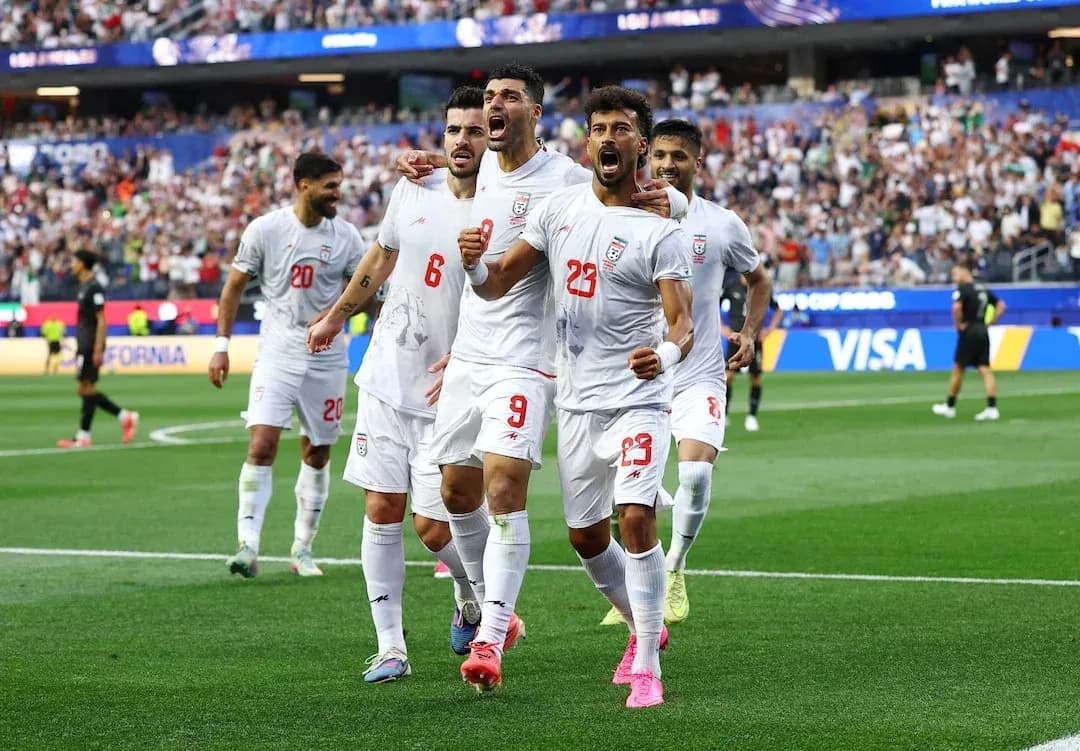
Iran 2-2 New Zealand at SoFi Stadium opened Group G with a high-tempo draw that reflected both sides’ attacking intent and defensive looseness. Iran, starting the night second in the group, move to 2 points from 2 matches with a neutral goal difference, while New Zealand stay top on 2 points as well, also with an even goal record. With both teams now on identical tallies after two 2-2 draws apiece, qualification for the Round of 32 will hinge on their final group fixtures and small margins in front of goal.
Match Report
The game ignited early. In the 7th minute New Zealand struck first: New Zealand goal — E. Just (assisted by C. Wood). Chris Wood dropped into the right half-space, received between the lines and slid a measured pass into the inside-left channel, where Elijah Just timed his run to finish low across the goalkeeper for 0-1.
Iran responded by pushing their full-backs higher and circulating possession more patiently. The pressure told in the 32nd minute: Iran goal — R. Rezaeian (unassisted). Ramin Rezaeian, advanced from right-back, collected a loose ball outside the box, drove inside and unleashed a driven shot that took advantage of New Zealand’s failure to close him down, levelling at 1-1.
At half-time, Iran adjusted their attacking structure. In the 46th minute, M. Ghaedi replaced A. Yousefi (Iran), injecting more direct dribbling from wide areas. Seven minutes later, in the 53rd minute, A. Alipour replaced S. Moghanlou (Iran), adding fresh movement on the last line.
New Zealand, however, reclaimed the initiative almost immediately after Iran’s second change. In the 54th minute: New Zealand goal — E. Just (assisted by C. Wood). Again Wood acted as the pivot, receiving centrally and threading another precise through ball into Just’s path. The winger’s composed finish restored New Zealand’s lead at 1-2 and exposed Iran’s defensive spacing between centre-backs and full-backs.
Iran refused to fold and found another equaliser in the 64th minute: Iran goal — M. Mohebi (assisted by R. Rezaeian). Rezaeian overlapped on the right and delivered a driven cross towards the near post, where Mohammad Mohebi arrived from midfield to guide a first-time finish past Max Crocombe, bringing the score to 2-2.
Iran then sought to stabilise the midfield. In the 65th minute, E. Hajsafi replaced S. Ghoddos (Iran), adding more defensive discipline on the left side of midfield.
New Zealand turned to their bench in the 68th minute with a double change: B. Old replaced L. Cacace (New Zealand) at left-back, and R. Thomas replaced C. McCowatt (New Zealand), offering fresher legs and more control in central areas. In the 78th minute, C. Elliot replaced T. Payne (New Zealand), refreshing the right-back position to cope with Iran’s wide pressure.
Iran made a late attacking tweak in the 80th minute, with A. Hosseinzadeh replacing M. Taremi (Iran), looking for more vertical running from the forward line in transition.
The only card of the match came in the 89th minute: E. Hajsafi (Iran) — yellow card (Tripping), punished for a late challenge as Iran tried to halt a New Zealand counter.
Deep into stoppage time, New Zealand made two further substitutions to manage the closing moments. In the 90+2' minute, J. Randall replaced S. Singh (New Zealand), adding fresh energy in the attacking midfield band, and simultaneously T. Bindon replaced M. Stamenic (New Zealand), a move that shored up defensive height and aerial presence as the match closed at 2-2.
Fixture Statistics & Tactical Audit
- xG: Iran 1.5 vs 1.24 New Zealand
- Possession: Iran 48% vs 52% New Zealand
- Shots on Target: Iran 4 vs 8 New Zealand
- Goalkeeper Saves: Iran 6 vs 2 New Zealand
- Blocked Shots: Iran 5 vs 2 New Zealand
On the balance of chances, the draw was broadly in line with underlying numbers, though New Zealand’s sharper shot selection in the box could argue they left something behind. Iran edged xG at 1.5 to 1.24, reflecting the volume and quality of their central entries, but New Zealand produced twice as many shots on target (8 vs 4), forcing Alireza Beiranvand into six saves and underlining how efficiently they turned possession into clear sights of goal. Iran’s five blocked shots showed New Zealand’s defensive line reacting well inside their own area, yet the visitors’ vulnerability to late runs from deep — highlighted by Mohebi’s equaliser — offset that resilience. New Zealand’s 52% possession and 85% pass completion allowed them to control long stretches, but Iran’s more direct phases and wide overloads ensured the contest remained tactically balanced and the 2-2 scoreline justifiable.
Standings Update & Seasonal Impact
For Iran, this second consecutive 2-2 draw moves them to 2 points, with 4 goals scored and 4 conceded, leaving their goal difference at 0 and maintaining their status in the Round of 32 qualification zone. They remain in a congested Group G, where progression will now depend on converting attacking promise into a first win. New Zealand also climb to 2 points, with 4 goals for and 4 against, and a goal difference of 0. They stay top of the group on rank, but the margins are minimal; any slip in their final group match could see their current Round of 32 position come under immediate threat, given how finely poised the group now is.
Lineups & Personnel
Iran Starting XI
- GK: Alireza Beiranvand
- DF: Ramin Rezaeian, Shoja Khalilzadeh, Ali Nemati, Milad Mohammadi
- MF: Mohammad Mohebi, Saman Ghoddos, Saeid Ezatolahi, Aria Yousefi
- FW: Shahriar Moghanlou, Mehdi Taremi
New Zealand Starting XI
- GK: Max Crocombe
- DF: Tim Payne, Finn Surman, Michael Boxall, Liberato Cacace
- MF: Joe Bell, Marko Stamenic, Callum McCowatt, Sarpreet Singh, Elijah Just
- FW: Chris Wood
Post-Match Verdict
This was an attacking, open contest shaped by the interplay between Iran’s width and New Zealand’s vertical combinations through Wood and Just. Iran were enterprising in wide areas and dangerous on late midfield runs, a productive approach backed by their xG edge (1.5 vs 1.24) and shot volume (17 total shots). Yet their defensive structure remained vulnerable (conceding 8 shots on target), with gaps either side of the centre-backs repeatedly exploited by New Zealand’s front line. New Zealand delivered a clinical attacking display in terms of accuracy (8 shots on target from 14 attempts) but were less secure when defending crosses and second balls, allowing Iran to score twice from right-sided sequences involving Rezaeian. Ultimately, both teams showcased enough offensive quality to suggest they can qualify from Group G, but the shared points underline that the side which tightens its defensive organisation first is likely to gain the decisive edge in the final round of group matches.