.svg&w=384&q=75 "GoalGist logo")
Greenville Triumph Defeats Loudoun United 3-1 in USL League One Cup
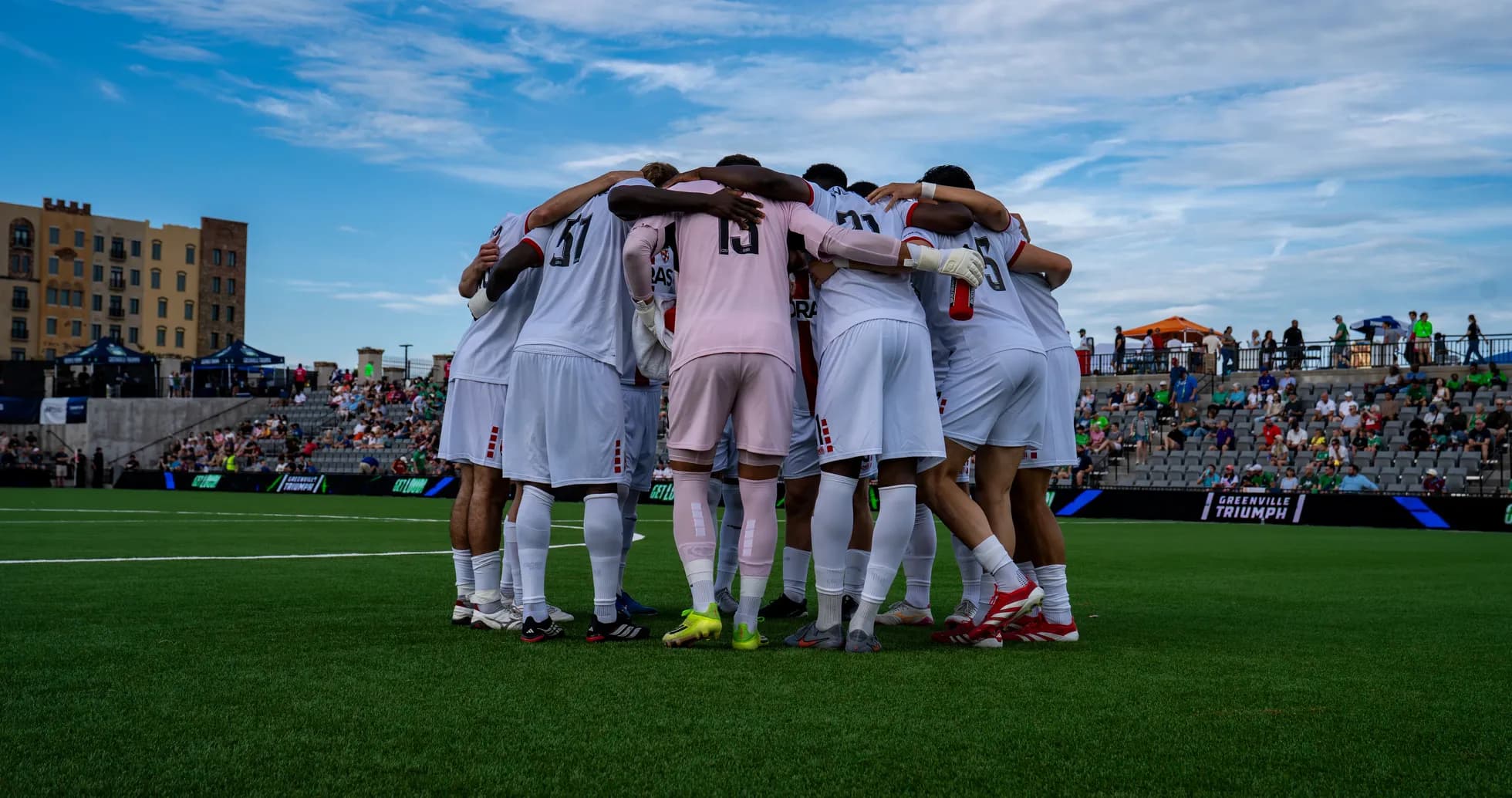
Under the lights at Paladin Stadium, Greenville Triumph and Loudoun United closed a bruising chapter of the USL League One Cup group stage with a 3-1 scoreline that said as much about mentality as it did about method. This was not a knockout tie – the data anchors it firmly in the “Group Stage” – but it carried the emotional weight of an elimination game for two sides trying to define their tournament identity.
Heading into this game, both teams were chasing stability rather than dominance. Greenville’s group record stood at 1 win and 1 loss from 2 matches, with 3 goals scored and 4 conceded overall, a goal difference of -1. At home, though, their profile was sharper: 1 match, 1 win, 3 goals for and 1 against. Loudoun arrived with more minutes in their legs but similar fragility: 3 matches played overall, 1 win and 2 defeats, 4 goals for and 5 against, again a goal difference of -1. Their travels had been unforgiving – 1 away match, 1 defeat, 1 goal scored and 3 conceded.
Final Score: Greenville Triumph 3 - 1 Loudoun United
Following this result, Greenville’s numbers at Paladin Stadium now look like a statement rather than a sample. Their home goals-for total in the competition reaches 3, all in this single outing, and the 3-1 full-time score mirrors their “biggest win” profile in the season stats. Loudoun, by contrast, see their away pattern deepen: another 3-1 loss on their travels, reinforcing a trend of conceding 3.0 away goals on average and struggling to keep games within reach once they tilt.
Tactical Overview
Tactically, Dave Dixon’s Greenville side leaned into a collective, hard-running XI rather than star power. With the formation not listed in the raw data, the structure must be read through personnel. A. Knight, wearing 13, anchored the back line alongside the likes of B. Fricke and A. Patti, with T. Polak and E. Lee completing a defensive unit that, despite conceding once, kept Loudoun from turning pressure into sustained momentum. In front of them, C. Herrera and C. Evans formed the connective tissue – the kind of double pivot or central pairing that quietly dictates tempo, even if the numbers do not spell it out.
Higher up, Greenville’s attacking trident of D. Boyce, W. Akio, and A. Liadi brought verticality and chaos. Boyce’s work between the lines, Akio’s direct running with the 10 shirt, and Liadi’s presence as a focal point gave Greenville layers in transition. The bench options – R. Robles, D. Beckford, and J. Bouregy among them – offered fresh legs to protect and then extend the lead as the game wore on.
Anthony Limbrick’s Loudoun United arrived with a different kind of balance. J. Farr in goal, shielded by a back line featuring L. Piras, N. Adnan, A. Essengue, J. Erlandson, and S. Mazzaferro, should have provided a platform for control. In midfield, B. Akinyode, J. Murphy, and J. Panayotou formed an “engine room” that, on paper, could match Greenville’s intensity and perhaps out-pass them. Up front, R. Aman and T. Ulfarsson were tasked with stretching a Greenville defense that had not yet kept a clean sheet in the competition.
Disciplinary and Mentality Analysis
The disciplinary and mentality data painted an intriguing backdrop. Heading into this game, Greenville’s yellow cards were heavily back-loaded: 75.00% of their cautions had come in the 76-90 minute window, a clear sign of late-game stress or desperation, with another 25.00% between 16-30 minutes. Loudoun’s bookings were more evenly scattered but still peaked in the second half, with 37.50% between 46-60 minutes and another 25.00% between 76-90. In other words, both sides tended to fray as the match wore on.
That context makes Greenville’s late-game control in this 3-1 win especially notable. Where earlier group fixtures saw them lose composure and collect cards in the closing stretch, here they managed the scoreboard and the emotional temperature more effectively. Loudoun, whose yellow card distribution suggested vulnerability right after half-time and again in the final quarter-hour, found themselves chasing shadows rather than dictating terms.
Strategic Trends
The “Hunter vs Shield” narrative in this fixture was less about individual top scorers – no such data is available – and more about systemic trends. Greenville’s attack at home had been explosive in a tiny sample, averaging 3.0 goals at Paladin Stadium, while Loudoun’s away defense had been porous, conceding 3.0 goals per away match. That collision played out almost exactly as the numbers foreshadowed: Greenville hit the 3-goal mark again, Loudoun again allowed three on their travels.
In midfield, the “Engine Room” battle between Greenville’s Herrera–Evans axis and Loudoun’s Akinyode–Murphy–Panayotou trio was decisive. Greenville’s overall goals-against average of 2.0 in the competition suggested a team that would give up chances; yet, with a 3-1 final, they held Loudoun to a single strike. That points to a more compact central block, better screening in front of Knight and Fricke, and a willingness from wide players like Boyce and Akio to track back and close lanes.
Defensively, neither side came in with a reputation for clean sheets. Greenville had recorded 0 clean sheets overall, while Loudoun had just 1, and none away. Penalty data underscored a different kind of truth: neither team had yet earned or missed a spot-kick in this competition, with both showing 0 penalties taken and 0 missed. There was no safety net from 12 yards; everything had to be earned in open play.
Statistical Prognosis
From a statistical prognosis standpoint, the outcome aligns closely with the underlying profiles. Greenville’s overall scoring rate of 1.5 goals per match and Loudoun’s 1.3 suggested a relatively open contest. Overlay that with defensive averages – Greenville conceding 2.0 per match, Loudoun 1.7 – and an Expected Goals model would likely have forecast a multi-goal affair with a slight edge to the home side, especially given Greenville’s perfect home record and Loudoun’s winless away form.
Following this result, Greenville look like a side whose attacking ceiling at Paladin Stadium can carry them deep into the group narrative, provided they continue to tame those late-game disciplinary spikes. Loudoun, meanwhile, remain an intriguing but inconsistent proposition: capable of scoring, structurally sound at home, but too fragile on their travels to turn competitive performances into points. In the tight corridors of a group stage, that contrast in home strength and away vulnerability may ultimately decide who advances and who is left reflecting on what might have been.