.svg&w=384&q=75 "GoalGist logo")
Detroit City vs Louisville City: USL League One Cup Tactical Analysis
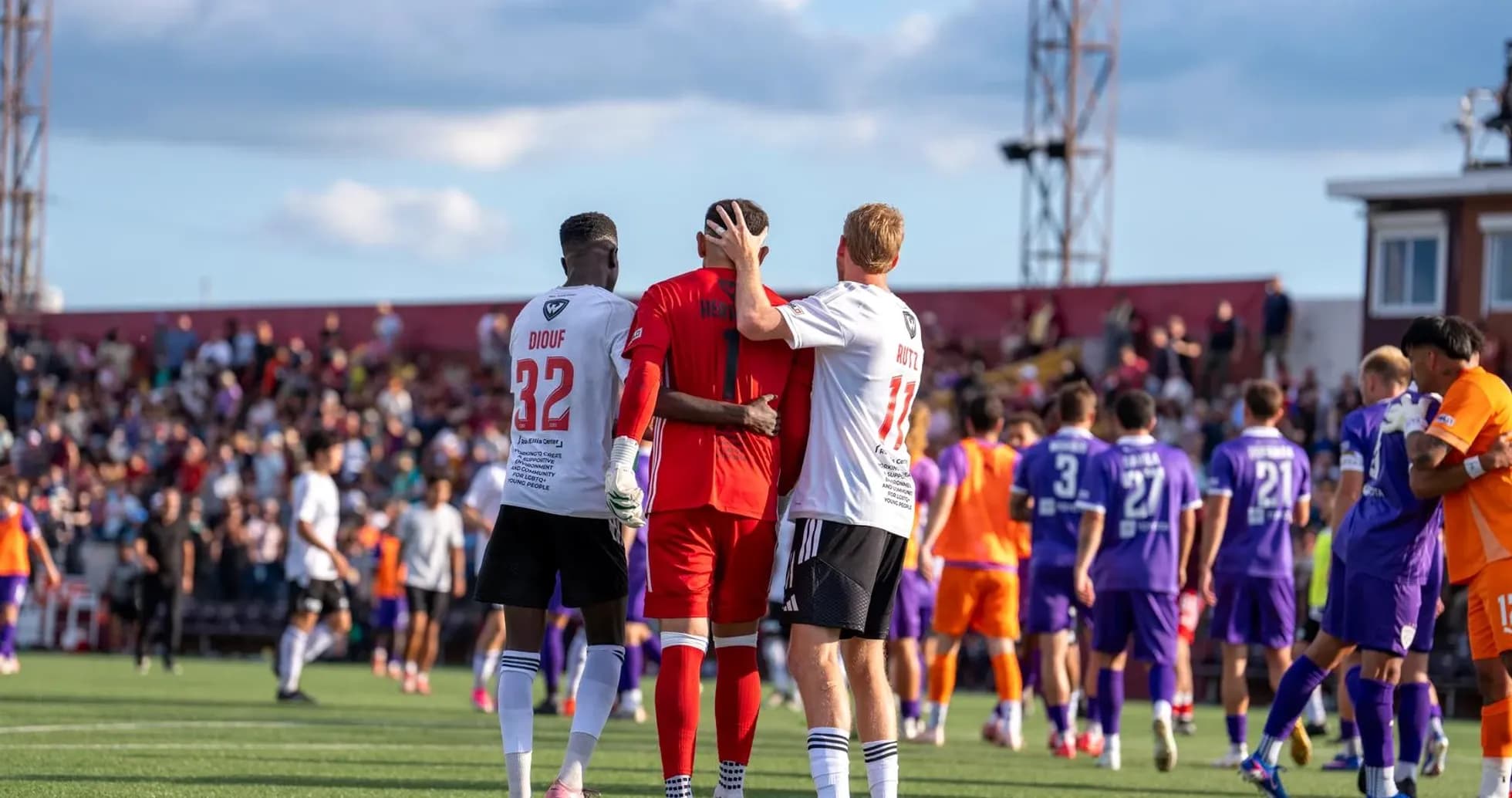
Under the lights at Keyworth Stadium, Detroit City and Louisville City played out the kind of Group Stage tie that feels far closer to a knockout. Over 120 minutes they could not be separated, locked at 0-0 through normal and extra time, before Louisville edged the penalty shootout 4-3 to close out a tense USL League One Cup night.
Heading into this game, the season’s DNA for both sides was already sharply drawn. Detroit arrived as a work in progress in this competition: in total this campaign they had played 3 fixtures, winning 1 and losing 2, with 2 goals scored and 3 conceded. At home they had struggled badly, losing both matches at Keyworth with only 1 goal for and 3 against. Louisville, by contrast, came in as the group’s pacesetters. Overall they had 3 wins from 3, with 9 goals scored and just 2 conceded; on their travels they had been ruthless, winning both away fixtures with 6 goals for and only 1 against.
The standings framed the narrative. Detroit sat 5th in USL Cup 2026, Group 4 with 4 points and a goal difference of -1, their form line “LW” hinting at inconsistency. Louisville were top of the same group with 6 points and a goal difference of 6, their “WW” form and “Playoffs” description underlining that they were the benchmark side. On paper, this was the group’s most fragile home side against its most confident travellers.
Yet the 0-0 across 120 minutes told of a Detroit side that bent their own statistical profile, turning a leaky home record into a disciplined, survival-first performance, and of a Louisville attack that, for once, had to grind rather than glide.
Tactical voids and disciplinary currents
With no official list of absences, both coaches appeared to lean heavily on their core groups. Danny Dichio’s Detroit XI was anchored by goalkeeper C. Herrera behind a defensive spine of H. Yamazaki, R. Hope-Gund, D. Amoo-Mensah and T. Silva. Ahead of them, K. Hernandez-Foster and Rafa Mentzingen formed the connective tissue between back line and advanced trio, with A. Diop and A. Stanley supporting the movement of A. Diouf and central reference point B. Morris.
For Simon Bird, Louisville’s starting structure revolved around D. Faundez in goal, a back unit featuring S. Totsch, B. Dayes, A. Dia and A. McFadden, and a midfield where Z. Duncan and B. Niang were tasked with both screening and launching. Out wide and between the lines, J. Morris, J. Wilson and R. Serrano worked to feed the runs of T. Showunmi.
Discipline was always likely to be a quiet but decisive storyline. Heading into this game, Detroit’s yellow-card pattern showed a clear warning: 37.50% of their cautions arrived between 46-60 minutes, with 25.00% in each of 31-45 and 76-90. That profile hints at a side that often emerges from the break aggressively, then tires into rash challenges late on. Louisville’s own yellow distribution was similarly front-loaded but more compressed: 28.57% between 16-30, 28.57% from 31-45, and 42.86% in the 46-60 window. Their midfield press tends to spike around half-time, which can turn matches but also invites risk.
In a match that went to 120 minutes and penalties, the key was who could navigate those volatile middle phases without a red card or a decisive set-piece concession. Neither side carries any recorded red cards in this competition, and that discipline held—vital in a goalless game where one lapse would have broken the stalemate.
Key matchups
Hunter vs Shield
On paper, Louisville’s collective attack was the “hunter”. Overall they averaged 3.0 goals per game, both at home and on their travels, with 9 goals in total this campaign. Their away profile—6 goals in 2 matches—suggested a side comfortable imposing themselves in hostile environments. Detroit, by contrast, had scored only 2 goals in total, with an average of 0.5 at home and 1.0 on their travels. The expectation was that Louisville’s front four of Serrano, Wilson, J. Morris and Showunmi would stretch a Detroit defence that had conceded 3 goals at home in just 2 fixtures.
Yet Detroit’s “shield” stiffened. In total this campaign they had conceded 3 goals with an average of 1.5 at home, but Herrera and his back line compressed space, forcing Louisville to play in front of them. Amoo-Mensah and Hope-Gund, flanked by Yamazaki and Silva, were content to drop deep, turning the game into a series of aerial duels and second-ball battles that blunted Louisville’s usual fluency.
Engine Room
The midfield duel was defined by contrasts. For Detroit, Rafa Mentzingen and Hernandez-Foster were tasked with carrying the ball through pressure and drawing fouls to relieve the back line. Their job was made harder by Detroit’s own attacking limitations: with only 0.7 goals per game in total this campaign, they could not rely on trading chances; they had to value every possession.
Louisville’s engine, built around Z. Duncan and B. Niang, came in with a different brief. With a team that had never failed to score in this competition—0 failed-to-score matches in total—they usually play on the front foot, compressing the pitch and trusting their forwards to convert. Duncan’s role as enforcer and first passer was to keep Detroit penned in, while Niang and the advanced trio probed for overloads.
The longer the game stayed at 0-0, the more psychological weight shifted. Louisville, who had scored at least 3 in each of their previous fixtures (3-1 at home, 1-5 away as biggest wins), suddenly faced the unfamiliar: a night where their 3.0 goals-per-game rhythm was broken. Detroit, for their part, grew into their defensive identity, turning the midfield into a spoiler’s zone and dragging the tie toward the lottery of penalties.
Statistical prognosis and penalty denouement
From a statistical standpoint, Louisville entered as heavy favourites. Their goal difference of 6 (8 scored, 2 conceded in the standings snapshot) and perfect record contrasted with Detroit’s goal difference of -1 (3 scored, 4 conceded) and mixed form. Expected Goals data is not provided, but the season patterns allow a reasoned inference: Louisville’s attack volume and efficiency, combined with Detroit’s modest home scoring and higher home concessions, would typically tilt any xG model strongly towards the visitors.
Detroit’s penalty record added another layer of tension. In total this campaign they had taken 5 penalties, scoring 3 and missing 2—a 60.00% conversion rate that underlined fragility from the spot. Louisville, conversely, were flawless from 12 yards in the competition: 4 penalties taken, 4 scored, a 100.00% record and no misses. Heading into a shootout, the numbers quietly leaned purple.
That is exactly how it played out. After 120 minutes of Detroit defiance and Louisville frustration, the tie was decided from the spot. Detroit’s historical 40.00% miss rate in penalties loomed, while Louisville’s perfect record gave them a mental edge. Following this result, the 4-3 shootout win for Louisville was less a twist than a statistical confirmation: the side that had been immaculate from the spot all season held their nerve again.
In narrative terms, Detroit City discovered a new defensive ceiling at home, finally matching their away resilience (1 clean sheet on their travels) with a shutout at Keyworth. Louisville City, meanwhile, proved that their unbeaten, free-scoring run can survive even when the goals dry up in open play. In a group defined by margins, this was a night where structure, discipline and penalty craft mattered more than any flowing attacking move—and Louisville, by design and by data, were better built for that final, narrow edge.