.svg&w=384&q=75 "GoalGist logo")
Espanyol's 2–0 Victory Over Athletic Club: A Tactical Analysis
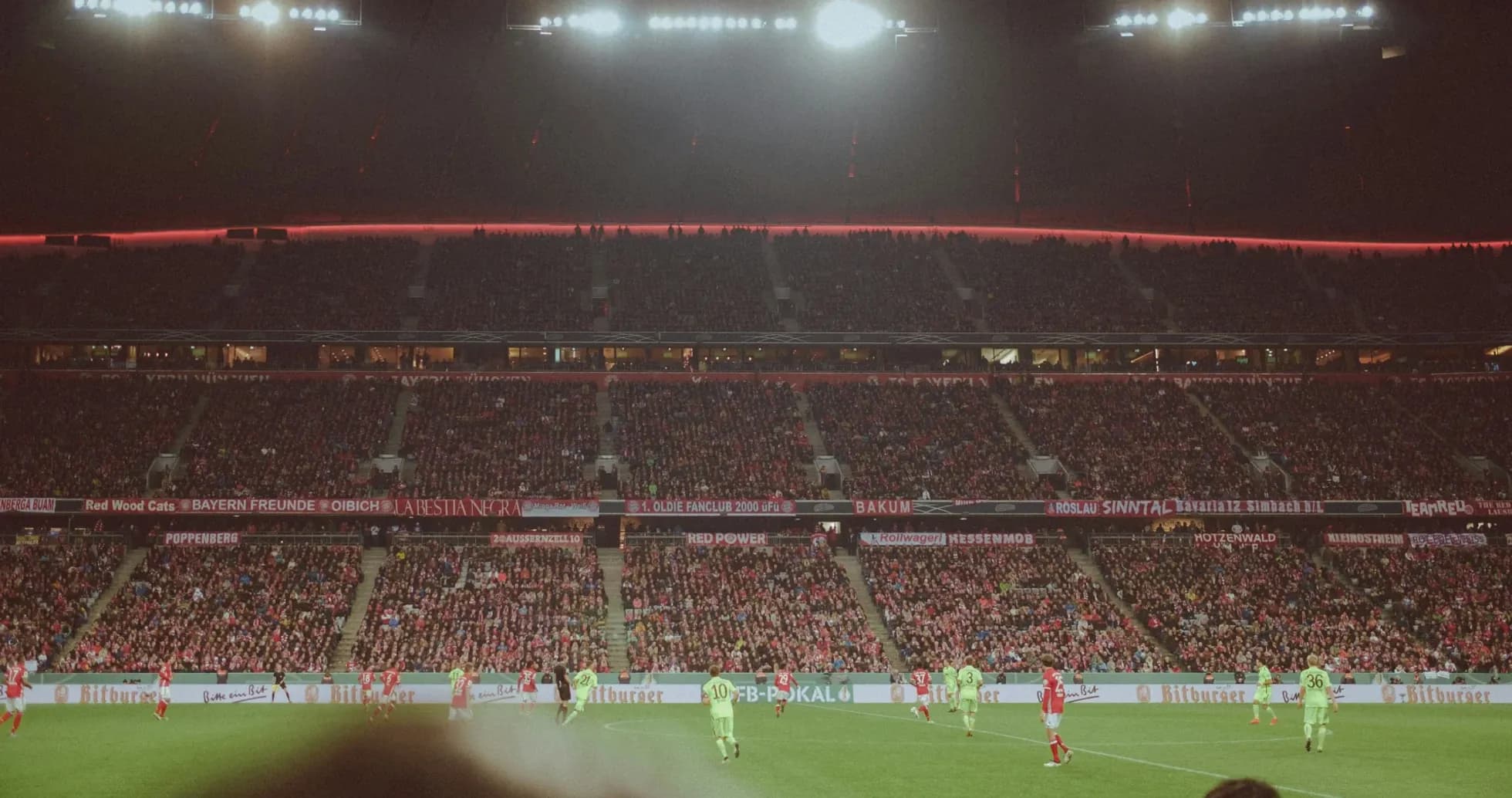
Under the Cornella lights at RCDE Stadium, Espanyol’s 2–0 victory over Athletic Club felt less like a routine home win and more like a late‑season statement. Following this result in La Liga’s Regular Season - 36, the table tells a tight story: Espanyol sit 14th on 42 points with a goal difference of -13, while Athletic, 9th on 44 points and also at -13, suddenly feel the breath of the chasing pack on their necks.
Across 36 league matches, both sides share an eerily similar statistical DNA. Espanyol have scored 40 and conceded 53 overall; Athletic mirror them exactly with 40 for and 53 against. The split, however, explains why this match tilted blue and white. At home, Espanyol average 1.1 goals for and 1.3 against, a fragile but functional platform. Athletic on their travels concede 1.8 goals per game and score only 1.1 – a soft underbelly that was exposed again here.
Espanyol’s season has been streaky – their longest winning run is five, but the overall form line (11 wins, 9 draws, 16 losses) shows a side constantly oscillating between survival mode and ambition. Athletic, with 13 wins and 18 defeats, are similarly volatile, built on a strong San Mamés (9 home wins) but undermined by an away record of 4 wins, 3 draws and 11 losses. This match fit the pattern: Athletic’s travelling fragility against Espanyol’s increasingly pragmatic home edge.
Manolo Gonzalez went with a 4‑4‑2, one of Espanyol’s favoured structures this season (11 league uses), while Ernesto Valverde stuck to his trusted 4‑2‑3‑1, the shape Athletic have deployed 35 times. The formations framed the evening: Espanyol compact and direct; Athletic trying to layer possession and width around a lone striker.
Tactical Voids and Discipline
This fixture was shaped as much by absences as by those on the pitch. Espanyol were without F. Calero and T. Dolan, both suspended for yellow cards, stripping Gonzalez of a defensive organiser and a flexible wide option. More damaging, perhaps, were the knee injuries to C. Ngonge and J. Puado, robbing Espanyol of vertical running and one‑v‑one threat in the final third.
Athletic’s voids were even more structural. Y. Berchiche’s leg injury forced Valverde to turn to A. Boiro at left‑back, altering the balance of the back four. In midfield, B. Prados Diaz’s knee issue and O. Sancet’s muscle injury removed two key connective pieces between build‑up and attack. The absence of N. Williams further stripped Athletic of their most explosive outlet on the flank, pushing more creative burden onto A. Berenguer and U. Gomez.
Discipline loomed in the background. Espanyol are a late‑card side: 29.55% of their yellows arrive between 76–90 minutes, and their reds cluster in the 46–60 and 76–90 ranges (40.00% each). Athletic, by contrast, spike in the 61–75 window, where 22.37% of their yellows and 28.57% of their reds occur, often when games open up. In a tight contest like this, the threat of a late sending‑off hovered over every transitional foul.
On an individual level, the midfield battleground was always going to be spiky. Pol Lozano, one of the league’s leading yellow‑card collectors with 10 bookings and 1 yellow‑red, patrols the Espanyol engine room with a combative edge. Across from him, Ruíz de Galarreta, also on 10 yellows, is Athletic’s organiser and first presser. Both walked the disciplinary tightrope, anchoring their teams’ aggression without tipping into chaos.
Key Matchups – Hunter vs Shield, Engine Room
Without top‑scorer data, the “Hunter vs Shield” storyline for Espanyol shifted to creators rather than pure finishers. Edu Expósito, starting as a forward here but statistically a midfield playmaker, is Espanyol’s creative hub: 6 assists, 79 key passes and 31 shots this season. His role in the front line blurred the lines between striker and 10, dropping into pockets between Athletic’s double pivot and centre‑backs.
That placed heavy responsibility on Athletic’s central defensive axis. Dani Vivian, who has blocked 13 shots this season and carries both aerial authority and a red‑card history, and A. Laporte had to step out to track Expósito’s movements while still managing the runs of R. Fernandez Jaen. Each time Expósito drifted off the front, he forced a decision: follow and risk depth, or hold and allow him to turn. Espanyol’s opening goal grew from that ambiguity, with Expósito linking play between lines and dragging markers out of shape.
On the flanks, O. El Hilali’s duel with A. Berenguer was a tactical hinge. El Hilali has been one of Espanyol’s most active defenders: 69 tackles, 14 successful blocks and 38 interceptions underline his capacity to both front‑foot press and defend his box. Against him, Berenguer, starting from the right in the 4‑2‑3‑1 line of three, tried to isolate the Moroccan full‑back and open channels for I. Williams. Too often, though, El Hilali’s positioning and timing of the tackle cut off that supply, forcing Athletic to funnel attacks centrally where Espanyol’s 4‑4‑2 block was densest.
In the “Engine Room”, the contrast was stark. Lozano and U. Gonzalez formed a rugged Espanyol axis, with Lozano’s 63 fouls committed and 38 tackles painting a picture of controlled disruption, while Gonzalez provided simple circulation. For Athletic, Ruíz de Galarreta and A. Rego had to both build and screen. Galarreta’s 1137 passes and 60 tackles this season speak to that dual role, but without Sancet ahead of him, the passing lanes into the final third were more predictable. Espanyol could step up from midfield knowing the ball would either go wide or into Williams’ feet, rarely into a true 10 pocket.
Statistical Prognosis and xG‑Style Verdict
Even without explicit xG numbers, the statistical backdrop frames this 2–0 as a logical extension of season‑long trends rather than an outlier. Espanyol at home average 1.1 goals for and 1.3 against; Athletic away concede 1.8 and score 1.1. A two‑goal margin for the hosts sits comfortably within that expected band, especially with Espanyol’s 10 clean sheets overall and Athletic’s 13 matches without scoring.
Espanyol’s penalty record – 3 from 3, a perfect 100.00% conversion – underlines their efficiency when chances of high value do appear, even though no spot‑kick was needed here. Athletic’s own 5 from 5 from the spot tells of composure that never had the platform to matter in Cornella; they simply struggled to generate the penalty‑box presence to force those moments.
Following this result, the prognosis for both squads is sharply defined. Espanyol, now with 7 home wins from 18 and a tightened defensive structure in this 4‑4‑2, look like a side that has finally aligned its tactical identity with its statistical reality: low‑margin, territorially disciplined, reliant on the craft of Expósito and the industry of Lozano to tilt close games.
Athletic, conversely, remain a split personality: competitive and structured at home, porous and blunt away. Until Valverde finds a way to translate the 4‑2‑3‑1’s fluidity from San Mamés to their travels – and until the likes of N. Williams and O. Sancet return to restore vertical threat and between‑the‑lines invention – their underlying numbers suggest more nights like this. The xG‑style reading is simple: Espanyol maximised a game state that suited their strengths; Athletic, stripped of key weapons and trapped in their recurring away pattern, played the role their season’s data had already written for them.