.svg&w=384&q=75 "GoalGist logo")
Egypt Edges Australia in Tense Penalty Shootout
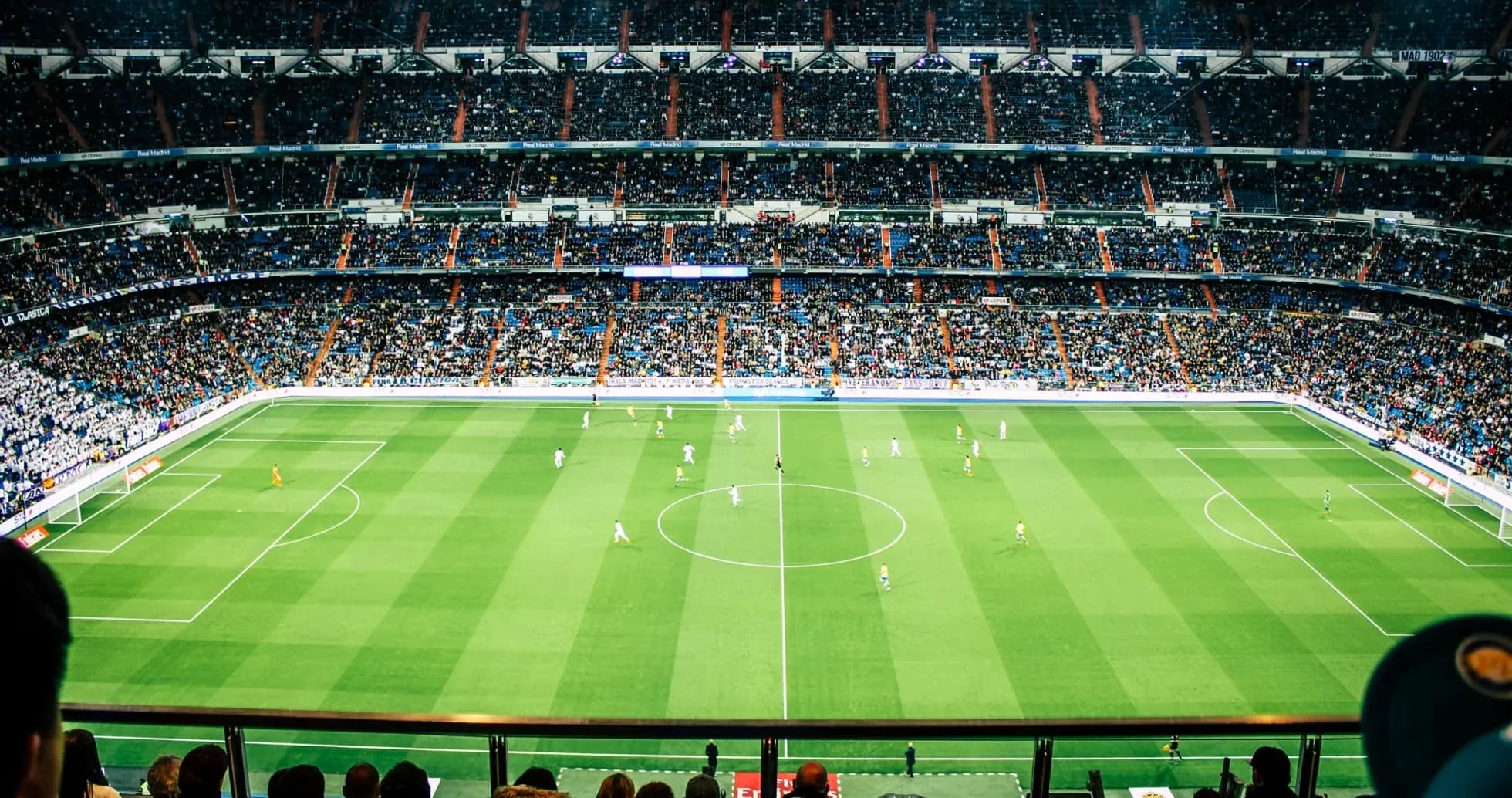
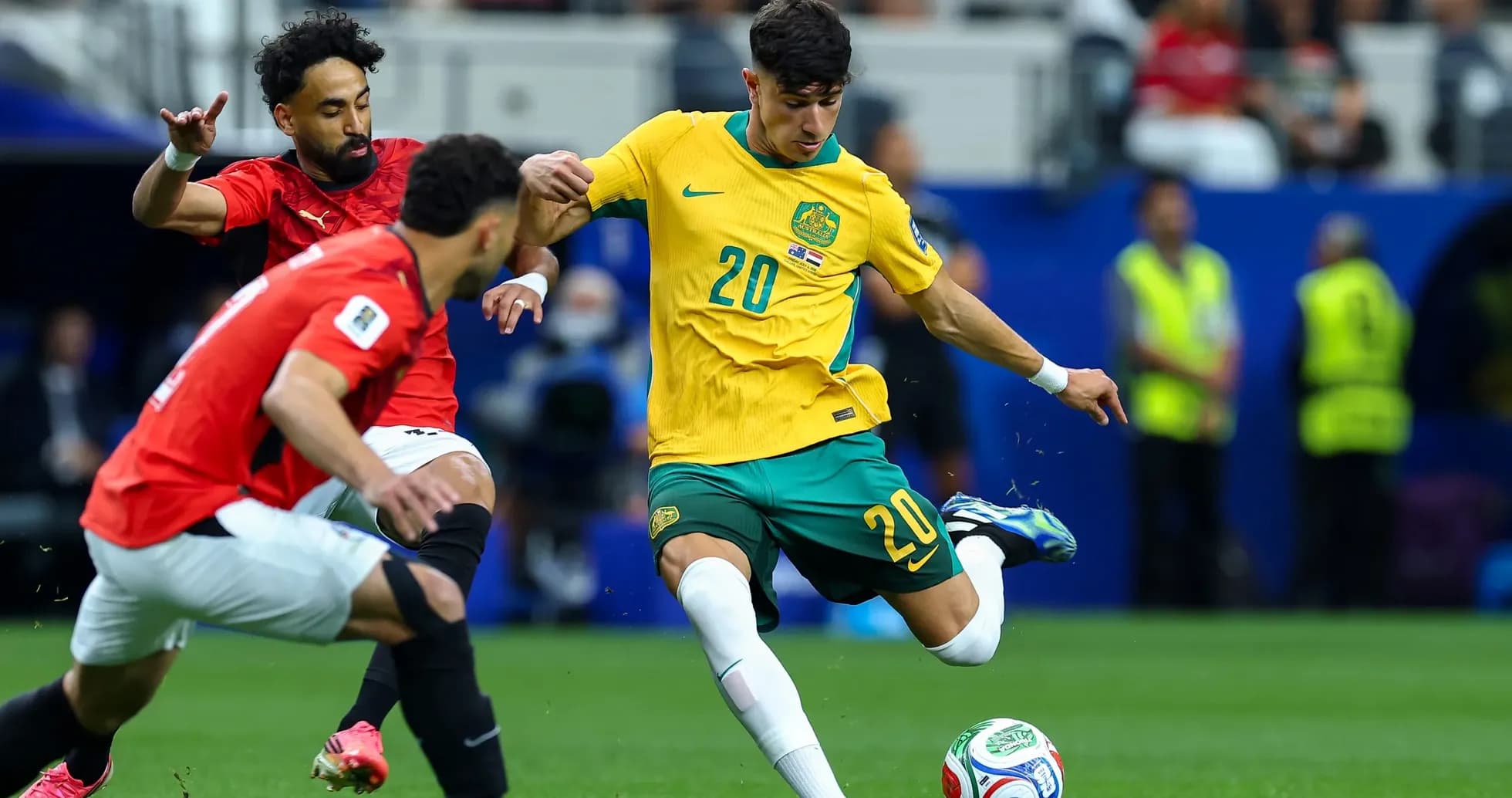
Under the closed roof of AT&T Stadium in Dallas, Australia and Egypt went the full distance: 120 minutes, nerves shredded, and finally a penalty shootout that Egypt edged 4–2 after a 1–1 draw. It was a Round of 32 tie that felt more like a chess match than a shoot‑out, shaped as much by absentees and structural tweaks as by the stars on the pitch.
I. The Big Picture – Two Groups, One Knife‑Edge
Both sides arrived in Dallas with quietly effective group‑stage profiles. Australia had come through Group D in 2nd place with 4 points from 3 matches, their overall goal difference exactly balanced at 0 (2 scored, 2 conceded). They were used to walking the tightrope: heading into this game they had played 4 matches in this World Cup, winning 1, drawing 2 and losing 1 overall. At home venues in this tournament they had scored 3 goals and conceded 1; on their travels they had yet to score, conceding 2.
Egypt, 2nd in Group G with 5 points and an overall goal difference of 2 (5 scored, 3 conceded), carried the aura of a side that simply refused to lose. Heading into this game they were unbeaten across 4 matches, with 1 win and 3 draws overall. Their attack had been more expansive than Australia’s: in total they had scored 6 and conceded 4. On their travels they had been particularly productive, with 5 away goals and an average of 1.7 away goals per game.
The tactical DNA of the two sides was visible from the first whistle. Tony Popovic doubled down on structural versatility, sending Australia out in a 3‑4‑2‑1 that leaned on a back three of A. Circati, H. Souttar and L. Herrington in front of P. Beach. Width came from J. Bos and A. Behich, with J. Irvine and A. O’Neill tasked with knitting transitions in central midfield. Ahead of them, the fluid line of C. Volpato and C. Metcalfe floated behind the spearhead of N. Irankunda.
Hossam Hassan answered with a more orthodox 4‑4‑2, but one carefully tuned to his personnel. O. Shobeir started in goal, protected by a back four of M. Hany, Y. Ibrahim, R. Rabia and K. Hafez. The midfield band – E. Ashour, H. Fathy, M. Attia and O. Marmoush – had to serve two masters: protect central spaces and feed the front pairing of M. Salah and M. Ziko.
II. Tactical Voids – The Missing Pieces
This tie was defined as much by who was missing as by who played.
Australia were without M. Leckie and J. Italiano, both ruled out through injury. Leckie’s absence stripped Popovic of a direct, experienced wide runner who thrives in transition. Without him, the burden of stretching Egypt’s back line fell on the younger, more mercurial N. Irankunda and the wing‑backs. The result was a front three that could be explosive in moments, but less predictable in its pressing triggers and off‑ball coordination.
Egypt’s absences were even more structurally disruptive. Hossam Abdelmaguid was suspended, while Hamdi Fathy, Mohanad Lasheen, Ahmed Abou El Fotouh and Mohamed Abdelmonem were all missing through injury or suspension. The loss of Lasheen and Abdelmonem, in particular, removed a significant chunk of Egypt’s defensive bite and aerial presence. Lasheen had been a standout ball‑winner in the tournament, and his absence forced Hassan to lean more heavily on H. Fathy and M. Attia to shield the back four.
Discipline also hung over the contest. Australia’s yellow‑card profile this World Cup had shown a late‑game surge: 40.00% of their cautions had arrived between 76–90 minutes, with further bookings sprinkled between 16–60 minutes. Egypt, by contrast, had a more evenly spread disciplinary map, but with a notable early‑game edge: 12.50% of their yellows came in the opening 15 minutes, and 25.00% each in the 16–30 and 31–45 ranges. They also showed a penchant for fouls in extra time, with 25.00% of their yellows between 91–105 and 12.50% between 106–120 minutes. This was always likely to be a contest where fatigue and pressure could tip either side into costly bookings late on.
III. Key Matchups – Hunter vs Shield, Engine Room vs Engine Room
The headline duel was clear: Mohamed Salah against Australia’s defensive structure.
Salah came into the tie as one of the tournament’s leading creators. Across 4 appearances he had scored 1 goal and provided 2 assists, with 16 key passes and 13 dribble attempts, 6 of them successful. His 7.25 average rating reflected not just end product but volume: 6 shots (4 on target), 113 passes with 77% accuracy, 37 duels contested and 9 fouls drawn. In other words, he was Egypt’s attacking hub, ball‑carrier and foul magnet rolled into one.
Australia’s answer was collective rather than individual. H. Souttar’s presence at the heart of the back three gave them aerial dominance and a natural organiser, while A. Circati and L. Herrington were asked to step out and confront Salah when he drifted into half‑spaces. The wing‑backs, Bos and Behich, had to constantly judge when to press Egypt’s wide midfielders – particularly O. Marmoush – and when to tuck in to prevent Salah and M. Ziko from combining centrally.
In midfield, the “engine room” clash was subtler but just as decisive. For Australia, J. Irvine and A. O’Neill were tasked with disrupting Egypt’s rhythm and giving a platform to Volpato and Metcalfe. For Egypt, M. Attia and H. Fathy had to compensate for the missing Lasheen, balancing screening duties with progression into Salah’s feet. Without Lasheen’s 13 tackles and 4 interceptions from earlier in the tournament, Egypt’s central block was less ferocious, more positional.
Behind Salah, Egypt’s defensive lynchpin was Y. Ibrahim. Across the competition he had been one of the most active defenders: 7 tackles, 3 blocked shots and 2 interceptions, with 236 passes at 91% accuracy. He had already collected 2 yellow cards, underlining both his willingness to engage and the risk of disciplinary trouble. In Dallas, he once again had to step into duels early, particularly when Irankunda tried to spin in behind or when Volpato drifted into pockets between the lines.
IV. Statistical Prognosis – Margins, Mentality, and Penalties
Heading into this game, the numbers suggested a narrow Egyptian edge. Overall, Egypt had been more potent in attack, with 1.5 goals per game in total compared to Australia’s 0.8. On their travels Egypt’s 1.7 away goals per game hinted at a side comfortable attacking in neutral or hostile environments. Defensively, both teams had conceded at a similar overall rate – 0.8 goals per game for Australia, 1.0 for Egypt – but Australia’s profile was split: at home they had been tight (0.5 conceded on average), away more vulnerable (1.0 conceded).
Neither side had taken a penalty in the tournament prior to this tie, with both teams’ penalty records showing 0 taken, 0 scored and 0 missed. The shootout in Dallas was therefore a plunge into the unknown rather than a continuation of established trends.
In narrative terms, Australia brought resilience and structure: 2 clean sheets overall, a willingness to grind and a late‑card tendency that spoke of pushing the edge in closing stages. Egypt brought control and star power: no defeats, no clean sheets but an ability to trade punches and trust their forwards to produce.
Over 120 minutes, those profiles played out almost to script. Australia’s back three and double pivot made Salah work for every yard, while Egypt’s midfield, stripped of some of its usual destroyers, relied on collective positioning and Ibrahim’s interventions to keep Irankunda and company at bay. The 1–1 scoreline after extra time reflected two teams that largely cancelled each other out: Australia’s structural discipline against Egypt’s creative spearhead.
Ultimately, it was mentality and execution from the spot that separated them. With no prior penalty record to lean on, the shootout became a pure test of nerve. Egypt’s 4–2 success from the spot was the logical extension of a tournament in which they had refused to lose in normal time, trusted their leaders – above all Salah – and found just enough clarity in decisive moments.
For Australia, elimination on penalties after such a balanced campaign will sting, but the underlying numbers and the adaptability shown – from a 5‑4‑1 earlier in the tournament to this 3‑4‑2‑1 – suggest a squad with a clear defensive identity and room to grow in the final third. For Egypt, this Round of 32 survival act reinforces a simple truth: with Salah orchestrating and a back line anchored by Ibrahim, they remain a side built for knockout football, comfortable living on the edge and emerging, just, on the right side of the fine margins.