.svg&w=384&q=75 "GoalGist logo")
Cristiano Ronaldo: The Relentless Pursuit of Greatness at 41
Cristiano Ronaldo was always supposed to be good. Nobody at Manchester United in 2003, though, thought they were unveiling a footballing supernova who would still be bending the sport to his will at 41.
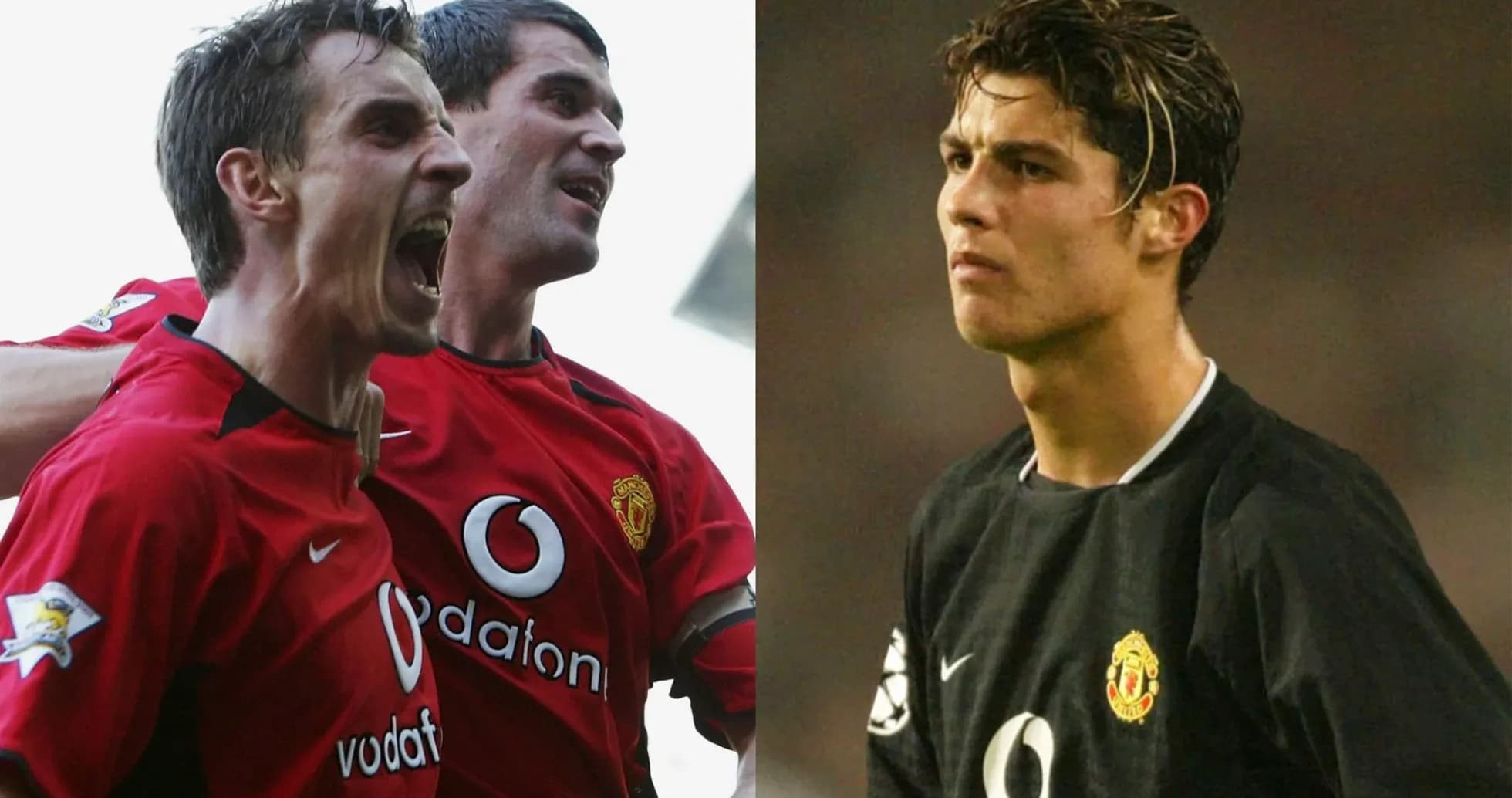
Back then he was a wiry teenager from Sporting, all stepovers and stubbornness, thrown into a dressing room policed by Roy Keane and Gary Neville. Now he is the face of Al-Nassr in the Saudi Pro League, still hoarding trophies, still rewriting records, still refusing to accept the idea of an end.
Another domestic title has followed in Saudi Arabia, added to the mountain he built at United, Real Madrid and Juventus. The numbers are now almost cartoonish: five Ballons d’Or, multiple Champions League crowns and a chase towards 1,000 competitive goals that feels less like fantasy and more like an inevitability.
And he is not done.
At 41, Ronaldo is preparing to captain Portugal at the 2026 World Cup. The idea alone would sound absurd for almost any other player. For him, it feels like the logical extension of a career built on obsession and endurance.
Eric Djemba-Djemba saw the foundations of that mentality being laid in Manchester. The former United midfielder remembers a raw talent being forged in fire on the training pitches at Carrington, and he remembers who held the blowtorch.
“I remember the training, people they can tackle him every time – Gary Neville, Roy Keane, they were tackling him,” Djemba-Djemba told GOAL, speaking courtesy of Betinia NJ. “But he was there, he was crying, but he would wake up, continue running, and I'm happy for him, he deserved it.”
That was the daily education. No comfort zone, no protection. A teenager repeatedly chopped down by senior pros, then told to get up and go again. He did. Every time.
Djemba-Djemba has watched the transformation from precocious winger to relentless goalscoring machine with a sense of inevitability. The drive he saw in those early days has never dimmed, only hardened.
“I'm so happy for him because he wants to be there, he always wants to be first, he always wants to be there winning the game, winning the training,” he said. The training. Not just the matches. Ronaldo wanted to dominate every minute that involved a ball and a stopwatch.
That is why, two decades on from his Old Trafford debut, talk is no longer about when he will stop, but how far he can push the limits of a footballer’s lifespan.
Djemba-Djemba is convinced the finish line still sits some distance away.
“I think he can go to 44, 45, Cristiano can do that, he has energy to do that,” he insisted. “He's amazing. I don't know how he does it, but he's a robot, he's amazing! I think Cristiano can go until 44, but he cannot do until 44, 45, with the national team and his team. But Cristiano can go to 44, easily.”
That is the crux now. Club and country. League and World Cup. Can Ronaldo realistically keep carrying both?
Djemba-Djemba suspects the dual burden may eventually prove too heavy, even for a player who has spent a career sneering at human limits. Yet when the conversation turns to the World Cup, doubt quickly gives way to intrigue.
Ronaldo has already played in five World Cups and is heading for a sixth in 2026. The notion of a seventh feels like something from a comic book. But then came the 2030 announcement: FIFA’s showpiece heading to Portugal, Spain and Morocco.
Suddenly, the impossible has a stage.
“I think if Cristiano goes to 44, and in four years the World Cup is in Portugal, if Cristiano is still playing, I think it will be a good last competition for him to finish his career in Portugal with the World Cup,” Djemba-Djemba said.
This is not a tactical argument. It is emotional, symbolic, national. A farewell written in capital letters across a home World Cup.
“I'm sure in Portugal they will say yes for the manager to bring him to be there in the squad,” he added. “I would do that for him, bring him in the squad, to say to him thank you for everything he did for his country.”
By then Ronaldo would be 44, a number that belongs more to coaches than centre-forwards. Yet that has always been the story with him: targets that look unreasonable from the outside, quietly stalked and then devoured.
From the boy in tears at Carrington to the man still chasing goals and history in Riyadh, the pattern has never really changed. Ronaldo sets his sights on something that sounds outlandish. Then he runs at it, again and again, until either the wall breaks or he does.
So far, it has always been the wall. The next one stands in 2030, on home soil, with a seventh World Cup and a final act that football has never seen before.