.svg&w=384&q=75 "GoalGist logo")
Cristiano Ronaldo's Last World Cup Journey
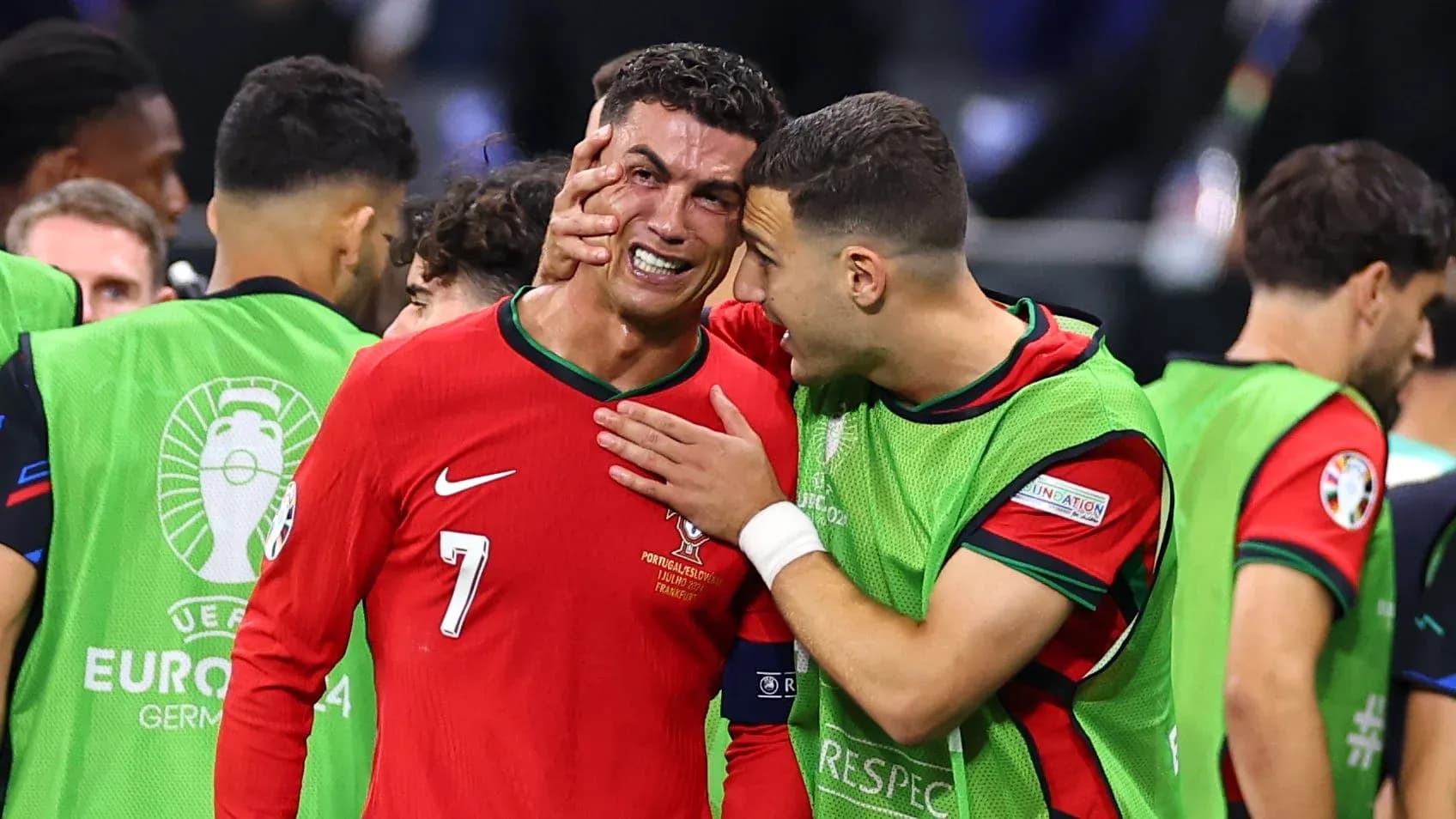
Cristiano Ronaldo is heading for a sixth World Cup, 41 years old and still the standard-bearer of a nation that has grown up with him. The closer it gets, the heavier it feels. Not just for him, but for everyone around Portugal’s seleção who knows this is likely the last dance on the biggest stage.
For Godinho, the former Portuguese Football Federation national team director who spent half a century inside the FPF, the wish is simple and immense: that Ronaldo walks away with the one trophy that has always stayed just out of reach.
“Let's hope he's in a position to retire – I don't know when, but the body isn't eternal – with a title of this magnitude,” he told Lusa. The line hangs in the air. A reminder that even careers built on defying time eventually run into it.
A brutal World Cup for tired legs
If this is to be Ronaldo’s farewell to the World Cup, the setting is unforgiving. The 2026 tournament, spread across the United States, Canada and Mexico, is already being talked about as one of the most demanding in history. Distances. Time zones. Heat. Different climates in different cities. It is a logistical maze layered on top of an already brutal club calendar.
Godinho does not sugar-coat it.
“The World Cup will be difficult ... because of the fatigue they will bring,” he warned. “The continental change is a disadvantage, as it will be for other countries on other continents.”
The concern is not abstract. The best players, the ones who decide tournaments, are the same ones who go deepest in the Champions League and domestic title races. They arrive in June and July with heavy legs and heavier schedules. Then come the long flights, the body-clock chaos, the climate swings.
“The most powerful teams have players in major club competitions and arrive there fatigued, which is compounded by long journeys, schedule changes and climate, all of which influence performance,” Godinho said. “Careful preparation is needed. It's much more difficult to play in the United States than in Germany.”
For European teams used to short hops and familiar conditions, this World Cup is a step into discomfort. Portugal will need more than talent. They will need planning, rotation, and the humility to respect the conditions as much as the opponents.
From boy among giants to the face of a nation
If anyone understands how far Ronaldo has travelled to reach this point, it is Godinho. He was there when an 18-year-old winger, all sharp edges and raw electricity, walked into the national team camp in 2003 and found Luis Figo, Rui Costa and Fernando Couto waiting.
“It wasn't difficult to work with Cristiano,” Godinho recalled. Ronaldo’s debut came against Kazakhstan, a teenager dropped into a room full of established legends. That dressing room, Godinho believes, made him.
“He had a group of players who helped him a lot to understand the dimension of where he was,” he said.
Ronaldo was “extraordinary” even then. Not just in talent, but in how quickly he absorbed advice, how he reacted when the older players spoke hard truths. There was “tough talk” at times, as senior figures demanded standards. The youngster listened, learned, and built the “winning mentality” that would define his next two decades.
From wide-eyed apprentice to captain and record-breaker, his arc has run alongside Portugal’s own rise. Euro 2016. The Nations League. Countless nights when he dragged his country with him. Only the World Cup remains.
A tricky path through the Americas
To chase that dream, Portugal must first deal with a group that offers more danger than glamour. They open their campaign in Group K against the Democratic Republic of Congo on June 17 in Houston. It is the kind of fixture that can be underestimated from afar and regretted up close.
“The first game is always very important,” Godinho said. Not decisive, but a tone-setter. A win calms nerves, builds rhythm, lets a squad settle into the tournament.
Yet he knows better than most that a slow start does not necessarily kill a campaign. Portugal stumbled through the group stage at Euro 2016 and still ended up champions of Europe. That memory lingers as a quiet reassurance.
“Everything depends on the state of mind, fatigue, and mentality,” he added. “But I am convinced that with the players and organisational capacity we can get there, but saying we are going to win is premature.”
After Houston, Portugal face Uzbekistan and Colombia. Different styles, different problems. Uzbekistan, awkward and disciplined. Colombia, talented and emotional, backed by a fanbase that travels in numbers. None of it will be straightforward under North American skies.
One last shot at the missing piece
Somewhere inside that challenge sits the emotional core of Portugal’s journey: the prospect of Ronaldo, at 41, chasing the one medal missing from his collection.
Godinho has watched the whole story unfold, from a skinny teenager in 2003 to a global icon preparing for a sixth World Cup. He knows the body will eventually say no. He also knows that, for now, Ronaldo is still planning to say yes one more time.
The dream is clear. To see him, in green and red, lifting the World Cup before walking away. To close a career that has rewritten records with the only ending it has never had.
Whether football allows that kind of symmetry is another matter entirely.