.svg&w=384&q=75 "GoalGist logo")
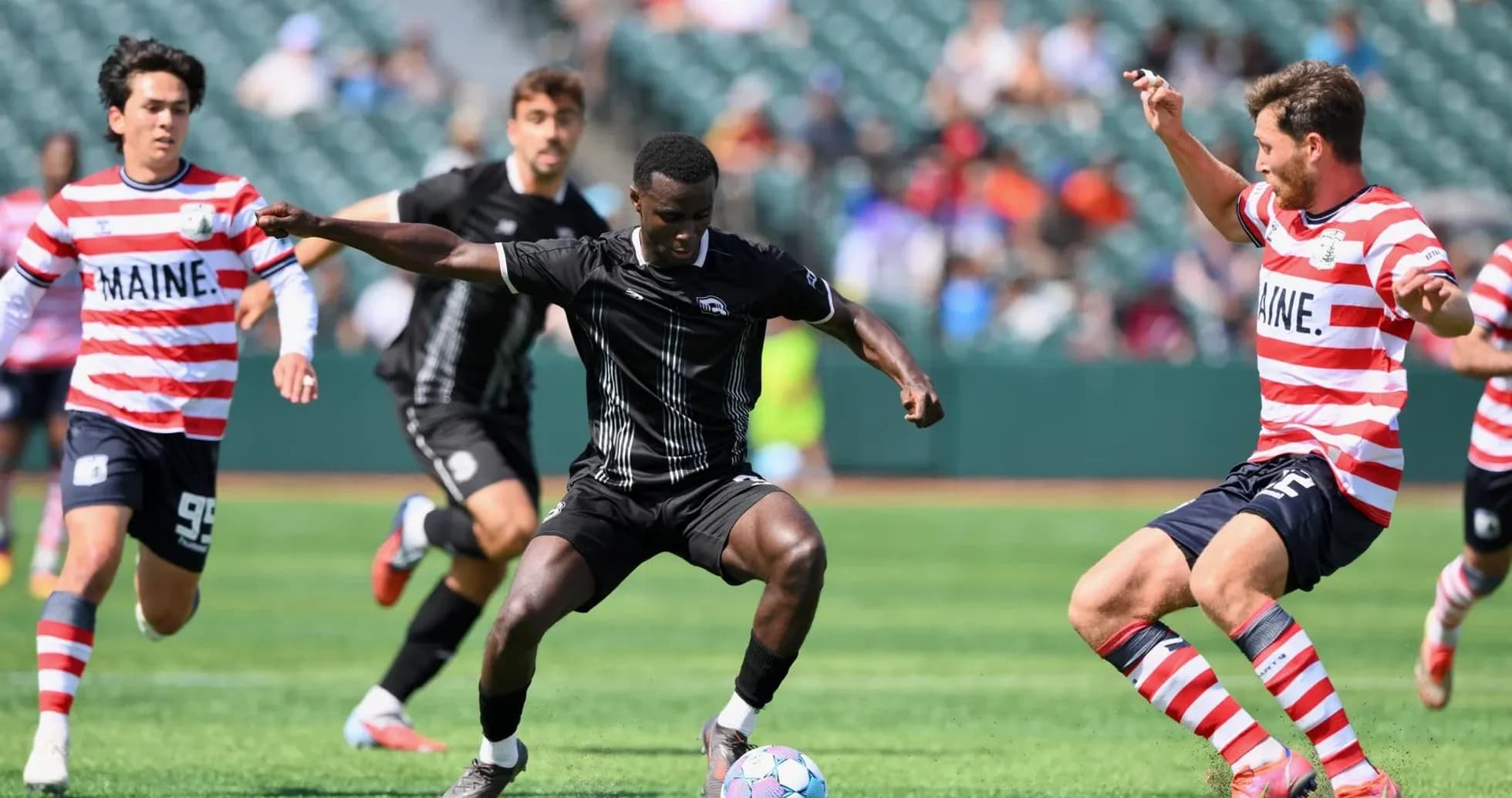
Brooklyn Dominates Portland Hearts of Pine 5–1 in USL League One Cup
On a cool evening at Maimonides Park, Brooklyn turned a group-stage knife-edge into a statement, dismantling Portland Hearts of Pine 5–1 and reshaping the contours of Group 5 in the USL League One Cup. Following this result, the table tells a stark story: Brooklyn, with 6 points, a goal difference of +5 and a record of 2 wins and 1 defeat from 3 matches, look like a side whose attacking identity is now firmly imprinted. Portland, rooted in 4th with 4 points and a goal difference of -4, are discovering the cost of defensive looseness despite flashes of offensive promise.
Brooklyn’s season profile already hinted at this kind of explosion. Overall they have scored 8 goals and conceded just 3 in 3 fixtures, with an average of 2.7 goals scored and 1.0 conceded per game. At home they have been particularly front-footed: 5 home goals across 2 matches at an average of 2.5, even if they have allowed 3 at an average of 1.5. That blend of aggression and acceptable risk was distilled into this performance: three goals before the break, five by full time, and a defensive display that reduced Portland’s earlier attacking verve to a single, isolated strike.
The lineups underlined Brooklyn’s intent. L. Burns in goal anchored a back line featuring T. Vancaeyezeele, C. Frogson, V. Latinovich and Gabriel Alves. In front of them, M. Pinto and T. McNamara offered a double pivot capable of both screening and progressing the ball, while the creative and mobile band of S. Stojanovic, P. Mangione and C. Olney JR buzzed around central striker M. Anderson. It is a group built less on star power and more on layers of complementary roles: distribution from the back, control in midfield, and multiple goal threats arriving from deep.
Portland’s XI, on paper, carried attacking menace of its own. K. Oladapo, M. Mohamed and K. Green formed the spine, with B. Evans and J. Drack offering width and thrust from deeper lanes. Ahead of them, D. Barbosa, M. Kidd, L. Kunga, W. Varela and O. Wright were tasked with feeding A. Camara, the focal point in the final third. Coach Bobby Murphy’s bench—H. Morse, J. Kamara, Z. Scarlett, S. Faye, K. Hersi, E. Espinosa and T. Huck—provided options but not enough structural stability to stem the tide once Brooklyn seized control.
The tactical void that continues to haunt Portland is defensive resilience, especially away from home. On their travels this campaign they have played 2, lost 2, scored 3 and conceded 8, shipping an average of 4.0 goals per away match. Overall, they have allowed 9 goals in 3 fixtures at an average of 3.0 per game. The heaviest away defeat before this was already a 5–1 reverse; Brooklyn simply matched that pattern and exposed the same fault lines: slow defensive reactions to overloads, poor protection of the central channels, and a back line that struggles to adjust once pulled wide.
Brooklyn, by contrast, came into this one with a clear, data-backed confidence. Their biggest home win of the campaign is now 5–1, underlining how dangerous they are when they tilt the pitch at Maimonides Park. The only blemish is a 0–2 home defeat, a reminder that when they fail to score—something that has happened once at home and once overall—they can look surprisingly blunt. But with 8 goals in 3 games and no penalties taken, their attacking output is entirely from open play and set pieces, a sign of sustainable chance creation rather than reliance on spot-kicks.
Discipline has also quietly shaped both squads’ narratives. Brooklyn’s yellow-card distribution shows a clear late-game spike: 40.00% of their cautions arrive between 61–75 minutes, with further 20.00% chunks in the 31–45, 46–60 and 76–90 windows. They grow more aggressive as matches wear on, often in response to protecting a lead. Portland’s profile is even more volatile: 50.00% of their yellows fall between 61–75 minutes, with another 25.00% between 46–60 and 12.50% between 76–90. Crucially, their only red card has come in the 46–60 band, a period in which they can lose emotional control just as tactical adjustments are being made. In a match that was already drifting away from them, any similar lapse would only have accelerated their collapse.
Within this, the “Hunter vs Shield” dynamic tilted decisively towards Brooklyn. Portland’s attack, which had produced 5 goals overall at an average of 1.7 per match, ran into a home defence that, heading into this game, had conceded just 3 goals in total and kept 1 clean sheet away but remained compact and cohesive. Brooklyn’s defensive unit—Burns behind the experienced Vancaeyezeele and Latinovich—absorbed the early Portland surges, then transitioned quickly through Pinto and McNamara to exploit the spaces behind Portland’s adventurous full-backs.
In the “Engine Room” duel, Brooklyn’s midfield simply out-thought and out-ran their counterparts. McNamara and Pinto dictated tempo, while Stojanovic and Mangione drifted into half-spaces, constantly asking questions of Mohamed and Green. For Portland, Oladapo and Mohamed were too often chasing shadows, with Kidd and Barbosa forced deeper to plug gaps rather than joining the press. That positional retreat left Camara and Wright isolated, turning Portland’s front line into a series of hopeful runs rather than a coordinated press.
From a statistical prognosis standpoint, Brooklyn’s trajectory in this group now looks upwardly stable. A side averaging 2.7 goals scored and 1.0 conceded overall, with a home attack at 2.5 goals per game, is well-positioned to carry a positive Expected Goals profile into the knockout phases should they progress. Portland, conceding 3.0 goals per game overall and 4.0 away, project as a team whose xG against will remain alarmingly high unless their structure is recalibrated.
Following this result, the narrative is clear. Brooklyn have found a ruthless, collective edge, with a squad that understands its roles and leans into a high-tempo, front-foot identity at Maimonides Park. Portland Hearts of Pine, for all their attacking flair and perfect penalty record—1 taken, 1 scored—are left confronting a harsher truth: until their defensive block is rebuilt and their discipline steadied in that volatile second-half window, they will remain a compelling watch, but a fragile one.