.svg&w=384&q=75 "GoalGist logo")
Belgium and Egypt Open World Cup 2026 Campaign with Tactical Stalemate
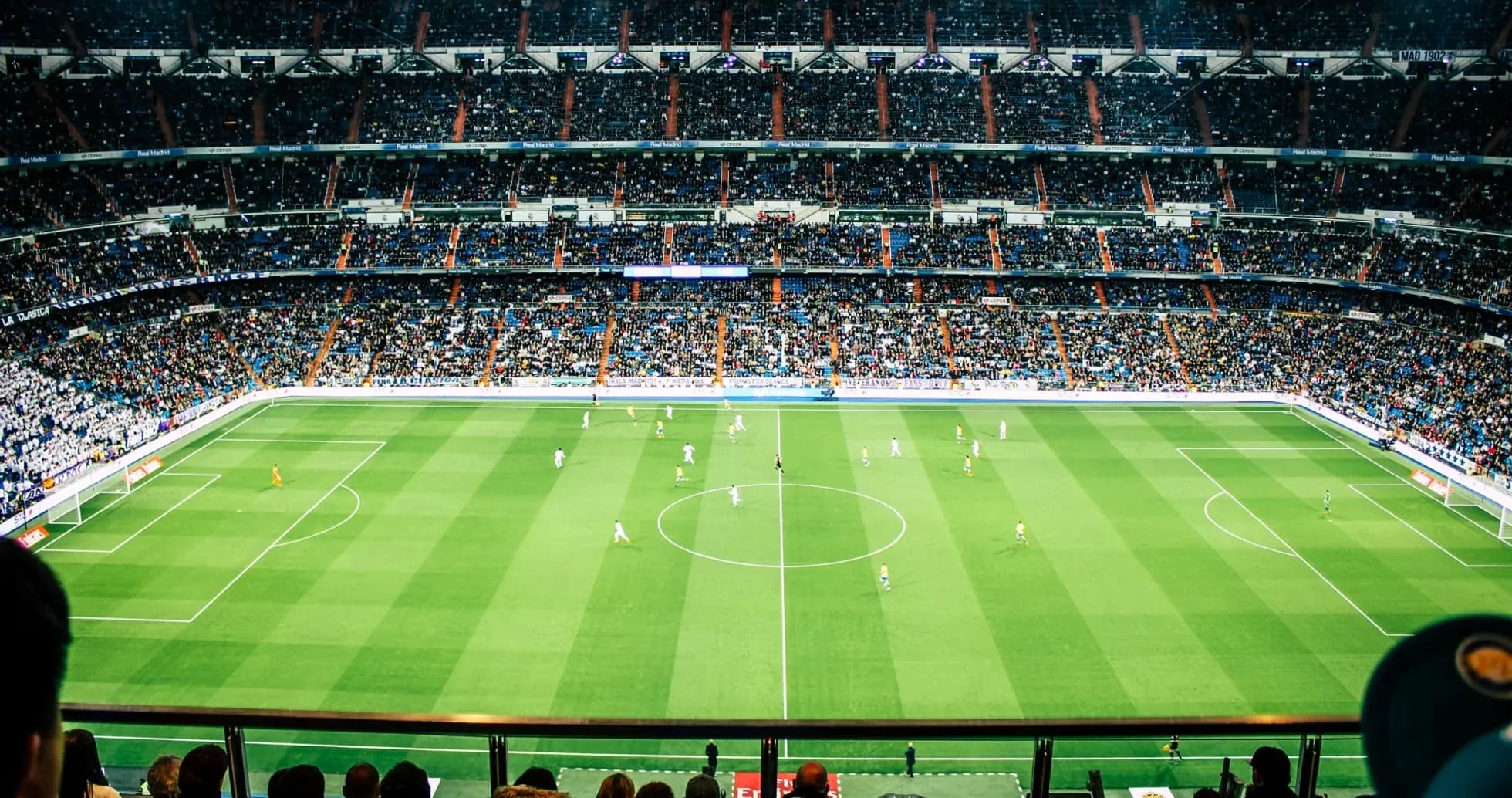
Under the closed roof of Lumen Field, Belgium and Egypt opened their World Cup 2026 campaigns with a 1–1 draw that felt less like a conclusion and more like the opening chapter of a tactical chess match that will echo through Group G.
I. The Big Picture – Two 4-2-3-1s, One Stalemate
Both sides arrived in Seattle with mirrored shapes and contrasting footballing cultures. Belgium, nominally the home team, leaned into a 4-2-3-1 that balanced structure with creative freedom. T. Courtois anchored the back, shielded by a back four of T. Castagne, B. Mechele, N. Ngoy and T. Meunier. In front of them, the double pivot of A. Onana and Y. Tielemans was designed as both launchpad and insurance policy, freeing a potent line of three — J. Doku, K. De Bruyne, L. Trossard — behind lone forward C. De Ketelaere.
Egypt, under Hossam Hassan, matched the 4-2-3-1 but with a different rhythm. O. Shobeir started in goal behind a disciplined defence of A. Fatouh, H. Fathy, Y. Ibrahim and M. Hany. The midfield hinge of M. Lasheen and M. Attia sat deep, allowing the more expressive trio of E. Ashour, M. Salah and M. Ziko to orbit around O. Marmoush up front.
Heading into this game, both teams shared the same statistical DNA in the World Cup: one match played, one draw, one goal scored and one conceded. Belgium’s numbers came entirely at home: 1.0 goals scored at home on average, 1.0 conceded at home, and no away data yet. Egypt’s profile was the mirror on their travels: 1.0 away goal scored on average, 1.0 away goal conceded. Goal difference for both was perfectly balanced at 0, a symmetry that the 1–1 in Seattle preserved.
In the standings, that equilibrium is reflected starkly. Following this result, Belgium sit 3rd in Group G with 1 point from 1 match, while Egypt trail just behind in 4th, also on 1 point, separated only by the group’s early tiebreak landscape rather than any gulf in performance.
II. Tactical Voids and Discipline – Early Edges, Late Nerves
There were no confirmed absences listed, so both coaches essentially had their full squads available, and that showed in the depth on the benches. Belgium could call on R. Lukaku, A. Witsel, H. Vanaken, D. Lukebakio, A. Saelemaekers and M. De Cuyper among others; Egypt had the likes of Trezeguet, Zizo, M. Abdelmonem and H. Hassan in reserve.
The disciplinary patterns, though, quietly shaped the tempo. Heading into this game, Belgium’s yellow cards were spread in two distinct pulses: 50.00% of their cautions arrived between 0–15 minutes and another 50.00% between 61–75 minutes. That early spike hints at a side that sometimes tackles the opening phase with a touch too much aggression, then again loses composure as legs tire and the match opens up.
Egypt’s caution map was even more front-loaded on their travels. Of their yellow cards, 50.00% came between 0–15 minutes and 50.00% between 31–45 minutes. This is a team that plays on the edge in the first half, particularly as they try to disrupt opposition build-up and deny rhythm between the lines.
Individually, Belgium’s defensive edge comes with risk. T. Castagne, who delivered a strong 7.6–7.9 level performance range across metrics, combined 4 tackles with 1 successful blocked shot and 1 yellow card. M. De Cuyper, used from the bench for 34 minutes, also picked up a yellow and committed 2 fouls, even as he blocked 1 shot and added 1 interception. Belgium’s wing-backs and full-backs are proactive — and occasionally overzealous.
Egypt, interestingly, have yet to see a red card or even a player on the disciplinary leaderboard, but their team yellow-card profile suggests that their pressing in the first half is a potential fault line if Group G referees keep a tight line.
III. Key Matchups – Hunter vs Shield, Engine Room Battles
Hunter vs Shield: Belgium’s attacking trident behind C. De Ketelaere is built around the gravity of K. De Bruyne and the direct menace of J. Doku and L. Trossard. Belgium’s overall attacking output so far — 1 total goal from 1 home match, 1.0 goals per home game — is modest but underpinned by a structure that regularly gets De Bruyne into central pockets.
Egypt’s shield, however, is organised. On their travels they have conceded just 1 goal in 1 match, an away average of 1.0 goals against, with the central pairing of H. Fathy and Y. Ibrahim supported by the double pivot in front. Their line is compact, and with M. Hany and A. Fatouh narrowing inside, they can form a narrow box that dares Belgium to go wide and cross.
On the other side, the “hunter” role for Egypt is shared between O. Marmoush’s movement and M. Salah’s orchestration. Salah’s profile in this tournament is already defined: in total this campaign he has 1 appearance, 76 minutes, 18 passes with 94% accuracy, and 3 key passes. He has not scored yet, but he has 1 assist and 1 shot on target, acting as the conduit between midfield and attack.
That puts him directly into the path of Belgium’s central shield: A. Onana and Y. Tielemans. Onana’s job is to close the lane between the lines, while Tielemans must balance progression with protection. If Salah finds space in the right half-space, drifting inside behind Belgium’s full-backs, Egypt’s transitions can turn quickly into high-quality chances.
Engine Room: The duel between the Belgian double pivot and Egypt’s M. Lasheen–M. Attia axis is where the rhythm of Group G games will be set. Lasheen and Attia are less about Hollywood passes and more about screening and recycling; their ability to track De Bruyne’s movement and prevent him from turning under minimal pressure will dictate how often Belgium can pin opponents back.
If Egypt’s midfield can force De Bruyne deeper, Belgium’s shape tilts into a 4-3-3 in possession, with Tielemans stepping higher and Onana left to cover large spaces. That, in turn, opens channels for Salah and Ziko on the break once Egypt win the ball.
IV. Statistical Prognosis – Margins, xG Shadows and What Comes Next
The raw numbers so far paint two sides that are almost perfectly balanced. Overall, both Belgium and Egypt have played 1 match, drawn 1, scored 1 and conceded 1. Both have a goal difference of 0, both have yet to keep a clean sheet, and neither has failed to score. Neither side has taken a penalty in total this campaign; both have 0 penalties taken, 0 scored and 0 missed, so spot-kicks have not yet been a factor in their attacking returns.
Without explicit xG figures, we read the shadows through structure and volume. Belgium’s 4-2-3-1, with its emphasis on creative midfielders and overlapping full-backs, is built to generate consistent shooting opportunities rather than rely on low-percentage moments. The presence of Doku and Trossard as wide creators, plus C. De Ketelaere’s link play, suggests that their Expected Goals profile will generally be healthy in group games — particularly at home, where they already average 1.0 goal scored and 1.0 conceded.
Egypt’s away numbers — 1.0 goals scored and 1.0 conceded per away match — hint at a side that accepts a degree of risk to transition quickly, especially with Salah as a high-level chance creator. His 3 key passes and 1 assist in 76 minutes underline that, even in a relatively cagey game, Egypt can carve out high-quality chances from limited possession.
The defensive solidity, though, will decide who escapes Group G. Belgium’s back line, fronted by proactive defenders like Castagne and supported by Courtois, is structurally sound but can be exposed if the full-backs are caught high. Egypt’s compact block, with Lasheen and Attia screening, is harder to pull apart centrally but can be stretched laterally by quick switches and overlapping runs.
Following this result, the prognosis for both is of razor-thin margins. Belgium look slightly better equipped to generate sustained xG through controlled possession and layered attacks. Egypt, with Salah as a high-end playmaker and Marmoush as a mobile focal point, may create fewer chances overall but a higher proportion of them will be dangerous.
In a group where both sides currently sit on 1 point, every adjustment matters. Belgium must refine their discipline in the early and mid-second-half phases, where their yellow-card spikes betray moments of stress. Egypt must manage their first-half aggression to avoid cheap bookings that could later hand opponents territorial control.
The narrative from Seattle is clear: two mirrored systems, two nations with very different footballing identities, and a group that will likely be decided not by sweeping dominance, but by who best aligns structure, discipline and chance quality when the margins are thinnest.