.svg&w=384&q=75 "GoalGist logo")
Bayern Munich Claims Supercup with 2-1 Victory Over Dortmund
Bayern Munich walked into Signal Iduna Park, took the noise, and walked out with the season’s first piece of silverware. A 2-1 win over Borussia Dortmund in the Franz Beckenbauer Supercup, built on a dominant first half and then survived in a far more frantic second.
Nathaniel Brown (28') and Michael Olise (45+1') put Bayern 2-0 up by the break. Fabio Silva’s reply on 75 minutes came too late to change the outcome, but not too late to change a few conversations around Dortmund’s attack and the rest of their transfer window.
Behind the scoreline, the night told some sharper stories.
Neuer: still world-class, still a risk
Manuel Neuer has always lived on the edge. It’s what made him a revolutionary goalkeeper. It’s also what now keeps Bayern fans occasionally holding their breath.
The pattern is becoming familiar. With the ball at his feet, Neuer continues to invite pressure and, at times, danger. The most glaring recent example came in April, that stray pass straight to Arda Güler which handed Real Madrid the lead in the Champions League quarter-final second leg. In Dortmund, he flirted with another such headline.
After 15 minutes, he played a loose pass towards Min-jae Kim that almost opened the door for BVB. Kim bailed him out with sharp defending, masking a mistake that could easily have put Bayern behind.
Late on, Neuer created his own chaos. Under pressure from Jobe Bellingham after a backpass from Kim, he tried to let the youngster run past with a feint behind his standing leg. It misfired badly. Bellingham suddenly had a clear sight of goal. Neuer then did what Neuer still does better than almost anyone: he threw himself at the shot and saved Bayern with a superb block.
The rescue was brilliant. The situation was needless.
All of this comes as the 38-year-old again hints this could be his final season. Bayern have already lined up Jonas Urbig as his successor, and the plan is clear: more minutes for the 23-year-old, a gradual transition, Neuer for the biggest nights. But those high-risk moments on the ball are cropping up more often. Often enough that the question is no longer taboo: does Urbig start to get chances even in major games?
On the line, though, Neuer remains elite. His reflex stop from close range to deny new signing Konstantinos Karetsas early in the second half was vintage: explosive, instinctive, decisive. Bayern are living with the contradictions of a legend in his final act.
Brown’s surprise role, Bayern’s growing depth
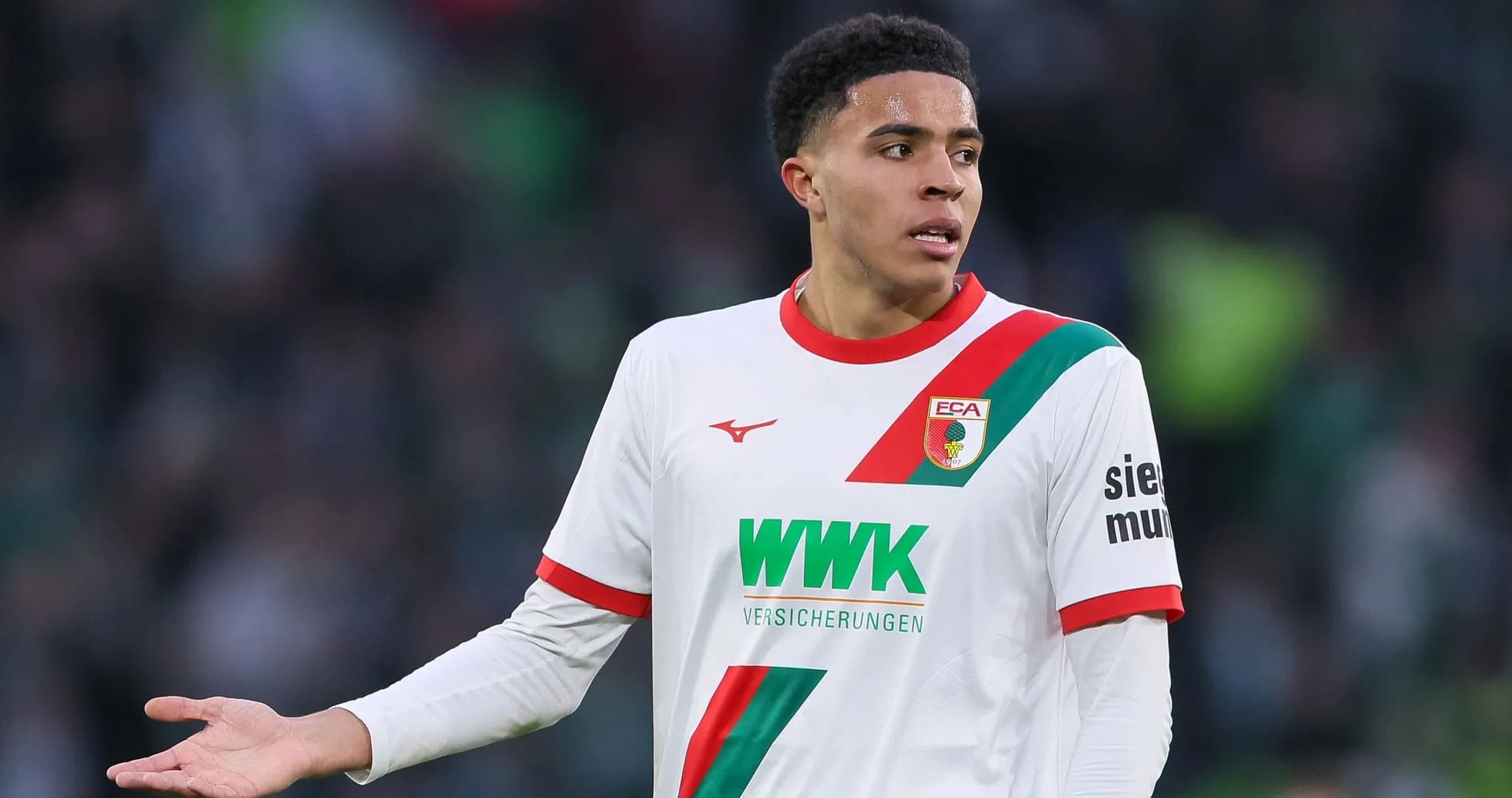
Nathaniel Brown arrived as a left-back. On Saturday, he looked like much more than that.
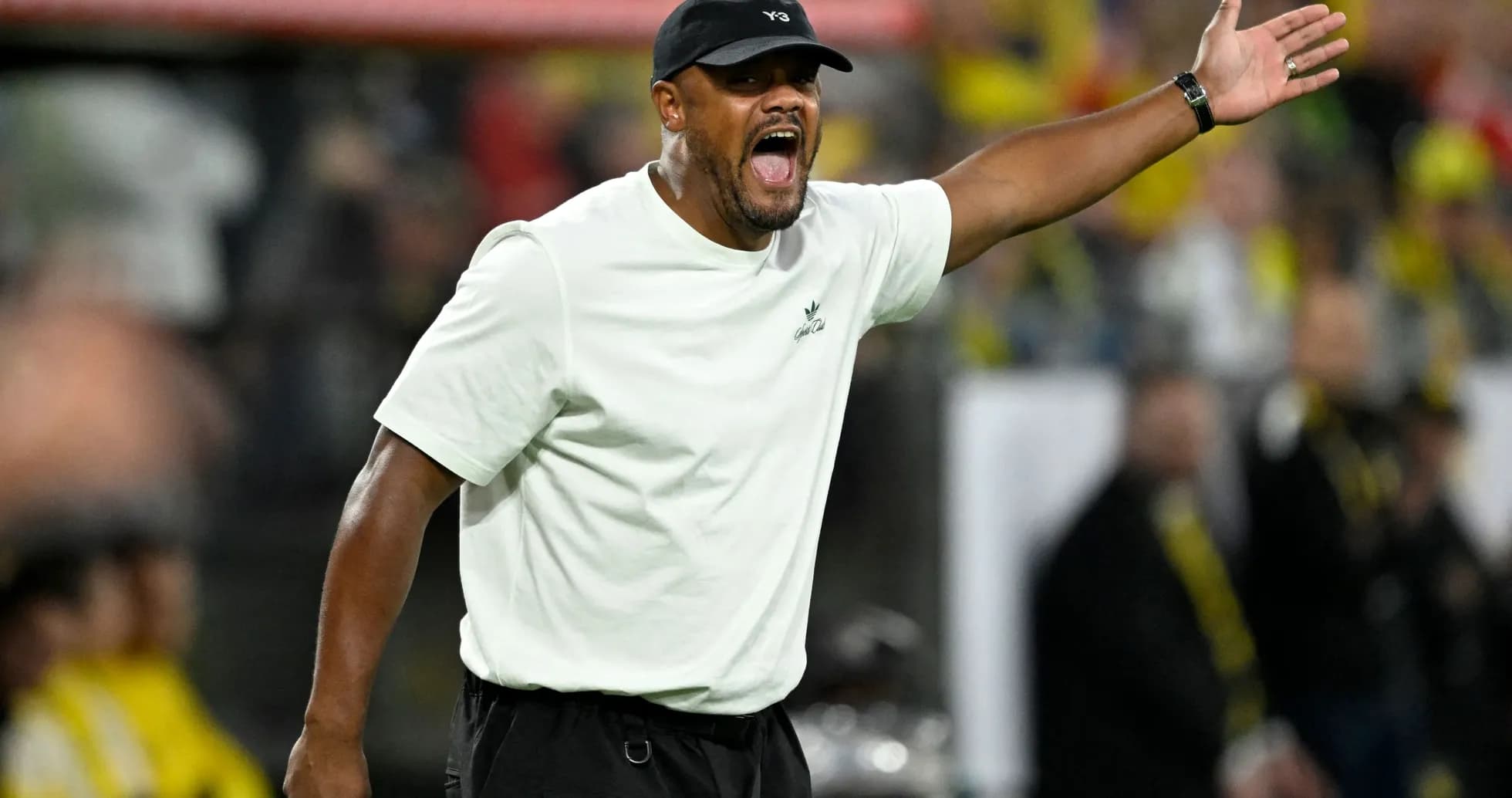
With Jamal Musiala absent due to neurological issues that have already forced him off in recent friendlies, and new signing Ismael Saibari not yet ready to start, most expected Tom Bischof to slot in as the No. 10 behind Harry Kane. Vincent Kompany had other ideas.
Brown started centrally, as the playmaker. A left-back by trade, a No. 6 by profile, and, judging by pre-season, a No. 10 in Kompany’s imagination.
“For us, the spaces for full-backs are sometimes similar to those for a No. 10. He is unbelievably good between the spaces,”
Kompany told Sky afterwards, explaining why Brown was pushed into that role. The coach also pointed to the absences of Serge Gnabry, Lennart Karl and Musiala as part of the decision.
It was a bold call, and it largely worked. Brown’s performance wasn’t flawless – it couldn’t be, given he has only been at Bayern a few weeks and is still learning the patterns in an unfamiliar position. There were loose touches, a couple of misread runs.
Then came the goal.
On 28 minutes, Brown arrived with conviction and buried his chance, a crisp, composed finish that set Bayern on their way and earned him his first trophy with the club. It wasn’t just a nice story; it was a statement about what he can add to this squad.
Brown’s versatility fits a broader theme. Konrad Laimer can play on either defensive flank and anywhere across the midfield line as a No. 6, No. 8 or even No. 10. Josip Stanisic can operate at right-back, left-back or in central defence. Bayern’s bench is starting to look less like a list of specialists and more like a toolbox.
If this is a season of transition under Kompany, Brown’s emergence as a genuine multi-role option might be one of the early wins.
Kovac’s full-back experiment: promise and price
On the other bench, Niko Kovac used the Supercup to double down on an idea he has been toying with all pre-season: inverted wing-backs.
Left-footed Daniel Svensson started on the right. Right-footed Julian Ryerson played on the left. The logic, as Kovac explained, was simple enough. With opposite-footed players on each side, Dortmund could threaten by cutting inside, closer to what top sides get from traditional wingers who drift infield to shoot or create.
There were glimpses of what he wants. In the first half, Ryerson, from the left, whipped a deep cross with his stronger right foot towards the far post. Ramy Bensebaini glanced it in, but the flag went up for a narrow offside. The move, though, showed the kind of angles Kovac is chasing.
The drawbacks were just as clear.
One of the biggest chances of the opening period fell to Svensson – but on the wrong foot. Bensebaini fired a low ball across from the left, Svensson had drifted inside from the right and found space near the penalty spot. The problem: he had to shoot with his weaker right foot. The timing was off, the technique went, and he completely missed the ball. You could almost see Ryerson finishing that with his natural right.
At half-time, Kovac reversed course. Svensson went back to the left, Ryerson to the right. “We saw that we had to change something,” he said afterwards, and he was right. Dortmund immediately looked more direct, more dangerous, and more comfortable.
The 2-1 goal came from exactly that kind of conventional full-back play. Svensson, now on his natural left side, drove to the byline and cut the ball back smartly for Fabio Silva to finish. It was simple, quick, and effective.
Kovac’s tweak has potential. It gives Dortmund new patterns and extra unpredictability. But it also reduces the number of natural byline runs and forces players into awkward finishing situations. The Supercup showed both sides of the experiment in 90 minutes.
Fabio Silva’s audition in the shop window
Serhou Guirassy’s future has gone quiet. For now, the expectation is that he stays. His performance against Bayern, though, echoed some of last season’s more frustrating spells.
He worked. He battled. He rarely threatened.
Guirassy never found his rhythm, never imposed himself on Bayern’s centre-backs, and never carved out a truly dangerous moment. After just over an hour, Kovac made a call: off came Guirassy, on came Fabio Silva.
The game changed around the box.
Silva, who had already shown flashes in his first year at Dortmund, brought sharper movement and cleaner touches in tight spaces. For the goal that cut the deficit to 2-1, he dropped cleverly into a pocket, then attacked the box again to finish from close range with cold precision. One chance, one strike, one reminder of what he can offer.
His cameo will not just have caught Kovac’s eye. Several clubs are pushing for the 24-year-old, with Real Betis currently seen as the most serious suitor. Silva himself is not locked into staying, and Dortmund’s hierarchy are open to a sale if a suitable offer lands on the table.
That’s where the dilemma lies. On this evidence, Silva looks ready to play a bigger role in his second season. Yet the calendar is brutal: the summer window is almost over. If BVB cash in now, can they realistically bring in a replacement of similar quality and profile in time?
On a night Bayern lifted a minor trophy, Dortmund’s bigger questions were about the future. Neuer’s succession plan is mapped out. Bayern’s squad is thickening. Dortmund, by contrast, must decide quickly: is Fabio Silva a short-term asset to be sold, or a forward they can build around when the real trophies are on the line?