.svg&w=384&q=75 "GoalGist logo")
Aston Villa vs Liverpool: Premier League Showdown for Champions League Spot
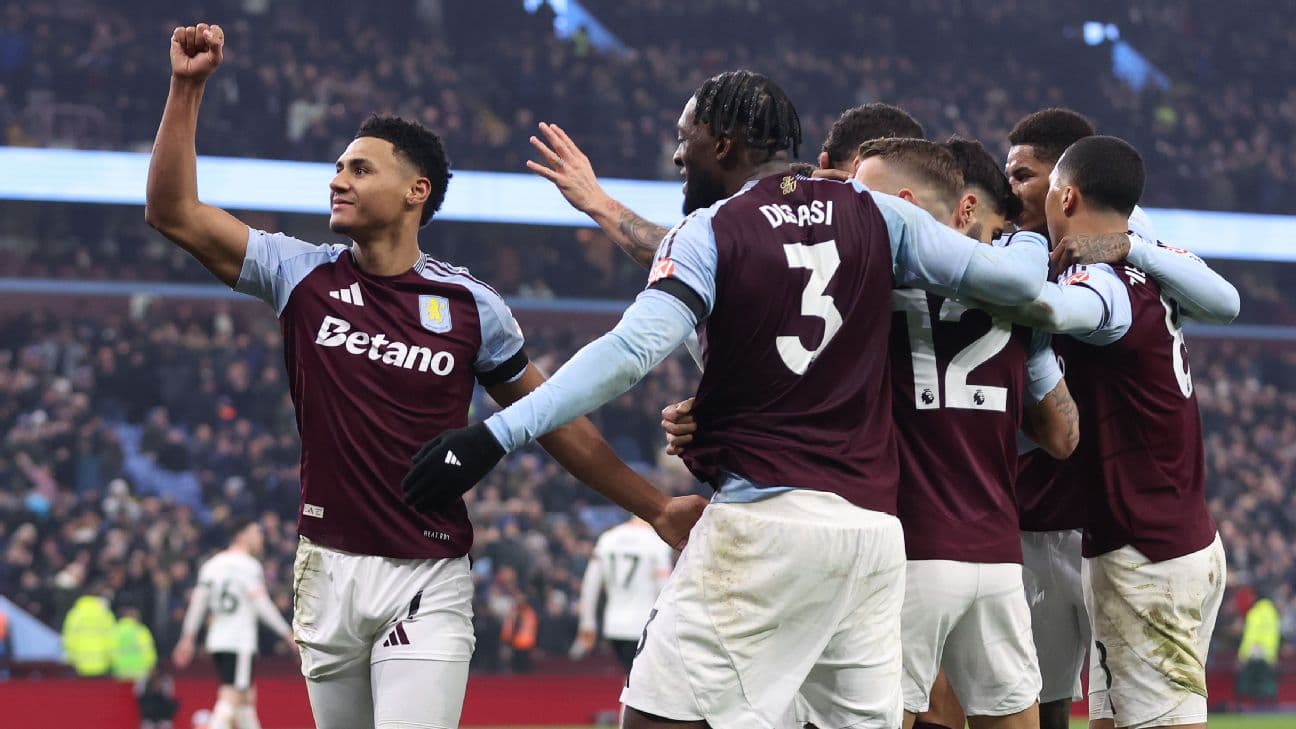
Villa Park stages a high‑stakes Premier League showdown on 15 May 2026 as Aston Villa host Liverpool in Round 37, with both sides locked on 59 points and chasing a Champions League league‑phase spot. Liverpool arrive in 4th with a superior goal difference (+12), Villa sit 5th (+4), and with just two games left, this feels like a de facto play‑off for a top‑four finish.
Context and stakes
In the league, both teams have identical records across all phases: 17 wins, 8 draws and 11 defeats from 36 matches. The split is in the details. Liverpool have scored more (60 vs Villa’s 50) and conceded slightly more (48 vs 46), but that +8 swing in goal difference could be decisive if they remain level on points.
Form guides underline the knife‑edge nature of this fixture. Aston Villa’s last five in the league read “DLLWD” – only one win in that run – suggesting a side that has cooled after a strong mid‑season surge. Liverpool’s “DLWWW” tells the opposite story: one defeat followed by three consecutive victories, momentum moving in their direction at exactly the right time.
Villa Park has been a genuine asset for Unai Emery’s side. In the league they have 11 wins from 18 at home, scoring 28 and conceding 20, with six clean sheets and only four games in which they failed to score. Liverpool, by contrast, have been more volatile away from Anfield: 7 wins, 3 draws and 8 defeats, 27 scored and 29 conceded, but with five away clean sheets and only two blanks on their travels. This is not the impenetrable Liverpool of previous eras, but they remain capable of both blowing teams away and collapsing on the road.
Tactical outlook: Emery’s structure vs Liverpool’s firepower
Across all phases, Aston Villa have been one of the Premier League’s most stable sides tactically. Their most-used shape is a 4‑2‑3‑1 (32 league matches), occasionally shifting into 4‑4‑2 or 4‑2‑2‑2. Expect a familiar double pivot protecting a back four, with aggressive full‑backs and a high, hard‑running front line.
Villa’s numbers paint the picture of a team that balances risk and control. They average 1.4 goals for and 1.3 against per game, with a biggest home win of 4‑0 and heaviest home defeat of 1‑4. Nine clean sheets show they can shut games down, but 10 matches without scoring highlight streaky attacking spells. Their card profile is revealing: yellow cards spike between 46–60 minutes (16 yellows, 29.09%) and 61–75 minutes (9, 16.36%), hinting at a side that ramps up intensity – and tackles – straight after half-time.
Liverpool, under their current set‑up, are also most comfortable in a 4‑2‑3‑1 (32 matches), with occasional switches to 4‑2‑2‑2 and 4‑3‑3. They score at a higher clip – 1.7 goals per game – but concede at the same average rate as Villa (1.3). Their biggest away win is 0‑2, their worst away defeat 3‑0, underlining that when they lose on the road, it can be emphatic.
Discipline and game flow could matter late on. Liverpool’s yellow cards cluster heavily between 76–90 minutes (17 yellows, 31.48%) and 91–105 minutes (9, 16.67%), suggesting frantic, stretched endings to matches. That could suit Villa’s ball‑carriers if this turns into a chaotic finale.
Key players and attacking threats
Aston Villa’s primary reference point in attack is Ollie Watkins. Across all phases this season he has 12 league goals and 2 assists in 35 appearances, with 31 of 51 shots on target and 22 key passes. His work rate is immense: 271 duels (108 won) and 52 dribble attempts. Watkins’ movement across the front line will test a Liverpool defence that has been inconsistent away from home.
Supporting him is Morgan Rogers, one of Villa’s most influential all‑rounders. Rogers has 9 goals and 5 assists from midfield in 36 appearances, with 57 shots (31 on target) and 43 key passes. His 117 dribble attempts (41 successful) and 433 duels (155 won) underline his role as a primary ball‑progressor and zone‑breaker between the lines. If Villa are to disrupt Liverpool’s double pivot, Rogers’ ability to carry and combine in the half‑spaces will be central.
Liverpool’s top league scorer in the data set is Hugo Ekitike with 11 goals and 4 assists in 28 appearances. He offers a blend of penalty‑box threat and link play: 48 shots (19 on target), 21 key passes and 72 dribble attempts (38 successful). With 239 duels (92 won), he is also a focal point for direct play when Liverpool look to bypass pressure.
One subtle but important angle: penalties. Across all phases, Villa have not taken a league penalty this season (0 total, 0 scored, 0 missed). Liverpool have taken one and scored it. No individual player in the data has missed a penalty, so there is no negative record to highlight, but the tiny sample size means neither side can lean on spot‑kicks as a consistent weapon.
Injuries and selection headaches
Both managers must navigate significant absences.
For Aston Villa, goalkeeper Alysson is ruled out with a muscle injury, while Boubacar Kamara misses out with a knee problem – a major blow to the double‑pivot structure that underpins Emery’s 4‑2‑3‑1. Midfielder A. Onana is listed as questionable with a calf injury, further clouding the options at the base of midfield. If Onana is not fit to start, Villa may have to improvise in the screening roles, potentially exposing the back four against Liverpool’s central runners.
Liverpool’s list is even longer. First‑choice goalkeeper Alisson is out with a muscle injury, meaning the visitors will rely on their backup in a match of huge importance. Conor Bradley (knee), Hugo Ekitike (Achilles tendon injury), Wataru Endo (foot), G. Leoni (knee) and Mohamed Salah (thigh) are all listed as missing. The absence of Salah removes Liverpool’s most established Premier League scorer and wide threat, while Ekitike’s injury takes away the season’s top league scorer in this dataset, forcing a reconfiguration of the forward line.
Ibrahima Konaté is questionable with an unspecified injury, and Florian Wirtz is questionable with illness. If Konaté is unavailable, Liverpool’s central defence loses both pace and aerial presence – a potential advantage for Watkins. Wirtz’s status matters for creativity; if he cannot start or is limited, Liverpool’s ability to unlock a compact Villa block from midfield may suffer.
Recent head‑to‑head record
The last five competitive meetings, all in the Premier League, show a clear pattern:
- 1 November 2025 at Anfield: Liverpool 2-0 Aston Villa – Liverpool win.
- 19 February 2025 at Villa Park: Aston Villa 2-2 Liverpool – draw.
- 9 November 2024 at Anfield: Liverpool 2-0 Aston Villa – Liverpool win.
- 13 May 2024 at Villa Park: Aston Villa 3-3 Liverpool – draw.
- 3 September 2023 at Anfield: Liverpool 3-0 Aston Villa – Liverpool win.
Over these five matches, Liverpool have 3 wins, Aston Villa have 0, and there have been 2 draws. Liverpool’s home dominance at Anfield is clear, but at Villa Park the last two league meetings have both finished level (2-2 and 3-3), suggesting a more even contest in Birmingham with plenty of goals.
The verdict
Data and narrative pull in different directions. The head‑to‑head trend favours Liverpool, especially their ability to keep clean sheets at Anfield against Villa. Their recent league form (“DLWWW”) and superior goal difference also point to a side finishing the campaign strongly.
Yet the context at Villa Park is more nuanced. Villa are strong at home, with 11 wins from 18 and only 20 goals conceded, and the last two league encounters between these clubs in Birmingham have been high‑scoring draws. Liverpool’s away record is erratic, and they travel without Alisson, Salah and Ekitike, with Konaté and Wirtz doubtful. Those absences strip significant quality from all three lines of the team.
Tactically, expect Villa to lean on their 4‑2‑3‑1, pressing aggressively and using Rogers between the lines to feed Watkins. Liverpool will likely mirror the shape but may have to improvise in attack, relying on system and collective pressing more than individual star power.
Given Villa’s home strength, Liverpool’s absentees and the pattern of recent meetings at Villa Park, a tight, high‑intensity draw feels the most logical outcome – a result that would keep the top‑four race alive going into the final day, but leave both sides with work still to do.