.svg&w=384&q=75 "GoalGist logo")
Arsenal's Ambitious Summer Reset After Champions League Heartbreak
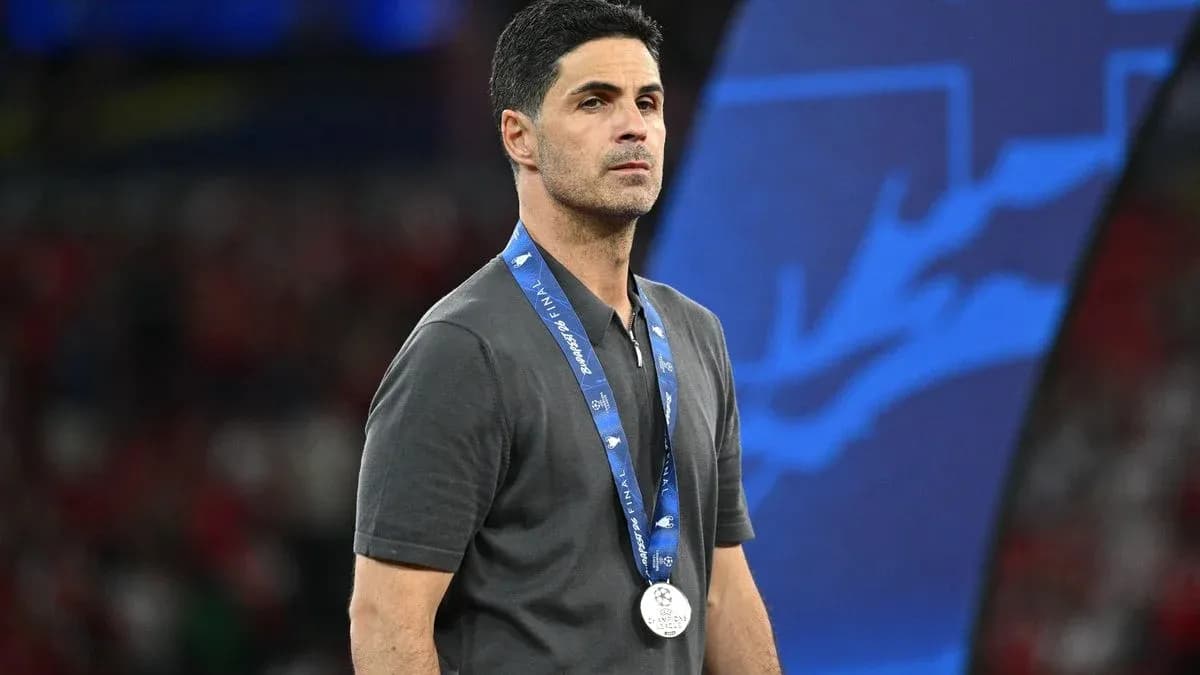
The tears in Budapest had barely dried before the calculators came out in north London. Arsenal’s season ended on penalties against Paris Saint-Germain, the club’s second Champions League final defeat in 20 years, but Mikel Arteta is already preparing a response that goes well beyond a few cosmetic tweaks.
This is shaping up to be a hard-edged summer.
Title won, final lost – and no appetite to stand still
Arsenal arrive at this crossroads from a position of strength. A first Premier League title in 22 years is in the bag, a landmark that restores the club among domestic heavyweights. Yet the manner of their European exit – 1-1 after extra-time, then a shootout collapse with Eberechi Eze and Gabriel missing from the spot – has sharpened minds rather than dulled ambition.
Arteta has been clear: this is not a time for sentiment. It is a time for “very important decisions” if Arsenal are to “reach another level”. Those aren’t throwaway lines. Inside the club, they are being treated as a mandate.
The plan is not subtle. Arsenal intend to upgrade almost every line of their team.
Four positions, one message: go again, go harder
The recruitment blueprint is bold. Arteta has identified a left winger, a centre-forward, a right-back and a new midfielder as priority positions. That is not a light refresh; that is a manager signalling that even a title-winning squad can be torn open and improved.
The number nine role sits at the heart of it. Speaking on TNT Sports, The Athletic’s David Ornstein underlined how sharply that position is being scrutinised. Victor Gyokeres, a marquee arrival last summer, watched most of the Champions League final from the bench, his “first season” impact acknowledged but not enough to win him the biggest start of all. Kai Havertz led the line instead and scored Arsenal’s only goal.
When a club spends heavily on a striker, reaches a European final, and then leaves that striker out, it usually tells you where the next window is heading.
On the flanks, the left-sided attack has been under the microscope “for a few years”, as Ornstein put it. This, he suggested, feels like the summer Arsenal finally act decisively. The intention is not simply to add depth, but to bring in a left winger who can change the dynamic of their front line.
In midfield, the search is for a player who can operate as both a six and an eight – someone who can anchor and create, protect and progress. At right-back, the brief is similar: raise the level, sharpen the competition, and give Arteta more flexibility in and out of possession.
Add that all up and the projected spend is eye-watering. Ornstein hinted that last summer’s outlay could be “repeated or even exceeded”. Arsenal, clearly, are not behaving like a club satisfied with one title and a near miss in Europe.
Morgan Rogers on the radar as attack reshaped
Names will come and go in the rumour mill, but one target has already emerged with some clarity. Arsenal are understood to be among several top clubs tracking Aston Villa’s Morgan Rogers.
At 23, Rogers fits the profile Arsenal like: young, versatile, and tactically flexible. He can play as a left-sided forward or slide inside into the No 10 role, a useful trait for an Arteta system that often blurs the lines between winger and playmaker. He would not arrive as a guaranteed starter, but as a weapon who can stretch games, drift into pockets, and offer something different to what is already there.
The Daily Mail report that Arteta has “acknowledged he needs an upgrade on the left” and will push for a new forward, midfielder and right-back. That is a manager looking at a title-winning team and still circling positions with a red pen.
Big names, big wages, big calls
Ambition has a cost. Arsenal may have money to spend, but they are also under pressure to balance the books. That is where the ruthlessness comes in.
Gabriel Martinelli, Leandro Trossard, Ben White and Gabriel Jesus – four players who have all had major roles in Arsenal’s resurgence – are now described as big earners the club are ready to listen to offers for.
None of them has been publicly put up for sale. Yet the message is unmistakable: loyalty has limits when the next step is this demanding.
Martinelli, once seen as the future of the left flank, now faces direct competition from whatever “upgrade” arrives. Trossard has delivered important goals but sits in that awkward bracket of being valuable, saleable and not entirely indispensable. White has been a model of consistency at right-back, yet the very fact Arsenal want to strengthen there suggests a desire for a different profile. Jesus, a key signing in the early Arteta rebuild, has seen questions grow around his fitness and finishing.
These are not fringe players. They are core pieces whose futures are suddenly negotiable.
Last summer’s statement, this summer’s escalation
Arsenal have already shown they are willing to spend heavily to chase the game’s biggest prizes. Last summer, they invested significantly in Gyokeres and Eze to sharpen their attack. Both, however, began the Champions League final on the bench.
Havertz, chosen ahead of Gyokeres, justified his selection with the goal that took the tie to extra-time. Eze, one of the penalty takers in the shootout, saw his effort saved. Fine margins, brutal consequences.
Those details will sting inside the club. They also feed into a broader truth: Arsenal have built a very good squad, but to dominate in England and Europe, they believe they need an exceptional one.
Arteta knows exactly what that requires. “We start to make some very important decisions if we want to reach another level,” he said. “We’re going to have to show that ambition… very, very ambitious, very fast and very smart.”
The heartbreak in Budapest underlined how close Arsenal now are to the summit of Europe. The transfer window will show just how far they are willing to go – and who they are willing to sacrifice – to make sure the next final ends with medals, not regrets.

