.svg&w=384&q=75 "GoalGist logo")
Wouter Vrancken: Hearts' New Era and Data-Driven Ambitions
Six weeks ago, Heart of Midlothian were a few agonising minutes from a first league title in more than half a century. Since then, the ground has barely stopped moving beneath them.
The captain has gone. Several pillars of that title tilt have followed him out of the door. Seven new faces have arrived. Derek McInnes is already yesterday’s man.
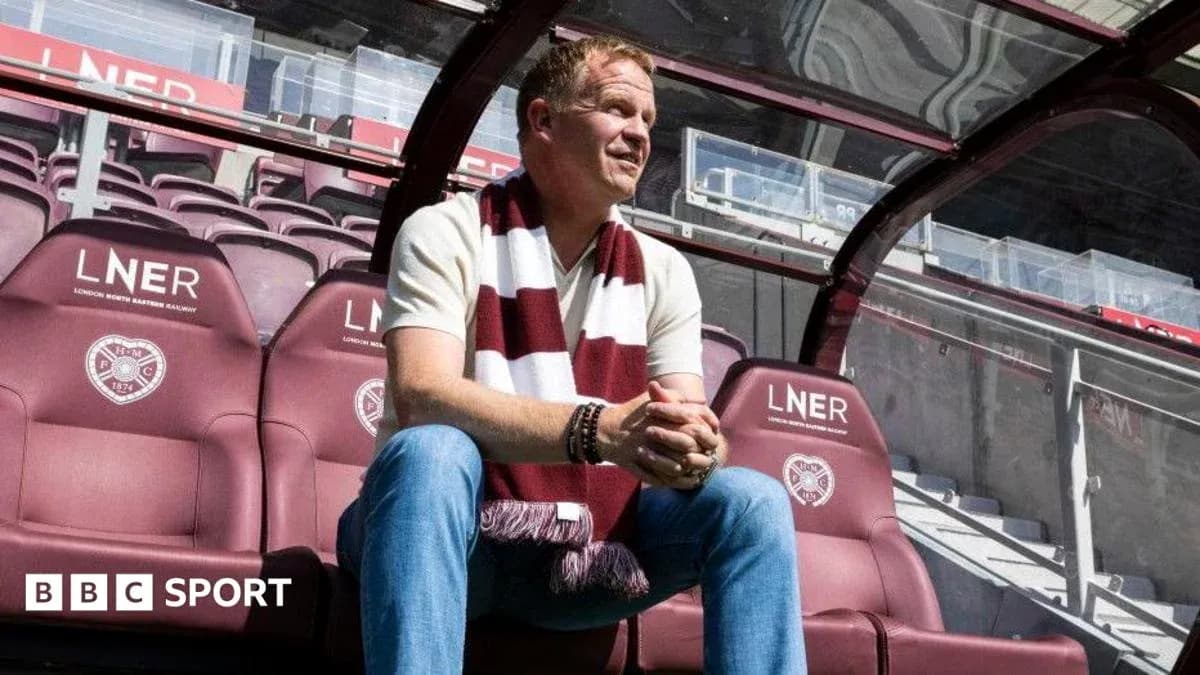
Into the turbulence walks Wouter Vrancken, 47 years old, Belgian, and the first true standard-bearer of Hearts’ new data-led era.
A club in flux, a plan in motion
This is not a sudden revolution. Tony Bloom and his analytics operation have been wired into Tynecastle thinking for well over a year. But McInnes was a bridge between the old world and the new. Vrancken is something else: a head coach hired precisely because the numbers liked what they saw.
Sporting director Graeme Jones did not hide it. In the data, Vrancken was “a standout”. His work at Sint-Truiden and Genk – teams consistently punching above their financial weight in Belgium – leapt off the spreadsheets.
Hearts want exactly that: a side that stretches its resources to the limit, built on evidence and edge rather than instinct alone.
Crucially, Vrancken has lived this model before. He has always worked as a head coach, not an old-school manager, fitting his ideas into a collaborative recruitment structure rather than demanding full control. That matters at a club where seven signings walked through the door before the new man even sat down behind his desk.
He does not see that as a problem. He sees an opening.
“I always wanted to look behind the curtain, actually,” he said. “So maybe this is an opportunity to do it.”
He trusts the process because he has seen it up close in Belgium. Now he wants to be on the inside of the machine, not simply coached by it.
There is another thread tying him to this project. Vrancken is close to Chris O’Loughlin, the sporting director at Union Saint-Gilloise, another club in Bloom’s network and one he faced in the Belgian league. The ecosystem is familiar. So is the ambition.
Fast start, bold ideas
The challenge could hardly be sharper. Four weeks. That is all Vrancken has to imprint his ideas before Hearts step into a Champions League qualifier against Sturm Graz.
He knows the clock is against him. He does not intend to wait.
His teams in Belgium earned a reputation for aggressive, front-foot football. High pressure. High tempo. The ball treated as something to be used, not feared.
“I like to have the ball,” he said. “I like to be positive and constructive and also a lot of joy in the game.”
Enjoyment might sound like a luxury in a league title race, but Vrancken sees it as a requirement. Players hit their ceiling, he believes, only when they actually relish what they are doing. So the plan is clear: create a positive, offensive style, built on intensity and energy, and let the data help shape the cast.
It will have to, because the cast is changing fast.
Shankland gone, questions everywhere
The cost of ambition is churn. Hearts supporters knew that when Bloom’s influence deepened. The club would trade more aggressively, back their models, and accept a higher turnover of players.
Now they are living it.
Lawrence Shankland, the captain and talisman of last season’s surge, has gone. So has Beni Baningime, a heartbeat in midfield. Cammy Devlin has a contract on the table but has yet to commit to it. Michael Steinwender and Frankie Kent have departed in defence, while Craig Halkett will miss the start of the season through injury.
Reports suggest Claudio Braga and winger Alexandros Kyziridis could be next to move on. For any coach, that is a lot of moving parts. For a new one, it could be chaos.
Vrancken does not flinch. He describes the squad as “good, big” and points to what it achieved last year as proof of its foundations. He sees qualities he can immediately bend towards his style, not a group in need of ripping up.
“I don’t think it’s needed for me to change a lot,” he said. “Perhaps tweaks. Perhaps different types of players in certain roles. But not a revolution for revolution’s sake.”
He is quick to praise McInnes’ work – “incredible”, in his words – yet just as quick to underline that no two coaches are the same. They see different details. They chase different marginal gains. The core remains, the emphasis shifts.
The question hanging over all of it is simple: with so much flux and so little time, can Hearts really go again at the very top of the table?
Learning to live with heartbreak
Vrancken understands the emotional weight of that question better than most. Hearts’ title slipped away in the dying minutes of a breathless campaign. That sort of wound does not heal overnight.
He has lived the same script. In 2023, as Gent coach, he watched a late Royal Antwerp goal on the final day snatch the Belgian title from his grasp. The silence after the final whistle, the hollow feeling, the long summer of what-ifs – he knows it all.
“It takes time [to get over] for sure,” he admitted. “The only cure he recognises is forward motion: new targets, new work, new energy.”
“I hope that we’re on the good side of the story, let’s say, the next time,” he said. That is where his focus sits now – not on the pain, but on the chance to flip the ending.
Hearts, he believes, are the right kind of club for that. A club with demands. A club that refuses to stand still.
“The best clubs to work in are those that have ambitions,” he said. For Vrancken, the remit is blunt: push on from last season, aim as high as possible, and see where the climb ends.
The data will guide the journey. The recruitment model will keep the squad in motion. The style will be bold, or it will be nothing.
What remains to be seen is whether this new, analytics-driven Hearts can turn all that theory into the one thing they missed by inches last time: a title-winning finish when it matters most.

