.svg&w=384&q=75 "GoalGist logo")
Inquest into Nobby Stiles’ Death Highlights Brain Trauma Evidence
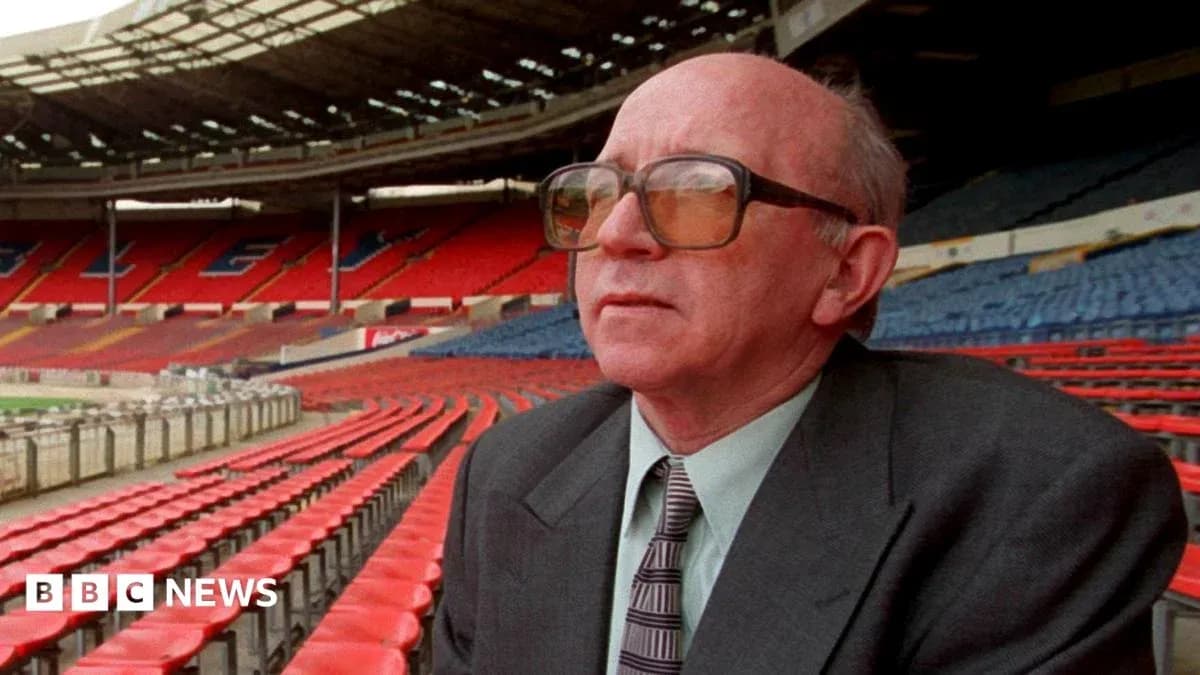
Nobby Stiles, the toothless terrier of England’s 1966 World Cup triumph, died with a traumatic brain injury and chronic traumatic encephalopathy (CTE), a coroner has confirmed, as the game’s reckoning with its past gathers force.
A court heard that Stiles, who died in 2020 aged 78, had CTE – the degenerative brain condition increasingly linked to repeated head impacts – alongside Alzheimer’s disease and other serious brain pathologies. The finding has prompted a full inquest into his death.
Chris Morris, area coroner for Greater Manchester South, told Stockport coroner’s court that an inquest should have been opened at the time of Stiles’s death, but was not.
“For reasons not entirely clear to me,” he said, Stiles’s death was never initially reported to the coroner’s office. Only after the family came forward with information did the investigation begin.
A World Cup Hero, a Relentless Tackler
Norbert “Nobby” Stiles was born in Manchester in 1942 and grew into one of English football’s most uncompromising defensive midfielders. Capped 28 times by his country and a key part of Sir Alf Ramsey’s 1966 side, he also made nearly 400 appearances for Manchester United.
He was the archetype of the old-school enforcer: low centre of gravity, ferocious in the tackle, fearless in the air. The very traits that made him a national hero are now at the heart of a legal and medical battle that reaches far beyond one man.
Brain Expert’s Findings
Stiles’s brain was examined by neuropathology specialist Dr Daniel du Plessis. After reviewing the medical records and tissue, Dr du Plessis concluded that the primary cause of death was Alzheimer’s disease.
But that was not the whole story.
He also found high-stage CTE, “stage three limbic predominant age related TDP-43” pathology, and small vessel cerebrovascular disease. Taken together, it painted a picture of a brain ravaged on multiple fronts.
On hearing those conclusions, Mr Morris said: “On the basis of that cause of death, particularly the inclusion of a traumatic injury included in the cause of death, I’m satisfied an inquest is required into the sad death of Mr Stiles.”
A full inquest will be held on Wednesday at the same court.
Family Fury and a Fight for Justice
For Stiles’s family, this is not a theoretical debate about science. It is personal, painful and long-running.
His son John has repeatedly said football “killed” his father. He now leads the Football Families for Justice (FFJ) group, which is pressing the game’s authorities to support former players and their families living with dementia and other brain conditions.
The cost has been brutal. Stiles was forced to sell his World Cup winner’s medal to help fund his dementia care. A symbol of England’s greatest footballing moment became a financial lifeline.
John Stiles is one of dozens of former players and relatives suing the Football Association, the Football Association of Wales and the English Football League. Their claim is stark: that the governing bodies were “negligent and in breach of their duty of care” in failing to protect players from the long-term effects of repeated heading and concussive blows.
Lawyers representing the families argue that football’s rulers knew, or should have known, for decades that constant heading in training and matches carried a serious risk of brain injury.
Football’s Defence – and the Growing Evidence
The sport’s authorities are not conceding that ground. In March, lawyers for The Football Association told the High Court that it has “not been established by science” that heading a ball or “occasional” concussion leads to permanent brain damage.
That stance sits uneasily against the mounting evidence.
In January, an inquest into the death of Gordon McQueen, the former Scotland, Manchester United and Leeds United defender, found that heading the ball was “likely” to have contributed to the brain injury that played a part in his death at 70. McQueen, like Stiles, had been diagnosed with CTE.
His daughter, TV presenter Hayley McQueen, has spoken starkly about the toll on the generation that brought English football its defining glory. She said England’s 1966 World Cup-winning squad had now been “pretty much wiped out” by neurodegenerative disease.
The numbers back up the concern. A landmark 2019 study, co-funded by the FA and the Professional Footballers’ Association, found that former professional footballers were three-and-a-half times more likely to die of neurodegenerative disease than people of the same age in the general population.
The FA has since moved to phase out heading in youth football, planning to remove it entirely up to under-11 level by 2026. It is a major cultural shift in a sport built on crosses, clearances and towering centre-halves.
A Generation Paying the Price
Stiles’s story now sits at the intersection of memory and accountability. On one side, the image of him dancing at Wembley in 1966, boots in hand, dentures out, trophy won. On the other, the slow, unforgiving decline of dementia and the revelation of severe CTE in his brain.
The inquest ordered this week will not change the past. It will not restore his medals, his memories or his health. But it will ask, in a formal legal setting, whether the game that made him a legend also helped to destroy him.
And as more families step forward, more inquests are held and more brains are examined, English football faces a question it can no longer head away: how many more of its heroes must be lost before the sport fully accepts the true cost of the way the game was played?